Marketplace®
Every story is an economic story
  • We got some data out of China today that showed slowing growth in retail sales and factory output at three-year lows. Add to that some meh car sales and weak consumer sentiment. In short, economic growth is the world’s second largest economy is continuing to slow. Some of which is predictable, expected even, as the […]

  • The canal in front of the Hotel Cipriani in the Venice lagoon in 2014.
    Pierre Teyssot/AFP/Getty Images

    LVMH spends $3.2 billion on a deluxe hotel and travel chain to attract millennial money.

  • Be sure to document your medication expenses.
    Joe Raedle/Getty Images

    Use it or lose it? Make sure you take advantage of every dollar.

  • Have you ever left someone on read because you just didn’t want to date them anymore? More and more people are doing that with their jobs. We talk to the Washington Post’s Danielle Paquette about the growing trend of workers “ghosting” their employers. Then: Are you maximizing your flexible spending account? Millions of Americans still have money in their FSAs, which most have to spend before the year’s end. We look at how some workers are rapidly spending the money before it’s too late. Plus: We go over the latest on auto tariffs, trade and the U.S. budget deficit with the Washington Post’s Catherine Rampell and Politico’s Sudeep Reddy for the Weekly Wrap. 

  • Commuters wait for trains at the Metro North Station in Greenwich, Connecticut.
    AFP PHOTO / TIMOTHY A. CLARY

    So many workers are disappearing without even a text message that they've caught the Fed's attention.

  • A board shows stock numbers on the floor of the New York Stock Exchange on Dec. 07.
    Spencer Platt/Getty Images

    Duke University poll finds almost half think a slowdown will hit within a year

  • Container ships docked at the Port of Oakland are seen behind a locked fence in 2015 in Alameda, California.
    Justin Sullivan/Getty Images

    The restrictions could impact a variety of new technologies that have national security implications.

  • A patient affected by Alzheimer's disease gestures as he attends a special therapeutic session. 
    PIERRE-PHILIPPE MARCOU/AFP/Getty Images

    Lower cost adult daycare programs could be one solution for affordable care for Americans living with Alzheimer's.

  • Lyft passengers and drivers in a Lyft ride on Feb. 3, 2016 in San Francisco, California.
    Mike Coppola/Getty Images for Lyft

    App-based services like Lyft and Uber are expanding aggressively into health care, as insurers will often pay for rides to ensure patients get to the care they need.

  • Global debt reaches record high of $184 trillion, IMF says
    Getty Images

    The IMF found that global debt from 2017 hit a world record of $184 trillion. That comes out to $86,000 per person, calculates the IMF. Most of the debt is held by the United States, China and Japan. What does this mean for the global economy? 

  • China announced a 90-day suspension on Friday of tariff hikes on $126 billion worth of U.S. cars, trucks and auto parts.
    STR/AFP/Getty Images

    90 days is probably not enough time to resolve conflicts between Beijing and Washington, economists say.

  • While predictions of an economic slowdown are worrying some economists, American consumers are shopping away, according to strong retail numbers from November. With more protests planned in France this weekend, we look at how protests are impacting the country’s economy. Plus, with more and more Americans living with Alzheimer’s, adult daycare programs are becoming a viable option for affordable care. Today’s show is sponsored by Orvis, Selligent and Indeed. 

  • What could ride-share companies do for the health care system in the U.S.? Uber, Lyft and health-transportation startups are developing partnerships with health care providers to give people rides to medical appointments. Apple is making moves to Austin, Texas with a new $1 billion office complex in the Texas capital. Plus, the global debt has reached $184 trillion, according to a new report from the International Monetary Fund. We look at just how meaningful — or not — that large number is. Today’s show is sponsored by Orvis, Selligent and Indeed.

  • At the beginning of 2018, who’d have thought that by mid-December, Tesla stock would be on the rise, the company would be churning out Model 3 cars to great reviews and Wall Street analysts would be predicting sustained profits for the company? That’s all true, but not because everything at Tesla has turned tranquil. Molly Wood talks with Charles Duhigg, who just took a deep look at the firings, the outbursts and the last six months of drama at Tesla for Wired magazine. Today’s show is sponsored by Amazon Web Services and Logi Analytics. 

  • Tesla owners take a ride in the Tesla D model electric sedan in 2014 in Hawthorne, California.
    Kevork Djansezian/Getty Images

    A look at the last six months of drama at Tesla.

  • From the BBC World Service… Business activity plunges in France with more anti-government protests planned this weekend. Plus, the nude shade revolution in fashion leaves you out of pocket if you’re not white; we visit the entrepreneurs making the latest trend far more inclusive of all shades. 

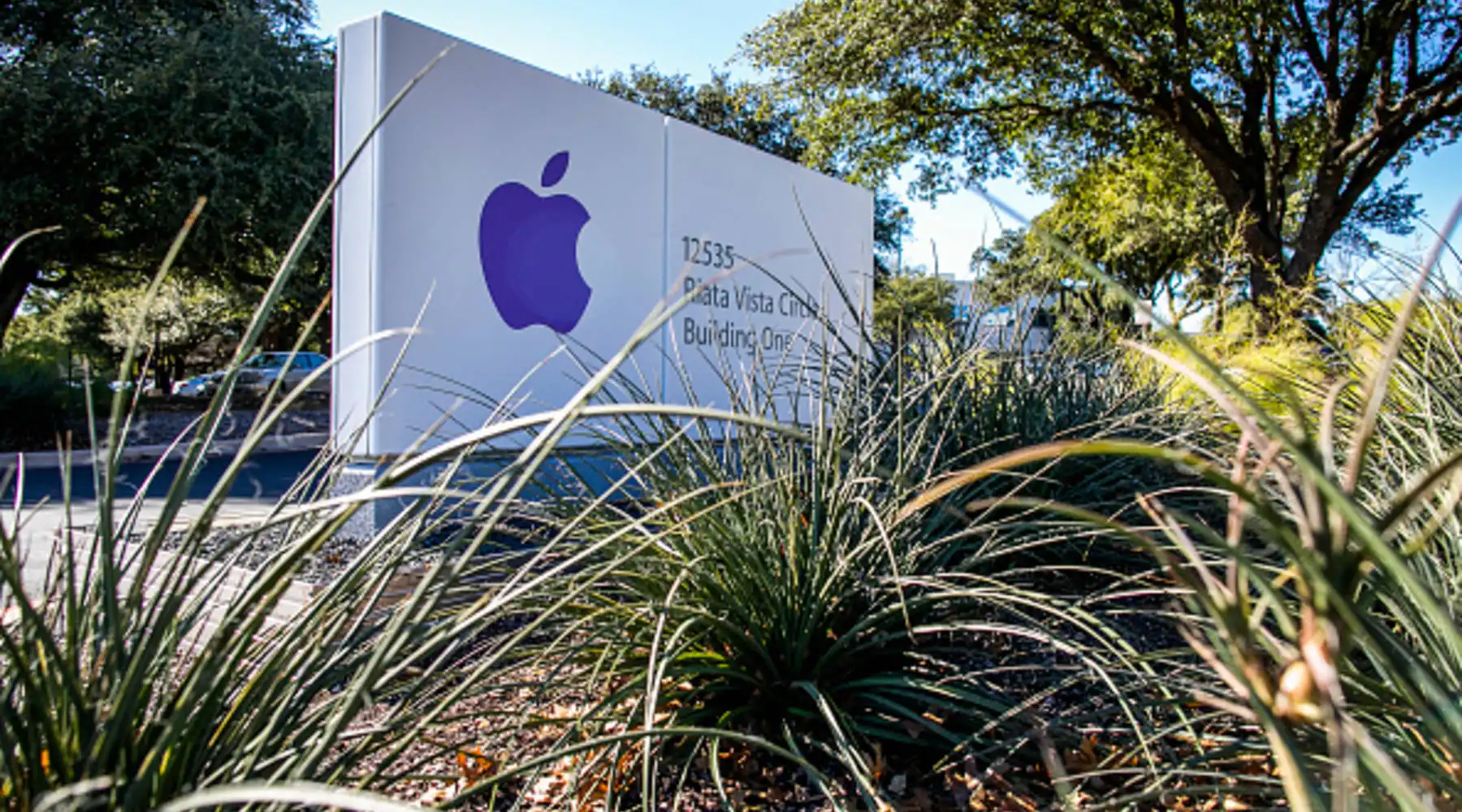
  • A sign for an Apple Inc. campus on West Palmer Lane is seen on Dec. 13, 2018 in Austin, Texas.
    Drew Anthony Smith/Getty Images

    Apple announced Thursday that it’s planning to build a new $1 billion campus in Austin, Texas, less than a mile from its existing campus. The company says it will also build new sites in three West Coast cities. The company says it’s on track to add 20,000 jobs in the next five years. We couldn’t […]

  • A sign for an Apple Inc. campus on Riata Vista Circle is seen on Dec. 13, 2018 in Austin, Texas. Apple announced it will be spending $1 billion on a new campus in North Austin that will initially employ 5,000 and potentially increase to 15,000 workers.
    Drew Anthony Smith/Getty Images

    The new campus will be on a 133-acre plot located within 1 mile of the current facility.

  • Apple quietly announced a new $1 billion, 15,000-employee campus to Austin, Texas. It did so without the media frenzy — and blowback — Amazon experienced with its East Coast expansion this year. We’ll compare the two tech giants’ approaches. Then: Nearly half of American chief financial officers believe the country will be in a recession next year. Are we ready? Plus, this year’s record-breaking box office numbers.

  • The Consumer Price Index, if you take out food and energy, showed prices rising slightly. It climbed 0.2 percent, so year-over-year prices have climbed 2.2 percent. One of the reasons for the price hikes in November was rent. And you might not be happy to hear it, but it could well be another sign of […]

  • Actor Chadwick Boseman at the Los Angeles World Premiere of Marvel Studios' "Black Panther."
    Alberto E. Rodriguez/Getty Images for Disney

    Box office revenue hit $11.1 billion this week.

  • KNEL 95.3 FM is a local radio station in Brady, Texas.
    Andy Uhler/Marketplace

    It's entertainment, gossip and a window into rural American life.

  • Dec 13, 2018

    How do books get adapted into movies?

    by Janet Nguyen
    A still from the movie "Everything, Everything," adapted from the young adult book of the same name by author Nicola Yoon. 
    Movieclips Trailers

    Young adult franchises can be very, very lucrative.

  • Universities regard football as the welcome mat to their institutions. And even schools in the NCAA Division II are taking it seriously enough to invest millions in the their athletic facilities.

  • China offers the U.S. an olive branch by unloading a bunch of soybeans. In a rare bipartisan move, legislators promise criminal justice reform that could mean early release from prison into transitional programs for many. Plus, a look at Division II colleges and the multimillion-dollar investments in their sports facilities. Today’s show is sponsored by the University of Florida Warrington School of Business, Selligent and Indeed.

  • The proposed law would shift thousands of federal inmates out of prison and into transitional programs.
    SAUL LOEB/AFP/Getty Images

    The proposed law would shift thousands of federal inmates out of prison and into transitional programs.

  • Off-shore property on the East Coast goes up for sale in an effort to spur the move towards wind energy, classically Europe’s thing. In a rare bipartisan move, legislators promise criminal justice reform that could mean early release from prison into transitional programs for many. Plus, one 2018 trend you might have missed: health care mergers. Today’s episode is sponsored by the University of Florida Warrington School of Business, Selligent and the Alliance for Lifetime Income.

  • Dec 13, 2018

    Iran hackers hunt nuclear workers, US targets

    by Associated Press
    Cyberattacks like the SolarWinds hack are increasingly common because it's hard for companies and governments to verify the security of every company they work with.
    Leon Neal via Getty Images

    The AP drew on data gathered by the London-based cybersecurity group Certfa.

  • From the BBC World Service… A day after surviving her party’s confidence vote, U.K. Prime Minister Theresa May will meet with European leaders in Brussels to try to secure concessions to get her Brexit deal through Parliament. But what can they offer that will make it palatable to British politicians opposing it? Then, as if Brexit turmoil, an Italian budget crisis, violent protests over taxes in France, and a looming global economic slowdown weren’t enough on the list of tail risks for global markets, add tightening monetary policy to the agenda as the European Central Bank is expected to wind down its bond-buying program.

  • This week, Encyclopedia Britannica celebrates its 250th birthday. That’s remarkable, but what may be more surprising is the simple fact that it’s still around. The company went fully digital six years ago. No more tomes on shelves. That pivot is part of the company’s history of being pretty revolutionary. When it began, Encyclopedia Britannica’s founders published in English instead of Latin, making it a resource for the masses. Today, given that pretty much everyone gets most of their information on the internet, Encyclopedia Britannica is literally inserting itself online, wherever possible, to provide context and stay relevant. Marketplace’s Jed Kim talks with Karthik Krishnan, CEO of Encyclopedia Britannica. Today’s show is sponsored by Colgate University and the Michigan Economic Development Corporation.

  • Encyclopedia Britannica on the shelf at the New York Public Library in 2012.
    Mario Tama/Getty Images

    Encyclopedia Britannica has a history of being pretty revolutionary.

  • Dec 13, 2018

    Tips for a successful office Secret Santa

    by Jana Kasperkevic
    A man dressed as Father Christmas aka Santa Claus 
    JOHN MACDOUGALL/AFP/Getty Images

    Gift giving at the office can be stressful, but it doesn’t have to be

  • As SpaceX's chief operating officer, Gwynne Shotwell leads the company day to day.
    NASA HQ PHOTO/Flickr

    "If there were no issues, then you don't need me," Shotwell says.

  • Could the 30-year mortgage disappear?
    Justin Sullivan/Getty Images

    President Trump's pick for housing regulator has questioned the loan's benefits.

  • Dec 13, 2018

    The cost of four missing words in the tax law

    by Marielle Segarra
    The drive-thru machine at the Commack, New York, White Castle is causing problems, but the store put renovations on hold because of the retail glitch in the tax law.
    Marrielle Segarra/Marketplace

    Dropped words in the tax law are causing a mess for retailers and restaurants.

  • Dec 12, 2018

    Departing members of Congress lobby for new jobs

    by Nancy Marshall-Genzer
    K Street is ground zero for the influence-peddling business in Washington, D.C.
    Gary Lowe/Flickr

    An exodus of lawmakers means tough competition for lobbying jobs.

  • Mainly, Mars. SpaceX COO Gwynne Shotwell talked with us about it during a tour of the company’s main factory in Southern California. But first, with the sun (possibly) setting on the government-supported 30-year fixed-rate mortgage, we’ll assess its pros and cons. Plus, why all those new apartment buildings look the same.

  • Orchards in Lebanon, New Hampshire belonging to Steve Wood, of Farnum Hill Ciders, where he grows apples specifically for cider making.  
    Britta Greene for Marketplace

    Cider sales in the U.S. have grown over the past decade. But some cider makers say the the market still isn’t valuing their product for what it’s worth.

  • Dec 12, 2018

    Congress closes in on a final farm bill

    by Kimberly Adams

    Lawmakers in the House and Senate have reached a bipartisan agreement on a nearly $900 billion bill. To get there, House Republicans backed off demands to increase work requirements for people receiving food assistance through the Supplemental Nutrition Assistance Program. The bill could come up for a vote this week. 

  • In this handout provided by the National Aeronautics and Space Administration, SpaceX's Falcon 9 rocket makes a successful launch with the SES-9 communications satellite on March 4, 2016, in Cape Canaveral, Florida.
    Photo by NASA via Getty Images

    We took a tour of the company's flagship manufacturing facility.

    Download
  • Michael Cohen, President Donald Trump's former personal attorney and fixer, arrives with his family at federal court for his sentencing hearing, Dec. 12, 2018 in New York City.
    Eduardo Munoz Alvarez/Getty Images

    The sentence was in line with what federal prosecutors asked for. Cohen is ordered to surrender March 6.

  • Aerial view of an oil complex called 'Cantarell' of Pemex (Petroleos Mexicanos), in the Gulf of Mexico, off Ciudad del Carmen, Campeche State, Mexico.
    ALFREDO ESTRELLA/AFP/Getty Images

    Mexico's new president wants to end massive fuel imports from the U.S.

  • Investors are desperate for signs the trade war between the U.S. and China is cooling, as China is reportedly offering at least one olive branch. An $867-million farm bill is up for a vote this week. Plus, the new president of oil-rich Mexico wants to end its dependence on imports of petroleum from the U.S. Today’s show is sponsored by the University of Florida Warrington School of Business, Selligent  and Indeed.

  • The White House nominates a libertarian economist as the country’s top housing regulator. Costco gets into the chicken-raising business. And what does a mistake in the text of the new tax law have to do with the drive-thru window at White Castle? Today’s show is sponsored by the University of Florida Warrington School of Business, Selligent , Indeed and the Alliance for Lifetime Income.

  • From the BBC World Service… U.K. Prime Minister Theresa May faces a confidence vote in Parliament these evening, which could result in a leadership contest if she loses. She’s vowed to fight with all she’s got, but what does it mean for Brexit with three months to go, and what happens from here?  Then, as uncertainty around Britain’s E.U. exit grows, we hear from one business owner who is increasingly worried about what a no-deal scenario will mean for his business, half of which comes from the European Union. Plus, a look at how and why non-E.U. member Switzerland is prepping for all Brexit scenarios.

  • The United Nations’ International Maritime Organization is committed to cutting shipping emissions in half by 2050. That matters because shipping moves 90 percent of global trade. Right now, if shipping were a country, its emissions would rank sixth in the world. Part of the solution will be tech. Marketplace’s Jed Kim talks with James Corbett, a professor in the School of Marine Science and Policy at the University of Delaware, about high-tech sails. And, no, these aren’t the flapping sheets you’re thinking of. Corbett mentioned one solution being developed in Japan — a rigid surface covered with solar panels. Today’s show is sponsored by Colgate University and Logi Analytics.

  • If the shipping industry were a country, its emissions would rank sixth in the world.
    Photo credit should read Robyn Beck/AFP/Getty Images

    Solar panel-covered sails may be the answer.

  • Google CEO Sundar Pichai delivers the keynote address at the Google I/O 2018 Conference at Shoreline Amphitheater on May 8, 2018 in Mountain View, California.
    Justin Sullivan/Getty Images

    Privacy, money and data promise to all be topics of discussion.

  • Filmmaker Hao Wu at Future Tense in Washington, D.C., in 2017.
    New America/Flickr

    In the United States, would-be internet stars turn to YouTube, Twitch or Instagram. In China, it’s a livestreaming platform called YY, where creators sing or tell jokes to an audience that pays them directly in the form of digital gifts. Top streamers can make $100,000 a month or more, and lots of people now want […]

  • Dec 12, 2018

    Verizon’s bet on Oath falters

    by Amy Scott

    Verizon created Oath out of its investments in “legacy” digital media companies AOL and Yahoo. The goal was to compete with internet giants Facebook and Google. It seems that the world’s biggest wireless network just wasn’t able to make that work. Click the audio player above to hear the full story.

  • Dec 12, 2018

    How will we know we’re in a recession?

    by Kai Ryssdal, Sean McHenry and Bennett Purser
    In this photo illustration, a man looks at a graph representing the 12-month decline of the FTSE 100 share index on Oct. 7, 2008, in London.
    Peter Macdiarmid/Getty Images

    What the National Bureau of Economic Research looks for when analyzing the business cycle.

  • Dec 12, 2018

    Perhaps Congress took "The Wizard of Oz" a bit too seriously

    by Phoebe Unterman and Kai Ryssdal

    At the House Judiciary Committee hearing with Google’s CEO Sundar Pichai, Rep. Zoe Lofgren from California had to ask for clarification that Google’s Search algorithm is not a “little man sitting behind the curtain figuring out what [Google is] going to show.” She wasn’t the only one that was confused by how Google works. On […]

  • Unemployment, inflation, GDP growth, bond yields … we do a lot of numbers on this show. But what should you really be watching if you’re nervous about another economic downturn? We asked James Poterba, president of the National Bureau of Economic Research. But first, we’ll recap Google CEO Sundar Pichai’s congressional testimony and look at the lobbyist job market as nearly 100 lawmakers leave their jobs.

  • Dec 11, 2018

    How woven cloth changed the course of history

    by David Brancaccio
    Was woolen sailcloth the secret weapon of the Vikings? Above, the Draken Harald Harfagre, a reconstruction of a Viking longship.
    Photo by Thos Robinson/Getty Images for Draken Harald Harfagre

    From Viking sails to international trade, author Kassia St Clair explains how fabric influenced civilization.

  • We're taking a wide view this week.
    Jean Revillard via Getty Images

    China! Cults! Sex on the internet! And so much more!

    Download
  • Cast members of NBC's comedy series "Friends"
    Warner Bros. Television

    Let’s do the numbers on one of the most successful sitcoms of all time.

  • The Trump administration is set to release a plan that would redefine which bodies of water are protected by the 1972 Clean Water Act. 
    BRENDAN SMIALOWSKI/AFP/Getty Images

    The Trump administration is set to release a plan that would redefine which bodies of water are protected by the 1972 Clean Water Act.

  • Main Street doesn’t seem to know Wall Street is having a rough December. A state program in Tennessee is giving students free tuition to get into college, but with the remaining costs of books, rent and food, administrators are trying to figure how to keep them enrolled… and fed. Plus, Anu Anand breaks down the drama in India’s economy following the resignation of the head of their reserve bank. Today’s show is sponsored by the Alliance for Lifetime Income.

  • Despite free college tuition, low-income students struggle with living expenses

    Tuition is free. Then come the books, rent and food.

  • The head of Google is in the Congressional hot seat today answering questions about how the company handles users’ private information. The EPA is set to release a plan that will replace an Obama-era definition of what waterways are and are not federally protected. Plus, a new book explores the history of fabric beyond what we put on every morning.

  • From the BBC World Service… The U.K. parliament’s vote on Brexit has been indefinitely delayed. Now what? Prime Minister Theresa May is already on her way to the continent in a last-ditch effort to bring back concessions to push her deal over the finish line at home. Plus, it’s already been a big week for business in India with the central bank governor’s resignation and the possible extradition of a billionaire businessman facing unpaid loan charges. We’ll explain how the flow of money between public banks, industrial tycoons and political parties have landed the country in rough economic waters.

  • China’s livestreaming industry is huge, lucrative and kind of dystopian
    GREG BAKER/AFP/Getty Images

    As more people join Chinese platform YY, a new documentary sheds light on the business.

  • In the United States, would-be internet stars turn to YouTube, Twitch or Instagram. In China, it’s a livestreaming platform called YY, where creators sing or tell jokes to an audience that pays them directly in the form of digital gifts. Top streamers can make $100,000 a month or more, and lots of people now want in on the action. A new documentary about China’s livestreaming economy, “People’s Republic of Desire,” is in some U.S. theaters now. It’s about loneliness, fame and greed. Molly Wood talks with the film’s director Hao Wu about how China’s livestreamers are mostly looking for a better life.

  • Firefighters battle flames at a burning apartment complex in Paradise, north of Sacramento, California, on Nov. 09.
    JOSH EDELSON/AFP/Getty Images

    Some urge FEMA to issue a catastrophe bond to help pay for wildfire recovery.

  • Dec 11, 2018

    Court TV is coming back. It was gone, you say?

    by Meghan McCarty Carino
    Court TV has been off the air for 10 years.
    Photo by Joe Raedle/Getty Images

    Court TV has been off the air for 10 years now.

  • Economic growth in the rest of the world will slow next year. And that slowing growth will take a bit of wind out the U.S. economy’s sails. So said Maurice Obstfeld, the outgoing chief economist of the IMF, this past weekend. In other words, despite “America first” rhetoric and increasingly nationalistic economic policies, the United States […]

  • A Union Jack flag flutters in front of the Elizabeth Tower, commonly known as Big Ben, in London.
    Jack Taylor/Marketplace

    The U.K.'s most profitable industry is cautious about airing its views on Brexit.

  • Potentially, Uber or Lyft will get to plant the first flag in a new public business: ride-hailing apps. Click the audio player above to hear the full story.

  • A man casts his midterm ballot on Nov. 6, 2018 at Briles Schoolhouse in Peoria Township, Kansas.
    Whitney Curtis / Getty Images

    One of the big winners in November’s midterm election was public health insurance coverage – specifically expansion of Medicaid under the Affordable Care Act.

  • You’ve got a corgi, some home-cooked meals and a few thousand bot followers. What more do you need to be famous on Instagram? Today we’ll talk to a writer who learned it takes a lot more to make that sweet, sweet #spon money. But first, we’ll catch you up on the latest with Brexit and now markets are responding. Plus, Lyft and Uber’s race to become the first ride-share IPO.

  • A man waves both a Union flag and a European flag together on College Green outside The Houses of Parliament at an anti-Brexit protest in central London on June 28, 2016. 
    JUSTIN TALLIS/AFP/Getty Images

    British Prime Minister Theresa May said she would seek “assurances” from the EU and bring the Brexit deal back to Parliament, but did not set a new date for the vote.

  • Great Lakes Brewing in Cleveland, Ohio recently decided to give employees stock in the company.
    Erik Drost/Flickr

    Nearly 7,000 businesses in the U.S. have employee stock ownership plans or ESOPs.

  • California has become the first state to require solar panels on most new homes.
    Justin Sullivan/Getty Images

    California has become the first state in the nation to require solar panels on most new homes starting in 2020.

  • Why limiting which federal benefits undocumented immigrants receive could be disastrous for some hospitals. Former Nissan Chairman Carlos Ghosn and the company have been officially charged of criminal wrongdoing. Plus, a look at catastrophe bonds in the wake of California’s devastating wildfires. Today’s show is sponsored by Navy Federal Union and the Alliance for Lifetime Income.

  • From the BBC World Service… Former Nissan chairman Carlos Ghosn has been officially charged by Japanese prosecutors for under-reporting his income, but he denies any wrongdoing. And new figures from France’s central bank show the ongoing Yellow Vest demonstrations against higher fuel taxes are starting to hit the economy in real ways, leading the country’s finance minister to call the situation an economic catastrophe.  Plus, have you ever been called the wrong name at work and just let it slide? We chat about the repercussions of wrong names in the workplace and what you can do to correct an ongoing problem.

  • Immigrants make up roughly 12 percent of the population in this country, but account for just 8.6 percent of heath care expenditures. 
    John Moore/Getty Images

    Today is the final day for comment for the Trump administration’s public charge proposal that would make it harder for immigrants to qualify for citizenship if they’ve used public benefits, including SNAP, public housing and Medicaid. Immigrants who’ve received cash assistance or long-term medical care already have a strike against them when they apply for […]

  • Rally organizers carry away props following a protest outside the Federal Communication Commission building against the end of net neutrality rules Dec. 14, 2017, in Washington, D.C. 
    Photo by Chip Somodevilla/Getty Images

    The story behind bandwidth throttling.

  • It’s been almost six months since the Federal Communications Commission repealed net neutrality rules. Today is the deadline for the House of Representatives to overturn that decision, although no one expects that to happen. But what has the repeal meant for ordinary people? Well, according to new research, it’s meant wireless carriers potentially slowing down your video streams. Molly Wood talks with David Choffnes, one of the researchers. He’s assistant professor of computer and information science at Northeastern University. Today’s show is sponsored by Mozilla  and the Michigan Economic Development Corporation.

  • Qualcomm has won an injunction to block Apple from importing old iPhone models to China. It’s the latest in a legal battle between the two tech giants over intellectual property. Then: A new solar energy rule in California that could make houses more expensive but panels cheaper for rest of the country. Plus, what it’s like to have an ESOP, or employee stock ownership plan, where workers become part-owners.