Marketplace®
Every story is an economic story
  • Banks count their blessings in recovery
    Andrew Burton/Getty Images

    Three big banks posted their quarterly results Friday. And they were good. When you hear that profits at a bank like JPMorgan Chase were up almost 25 percent, you have to wonder: Why? Well, one reason is banks are making a lot more from you and me. Click the audio player above to hear the […]

  • Here’s why Obamacare premiums are going down for the first time
    John Moore/Getty Images

    It's "really about returning excess profits," a Kaiser Family Foundation executive says.

  • Oct 12, 2018

    When mortgages hit the roof

    by Janet Nguyen
    When mortgages hit the roof
    Justin Sullivan/Getty Images

    In the early 1980s, the Fed combated inflation by hiking interest rates to over 18 percent.

  • With an avalanche of tariffs to navigate, companies are facing a lot of uncertainty over how to plan ahead. Meanwhile, business is booming for trade consultants. We’ll talk about it, but first: mortgage rates have hit a seven-year high, and Obamacare prices are dropping for the first time. What’s going on? Plus, how nonprofits fund raise after scandal.

  • A worker about to move stock at the Medsource Labs warehouse in Chaska, Minnesota.
    Laura McCallum/Minnesota Public Radio

    Anxious importers are flooding the phone lines of trade advisers; one has seen a 20 percent jump in business.

  • General Motors seeks to reestablish the Cadillac brand by moving its headquarters to New York.
    Scott Olson/Getty Images

    (Markets Edition) The volatile nature of the markets, especially this week, can take a mental toll on anyone paying attention. It hasn’t been this active since February, so we talked to market pro Barry Ritholtz, founder of Ritholtz Wealth Management, about it. Then, despite all the news of trade tensions between China and the U.S., China actually has a trade surplus with the U.S. Nancy Marshall Genzer has more. Also, we check in on Cadillac, which is making the move back to Detroit as it works to attract luxury buyers. Today’s show is sponsored by GAIN Capital Group, (gaincapital.com), LinkedIn (linkedin.com) and Selligent (selligent.com). (10/12/2018)

  • View of the Metropolitan Opera at Lincoln Center for the Performing Arts on Oct. 5, 2018 in New York City. 
    ANGELA WEISS/AFP/Getty Images

    Allegations of misconduct coincide with new fall season for some groups.

  • It’s getting more expensive to get a mortgage. Data out this week from Freddie Mac shows the average 30-year fixed-rate mortgage is 4.9 percent. That’s the highest it’s been in seven years. What does that mean for prospective home buyers?   

  • News tickers at the Nasdaq MarketSite show negative numbers October 9, 2008 in New York City.
    Mario Tama/Getty Images

    (U.S. Edition) The Dow’s roughly 1400-point drop this week seemed to have a ripple effect across the global markets as well, but now things appear to have settled down as of Friday morning. We talk to Barry Ritholtz of Ritholtz Wealth Management on how to deal with this kind of activity day-to-day. Then we check in with columnist and ProPublica editor Allan Sloan about the role of interest rates in the ongoing tale of President Trump and his blaming of the Federal Reserve for the market issues this week. Today’s show is sponsored by GAIN Capital Group, (gaincapital.com), LinkedIn (linkedin.com) and Selligent (selligent.com). (10/12/2018)

  • A woman holds a portrait of missing journalist and Riyadh critic Jamal Khashoggi reading 'Jamal Khashoggi is missing since October 2' during a demonstration in front of the Saudi Arabian consulate on October 9, 2018 in Istanbul.
    OZAN KOSE/AFP/Getty Images

    (Global Edition) From the BBC World Service … Businesses are turning away from Saudi Arabia after reports a dissident journalist was killed by the country’s security forces. Then, we hear from Paul Romer, who won this year’s Nobel Memorial Prize in economic sciences for his research into how innovation can be used to protect the environment. Afterwards, Netflix and Amazon are battling in India to increase viewers. But competition from Indian production houses is complicating efforts. We’ll take you to a film set in Mumbai and hear from filmmakers there competing for eyeballs online. Today’s show is sponsored by GAIN Capital Group, (gaincapital.com), LinkedIn (linkedin.com) and Selligent (selligent.com). (10/12/2018)

  • An assortment of recently launched Amazon devices, including an Echo Input, Echo Show, Echo Plus, Echo Sub, Echo Auto and Fire TV Recast are pictured at the company headquarters in Seattle in September.
    Stephen Brashear/Getty Images

    In just the last week, Facebook and Google have both announced new smart speakers with video screens. And Amazon is heck-bent on putting Alexa in everything. On the one hand, people seem to want these doohickeys. Research firm Canalys says global smart speaker sales grew 187 percent in the second quarter of this year. On the other hand, an always-on, always-connected listening device in the home really freaks some folks out. Let’s dig into this in Quality Assurance, the segment where we take a deeper look at a big tech story. Molly talks with Tom Merritt, host of the podcast Daily Tech News Show. He says, before you decide whether to worry about smart speakers, you should know what you’re worried about. (10/12/18)

  • An assortment of recently launched Amazon devices, including an Echo Input, Echo Show, Echo Plus, Echo Sub, Echo Auto and Fire TV Recast are pictured at the company headquarters in Seattle in September.
    Stephen Brashear/Getty Images

    No, they're not recording your every word.

  • Blank checks run through a printer at the U.S. Treasury printing facility in Philadelphia in 2011. 
    Photo by William Thomas Cain/Getty Images

    An estimated 67 million Americans receiving the benefits will see a 2.8 percent cost-of-living boost to their checks.

  • Oct 12, 2018

    How food banks are reaching high-risk seniors

    by Danielle Prieur
    A volunteer at a food drop at the Church of God in Bithlo passes out fresh bread donated from Second Harvest Food Bank of Central Florida. Of the 93,000 meals they’ve provided so far this year, 80 percent of the food is considered nutritious.    
    Danielle Prieur

    The AARP estimates more than 10 million people 50 and older are at risk of going hungry every day in the United States. In Florida, where many baby boomers retire, this food insecurity is compounded by a lack of public transportation. Some food banks are holding food drops to bring food and other health-related events […]

    Download
  • Oct 12, 2018

    Why do gas prices end in 9/10 of a cent?

    by Tommy Andres
    What's with the 9/10?
    Justin Sullivan/Getty Images News

    …and everything else you've ever wondered about gas stations.

  • Oct 11, 2018

    Questlove on "chasing ghosts"

    by Kai Ryssdal and Daisy Palacios
    “In my mind, it's always, this could end tomorrow. So don't ever sleep,” Questlove says.
    Peter Balonon-Rosen/Marketplace

    “I’m amazed that no one’s kicked me out of the pool yet.”

  • "Forever" first-class stamps.
    Mario Tama/Getty Images

    The price of these stamps will increase from 50 cents to 55 cents.

  • Roughly one in three people in the United States have less than $5,000 in retirement savings, but for those lucky enough to have some money stashed away, the cost of investing has been getting lower and lower. Management fees for mutual funds have dropped to fractions of a percent over the last decade, and some funds have no fees. So what’s driving the fee wars? What do institutions get out of it? We’ll talk about it. Then, a conversation with Ahmir Khalib Thompson, better known as Questlove of the legendary Roots crew, about deciding to accept his biggest job offer. Plus, what you need to know about this week’s market turbulence.  

  • The low-fee wars have no end in sight
    George Marks/Retrofile/Getty Images

    Management fees race to the bottom as investors embrace passive index funds.

  • Homeless advocate Candice Elder checks in with Dorothy Smith at an encampment in Oakland in August. Smith, who raised her children in the city, said her disability benefits are not enough to afford housing.
    Farida Jhabvala Romero/KQED

    If the Oakland measure is approved, it would be the state's first such tax.

    Download
  • The belongings of people living on a sidewalk in East Oakland sprawl next to an empty lot on Aug. 24, 2018. Homeless advocate Candice Elder, 34, said vacant properties dot the area. “A lot of properties were vacant when I was growing up, and they are still vacant now,” said Elder, a native of the city. 
    Farida Jhabvala Romero/KQED

    (Markets Edition) We take a look at inflation numbers in light of the Consumer Price Index’s rise by a tenth of a percent last month. Then we talk about pollution from a seemingly unlikely source: meat. Large meat processors have released more pollution than acceptable in streams and rivers according to a new study. Also, Oakland is seeing a rise in homelessness possibly due to climbing rents, so a tax on vacant properties is being discussed. Today’s show is sponsored by GAIN Capital Group, (gaincapital.com), Michigan Economic Development Corporation (planetm.com) and PayPal (paypal.com). (10/11/2018)

  • Here’s how the Federal Reserve determines the inflation rate
    Justin Sullivan/Getty Images

    The Consumer Price Index tracks the average price change over time for a “basket”  of goods and services. The CPI takes into account things like food, transportation and health care. If the CPI goes up, that’s considered an indication that the inflation rate is rising. But when the Federal Reserve calculates the inflation rate, it […]

  • Dog Walker Dorothy Agius-Bennett takes her pets for a stroll during a powerful rainstorm on December 21, 2010 in San Diego, California.
    Sandy Huffaker/Getty Images

    The gig economy is shrinking. Wait, what exactly is the gig economy?

  • Residents choose free groceries at the Food Bank. Financial assistance for poor families in Georgia is being threatened by an accounting sleight-of-hand.
    John Moore/Getty Images

    (U.S. Edition) Wednesday was a rough day for Wall Street, with markets dropping across the board. To shed some light on what’s happening is Michael Hewson, market analyst with CMC Markets. Also, earnings season is coming up, and big banks are expected to report their earnings on Friday. Marketplace’s Justin Ho shares more. Then, we look into the issue affecting people 50 years of age and older: hunger. With millions in that age range at risk of going hungry, food providers are holding events in communities where seniors live. Today’s show is sponsored by GAIN Capital Group, (gaincapital.com), Michigan Economic Development Corporation (planetm.com) and PayPal (paypal.com). (10/11/2018)  

    Download
  • A billboard showing global stock indices at the Taiwan Stocks Exchange in Taipei.
    SAM YEH/AFP/Getty Images

    (Global Edition) From the BBC World Service … Stock markets around the world are in retreat as a selloff ricochets from the U.S. Is it the latest buy-the-dip opportunity or are there more serious risks at play? Then, a conference on the illegal trade in wildlife opens Thursday in London – it’s worth $22 billion a year, making it the fourth-biggest transnational organized crime. Afterwards, prepare for takeoff: The world’s longest non-stop flight, from Singapore to New York, clocks in at 19 hours and launches Thursday. But it comes at a time of rising global oil prices and targets premium-cabin consumers. So, how viable is its longevity? And we’ll share what our listeners have been saying about how they survive long flights. Today’s show is sponsored by GAIN Capital Group, (gaincapital.com), Michigan Economic Development Corporation (planetm.com) and PayPal (paypal.com). (10/11/2018)

  • An attendee photographs a 5G logo display during a Qualcomm press event for CES 2018 at the Mandalay Bay Convention Center on January 8, 2018 in Las Vegas, Nevada.
    David Becker/Getty Images

    The whole multitrillion dollar promise of 5G and its millions of jobs and new businesses is just a pipe dream without infrastructure. Unlike 4G, which can be delivered through a relatively small number of tall towers, 5G wireless service relies on lots and lots of small receivers placed fairly close together. And installing all those little 5G cells is turning into a big fight. (10/11/18)

  • An attendee photographs a 5G logo display during a Qualcomm press event for CES 2018 at the Mandalay Bay Convention Center on January 8, 2018 in Las Vegas, Nevada.
    David Becker/Getty Images

    Turns out, building a new wireless network doesn't happen without a tussle.

  • A pollster loads paper into a primary registration machine at the Travis County Courthouse in 2008 in Austin, Texas.
    Ben Sklar/Getty Images

    This campaign season, millions of dollars are being spent to convince young voters to register and vote in the midterm elections.

  • Oct 11, 2018

    U.S. tightens foreign investment rules

    by Janet Babin

    Some sensitive industries — everything from technology to defense firms — will face tougher federal scrutiny under new regulations formalized Wednesday. The Committee of Foreign Investment in the U.S., or CFIUS, announced its pilot program will take effect in 30 days. The announcement has some innovation, defense and tech companies scrambling to comply so they […]

  • Oct 11, 2018

    Sears teeters on the edge of bankruptcy

    by Marielle Segarra
    Customers shop at Chicago's last remaining Sears store on May 3, 2018 in Chicago, Illinois.
    Scott Olson/Getty Images

    The company is more than $5.6 billion in debt.

  • Why rock is still king on the concert circuit
    Sean Gallup/Getty Images

    Hip-hop/R&B is America's most popular genre, according to Nielsen, but rock concerts still rake in revenue.

  • An employee counts 100-yuan notes at a bank in Nantong in China's eastern Jiangsu province on July 23, 2018.
    AFP/Getty Images

    One U.S. dollar today is worth about 9.92 Chinese yuan. That’s down nearly 10 percent from where it was last spring. That drop has the attention of Treasury Secretary Steven Mnuchin, who said Wednesday he wants to make sure China is not doing “competitive devaluations.” That’s when a country seeks an advantage by making its […]

  • Traders work on the floor at the closing bell of the Dow Industrial Average at the New York Stock Exchange on Wednesday.
    BRYAN R. SMITH/AFP/Getty Images

    Companies that have been big winners, including tech firms, suffered steep declines.

  • Oct 10, 2018

    6 Supreme Court cases to keep an eye on this term

    by Danielle Chiriguayo
    A man walks up the steps of the U.S. Supreme Court in Washington, D.C.
    Mark Wilson/Getty Images

    How willing are the justices to overturn prior decisions?

  • President Donald Trump hands his pen to the director of the Office of Management and Budget (OMB) Mick Mulvaney (front-L), after signing an executive order beside members of his cabinet in the Oval Office of the White House on March 17, 2017.
    Michael Reynolds-Pool/Getty Images

    Case in point: The Consumer Financial Protection Bureau is now the Bureau of Consumer Financial Protection.

  • A model of Beijing's Central Business District made from Chinese yuan notes.
    TEH ENG KOON/AFP/Getty Images

    (Markets Edition) With the Chinese yuan falling, U.S. Treasury Secretary Steven Mnuchin attempted to warn China of taking part in “competitive devaluation” of the currency. Then, we check on the markets with Jeffery Cleveland, chief economist with Payden & Rygel in Los Angeles. Finally, we look into networking. Before, connections could be made over a round of golf. But in Silicon Valley, ultimate frisbee has become the gateway to opportunities. Today’s show is sponsored by Alliance for Lifetime Income (retireyourrisk.org), GAIN Capital Group (gaincapital.com) and Selligent (selligent.com). (10/10/2018)

  • Workers at the Tsuda Shoten fish plant in Kamaishi, Japan. About 10 percent of the workers are non-Japanese “interns” who come through a special government program.
    Adrian Ma/Marketplace

    The unemployment rate is just 2.4 percent in Japan; the country is filling the job gaps with a controversial program for foreign interns.

  • Oct 10, 2018

    The high economic toll of mental illness

    by Tracey Samuelson
    The high economic toll of mental illness
    Andrew Caballero-Reynolds/AFP/Getty Images

    Costs are often indirect, such as not being able to work.

  • “The first that's scaling through the learning curve is frequently the first to scale and the one that essentially sets the ecosystem,” LinkedIn co-founder Reid Hoffman says.
    Drew Angerer/Getty Images

    (U.S. Edition) We check in on the decline of the yuan, the national currency of China. Shaun Rein, the managing director of the China Market Research Group, told us more. A global summit on mental health concludes Wednesday in a bid to secure money and treatment comparable to other health issues. Worldwide, mental disorders cost governments almost $2.5M per year. Reid Hoffman, the co-founder of LinkedIn, stopped by to talk about the concept of “blitzscaling” detailed in his new book. Today’s show is sponsored by Alliance for Lifetime Income (retireyourrisk.org), GAIN Capital Group (gaincapital.com) and Selligent (selligent.com). (10/10/2018)

  • We’re a couple weeks away from the midterm elections, and it’s crunch time for voter registration. Political organizations and campaigns have spent millions on voter registration efforts targeting young and diverse voters, but will it work? Also on today’s show: Amid trade tensions, the value of the Chinese yuan has been falling against the dollar, which has both the United States and China worried. Plus: How YouTube is changing parenting and the entertainment industry for children.

  • “The first that's scaling through the learning curve is frequently the first to scale and the one that essentially sets the ecosystem,” LinkedIn co-founder Reid Hoffman says.
    Drew Angerer/Getty Images

    Reid Hoffman discusses the unconventional advice he gives entrepreneurs that want to get big fast in his new book.

  • In this NOAA satellite handout image, shows Hurricane Florence it just makes landfall off the coast of the U.S. in the Atlantic Ocean on Sept.13, 2018.
    NOAA via Getty Images

    (Global Edition) From the BBC World Service … A day after it downgraded its forecast for global growth next year, the International Monetary Fund is out with a new warning Wednesday about what it calls “dangerous undercurrents” threatening the world economy. Then, more than half a million people have been urged to evacuate their homes in the southeastern part of the U.S. as Hurricane Michael prepares to make landfall. That’s just weeks after storms ravaged Indonesia and the Carolinas. Now, the United Nations is out with a new report showing economic losses from extreme weather events rose 251 percent in the last 20 years. And we’ll hear from business owners in Palu who are trying to get back to normal life in the weeks following the natural disasters. Today’s show is sponsored by Alliance for Lifetime Income (retireyourrisk.org), GAIN Capital Group (gaincapital.com) and Selligent (selligent.com). (10/10/2018)

  • Apple's Oct. 13 event demoed a new iPhone 12
    JOSEP LAGO/AFP/Getty Images

    The next generation of wireless technology, 5G, could be a huge deal. The speed and the number of devices that can be connected could spawn new businesses we haven’t even thought of yet. Last year chipmaker Qualcomm and tech research firm IHS Technology put out a report that said 5G could enable $12 trillion in economic output across the world by 2035 and add some 22 million jobs. The report compared 5G to electricity. Compare that to 4G, which, just in the U.S., contributed about half a trillion dollars to the economy in 2016. And even a whiff  of that potential is why there’s a race to get to 5G first between companies and even countries. Molly talks with Scott Tong, Marketplace reporter and former China correspondent. He says the U.S. won the race to 4G, and China doesn’t want that to happen again. (10/10/18)

  • Apple's Oct. 13 event demoed a new iPhone 12
    JOSEP LAGO/AFP/Getty Images

    The U.S. won the race to 4G. Can it do the same with 5G?

  • Oct 10, 2018

    Duke Energy CEO on the future of energy

    by Kai Ryssdal
    Lynn Good, president and CEO of Duke Energy, speaks at the KPMG Women's Leadership Summit in 2015 in Harrison, New York.
    Scott Halleran/Getty Images for KPMG

    The company's big challenge is keeping pace with technology.

  • The International Monetary Fund said Tuesday it’s shaving off some of its earlier optimism about world economic growth over the next couple years. It has downgraded its growth forecast for this year from 3.9 percent to 3.7 percent, and for next year, the IMF has ticked the world’s growth down from 2.7 percent to 2.5 […]

  • Google’s parent company, Alphabet, has announced new privacy measures that include shutting down its social network Google Plus. The decision comes after news this week that Google exposed the private data of hundreds of thousands of Google Plus users. We’re talking full names, email addresses, birth dates, profile photos and more. Google opted not to […]

  • We hardly used ye. Google is phasing out its social platform Google Plus after a massive data breach. We look at how this could affect Google’s business model. Also on today’s show, the International Monetary Fund predicted in its global economic forecast that trade disputes and turbulent emerging markets will slow global economic growth. And, are electric scooters all that bad, or are they a sign of where our transportation system is headed? A report on the electric scooter craze from Los Angeles. Plus, another installment of #HowWeChanged, the series exploring how the financial crisis changed people’s lives. This time we hear the story of a banker who left the chaos behind to live in a monastery.

  • Oct 9, 2018

    Expl4inathon

    Expl4inathon
    Fox Photos/Getty Images

    Two hosts. Thirty minutes. We’re answering as many of your questions as we can.

    Download
  • Oct 9, 2018

    Credit card interest rates are rising

    by Marielle Segarra
    Credit card interest rates are rising
    Joe Raedle/Getty Images

    The average rate is just over 17 percent, and it's expected to keep going up.

  • Mmm. Gumballs. 
    J.B. Hill/flickr

    Coin-operated gumball machines aren’t as common as they used to be. With sales slowly dwindling over the years and high domestic sugar prices, America’s sole remaining gumball maker has been branching out to stay afloat.   Click the audio player above to hear the full story. 

  • Mmm. Gumballs. 
    J.B. Hill/flickr

    (Markets Edition) New numbers show the benefits of aggressively helping young people finish school and find jobs. A study followed two groups, both ages 16 to 24, on their journeys. Then we dive into the markets, where the latter half of this week signals the beginning of a new season of sorts for market participants. Also, we check in on the last American gumball company standing, Ford Gum and Machine Company, which has been around for more than a century. Today’s show is sponsored by Alliance for Lifetime Income (retireyourrisk.org), GAIN Capital Group (gaincapital.com) and PayPal (paypal.com). (10/09/2018)

  • Google's European headquarters in Dublin in 2010.
    PETER MUHLY/AFP/Getty Images

    A software glitch left private data of more than 496,000 users of the social media network open to potential misuse.

  • Oct 9, 2018

    Ask a Manager: Should we talk politics at work?

    by David Brancaccio and Ali Oshinskie
    Ask a Manager: Should we talk politics at work?
    Pixabay

    Getting through Thanksgiving dinner is hard enough, do we have to dodge politics in the 9-to-5 now too?

  • A picture taken on November 20, 2017 shows logos of Google displayed on computers' screens. 
    LOIC VENANCE/AFP/Getty Images

    (U.S. Edition) A new report details how the private information of almost half a million Google users was exposed to hackers until Google sealed up the leak in the spring. The apparent weak link was Google Plus, so we take a look at the data vulnerabilities that can occur when a platform fades into oblivion. Then, we check the global economic pulse with new data from the International Monetary Fund. Also, we discuss what to do when political discussion forces its way into the workplace in the newest installment of  “Ask A Manager.” Today’s show is sponsored by Alliance for Lifetime Income (retireyourrisk.org), GAIN Capital Group (gaincapital.com) and PayPal (paypal.com). (10/09/2018). 

  • Music group BTS accepts the Top Social Artist award onstage during the 2018 Billboard Music Awards at MGM Grand Garden Arena on May 20, 2018 in Las Vegas, Nevada. 
    Kevin Winter/Getty Images

    (Global Edition) From the BBC World Service … The IMF has downgraded its view of global growth due in part to ongoing trade tensions. We’ll hear from the organization’s chief economist. Then, after a month of speculation, Pakistan put rumors to rest and said it will seek a bailout from the International Monetary Fund to tackle its mounting balance of payments crisis. We’ll hear from our reporter on the ground in Islamabad.  Afterwards, Korean pop band BTS has stepped in to fill the boy-band vacuum, igniting a wave of excitement around the globe with its “Love Yourself” world tour. The group’s popularity has grown so much that it has sold out two nights at the O2 in London, with tickets on the re-sale market going for thousands of dollars each. Today’s show is sponsored by Alliance for Lifetime Income (retireyourrisk.org), GAIN Capital Group (gaincapital.com) and PayPal (paypal.com). (10/09/2018)

  • A worker inspects motherboards on a factory line at the Foxconn plant in Shenzen on May 26, 2010. 
    VOISHMEL/AFP/Getty Images

    A report last week from Bloomberg Businessweek suggested that Chinese spies had embedded tiny microchips on motherboards that control computers in order to steal information from nearly 30 U.S. companies, including Apple and Amazon. Both of those companies, and Super Micro, the electronics maker that was allegedly infiltrated, and the Chinese government have categorically denied the report. But the story is lingering, in part because it brings up a very scary reality that lots of cybersecurity experts keep talking about. Molly Wood talks about it with cybersecurity expert Bruce Schneier. (10/08/18)

  • A worker inspects motherboards on a factory line at the Foxconn plant in Shenzen on May 26, 2010. 
    VOISHMEL/AFP/Getty Images

    Why it's so hard to lock down the supply chain that makes our electronics.

  • The U.S. Census Bureau says it needs to hire hundreds of thousands of workers to complete the 2020 census. But since the economy is in such good shape, with unemployment down to 3.7 percent in September, that hiring task may be a lot harder than it was back in 2010. And the census faces more […]

  • “I’ve been really disappointed that we just haven’t had the kind of political environment where we can think about speeding up technological progress,” Paul Romer said Monday.
    ERIC PIERMONT/AFP/Getty Images

    Economists comment on what makes Romer’s views unique.

  • Yale Professor William Nordhaus speaks during a press conference after winning the 2018 Nobel Prize in Economic Sciences at Yale University on Oct. 8, 2018 in New Haven, Connecticut.
    Eduardo Munoz Alvarez/Getty Images

    There’s a new report out on climate change science and it’s bleak. The Intergovernmental Panel on Climate Change, made up of thousands of scientists, finds the earth’s temperature has risen 1 degree Celsius — or 1.8 degrees Fahrenheit — since pre-industrial times. And if we don’t keep warming under 2 degrees? Well, the oceans could rise an […]

  • Tom Casey, a supervisor at Express Oil Service, checks in with his workers.
    Brian Grimmett/Kansas News Service

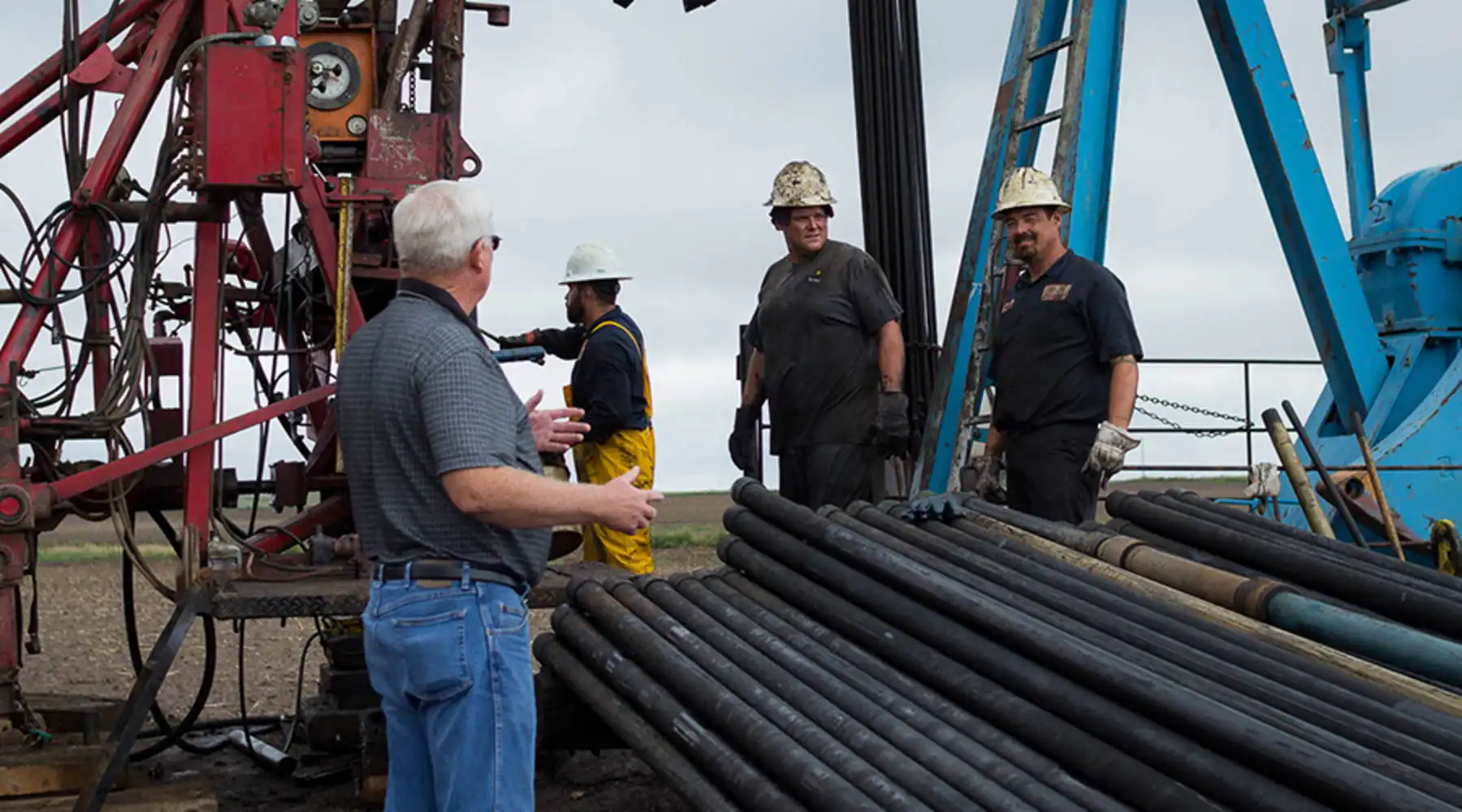
    Low oil prices hit the state's mostly small producers hard. As a barrel of oil goes up, the industry is hopeful profits will start flowing again.

  • Oct 8, 2018

    Two Americans won the Nobel Prize in economics. Who are they?

    by David Brancaccio, Daniel Shin and Redmond Carolipio
    Per Stroemberg, Goeran K Hansson and Per Krusell announce the laureates of the Nobel Prize in Economics during a press conference at The Royal Swedish Academy of Sciences in Stockholm on October 8, 2018. - The Nobel Prize for Economic sciences 2018 was awarded US economists Paul M Romer and William D Nordhaus. 
    HENRIK MONTGOMERY/AFP/Getty Images

    The work of William Nordhaus focused on climate change, while Paul Romer examined tech factors in calculating economic growth.

  • Young shoppers are giving the makeup industry a makeover
    Mario Tama/Getty Images

    With big chains like Sephora and Ulta on the move, department stores are playing catch up.

  • Yale economist William Nordhaus, along with New York University’s Paul Romer, received the Nobel Prize in economics Monday. We look at the consequences of putting Nordhaus’ research on the economic impact of climate change to policy. Then, Romer’s work connecting technological innovation to economic growth has been influential across the globe, but perhaps not as influential as he would like. Also on today’s show, we speak with Marketplace Tech host Molly Wood about Facebook’s newest gadget release amid users’ security concerns. And the U.S. Census Bureau needs to hire hundreds of thousands of workers to complete the 2020 census. But with a tight labor market, that may be a lot harder than it was back in 2010.

  • Dagne Dover Co-Founders, Jessy Dover, Deepa Gandhi (center) and Melissa Mash at their New York headquarters.
    Courtesy of Dagne Dover

    "We are confident we'll be able to weather it, but it definitely has us making some tough decisions," said Deepa Gandhi, co-founder and COO of Dagne Dover, a handbag and accessories company.

  • The trade deficit jumped 9.6 percent to $48.5 billion last month, driven by a surge of imported mobile phones, oil and foreign cars.
    Justin Sullivan/Getty Images

    (Markets Edition) Has the world gotten complacent about the price of oil? According to the Wall Street Journal, bets on oil surpassing $100 per barrel have doubled in the last month. Julia Coronado at Macropolicy Perspectives has more. Then, we examine the growing trade deficit as seen through goods and services … specifically services. Also, across two hemispheres, officials are cutting back on how much financial cushion banks set aside for emergencies. We look at how this can factor into economic stimulus and financial market risk with Nancy Marshall-Genzer. Today’s show is sponsored by Michigan Economic Development Corporation (planetm.com), Navy Federal Credit Union (navyfederal.org) and PayPal (paypal.com). (10/08/2018)

  • A dairy cow on a farm in Caledon, Canada.
    Cole Burston/Getty Images

    Some Canadians worry NAFTA replacement will flood markets with lower-cost U.S. milk and cheese.

  • Ordained minister and Elvis Tribute Artist Reverend Wyn Roberts  officiating and performing on the roof of the Porthcawl Grand Pavilion.
    Courtesy of Mimisse Beard

    An annual festival for Elvis impersonators is a moneymaker for Porthcawl, Wales.

  • Protesters rally about climate change outside the White House in Washington, DC on November 29, 2015. 
    YURI GRIPAS/AFP/Getty Images

    (U.S. Edition) Scientists with the International Panel on Climate Change have gathered in South Korea and released a report Monday outlining the steps that need to be taken to stop global temperatures from rising by more than 1.5 degrees Celsius. It also says that We also examine how goods and services indicate a growing trade deficit, but services alone offer different insights. Then, we talk to Karen Petrou, a familiar voice on the show, and one that now wants to call attention to a financial innovation designed to draw big money to help fight blindness. Today’s show is sponsored by Michigan Economic Development Corporation (planetm.com), Navy Federal Credit Union (navyfederal.org) and PayPal (paypal.com). (10/08/2018)

  • People watch Brazilian presidential candidate for the Worky Party (PT) Fernando Haddad's press conference on TV at a bar of Lapa neighborhood, in Rio de Janeiro, Brazil, October 07, 2018. - Polarizing far-right politician Jair Bolsonaro looked to be the big winner of a first-round presidential election in Brazil on Sunday, according to mostly complete results -- but a final victory in a run-off to be held in three weeks is far from assured.
    FERNANDO SOUZA/AFP/Getty Images

    (Global Edition) From the BBC World Service …  A new report on climate change says 2.5 percent of global GDP needs to be spent each year for two decades to stop global warming. We hear from the co-chair of the International Panel on Climate Change. Then, Brazil’s voters handed a previously fringe candidate nearly half the vote in Sunday’s election, but he’ll face a runoff election  at the end of the month after failing to secure a majority. What does that mean for a country facing continued economic hardship? After, we’ll take you to Sulewesi in Indonesia where schoolchildren are heading back to the classroom after a catastrophic tsunami and earthquake killed at least 1,900 people. Today’s show is sponsored by Michigan Economic Development Corporation (planetm.com), Navy Federal Credit Union (navyfederal.org) and PayPal (paypal.com). (10/08/2018)

  • A reel tender helps install fiber-optic cable onto telephone poles in Louisville, Colorado, in 2001.
    Michael Smith/Getty Images

    Almost 40 percent of rural America, or about 23 million people, don’t have access to broadband internet or reliable mobile service. Long term, this digital divide is a huge economic problem. Companies need high-skilled workers, and people without decent internet access can’t find those jobs or get the training they might need to do them. Now the Fed is trying convince businesses that the digital divide is their problem, too, Jeremy Hegle told us. He’s a senior community development adviser for the Federal Reserve Bank of Kansas City. Its territory includes Kansas, Nebraska, Wyoming, Colorado, parts of Missouri and northern New Mexico. (10/08/18)

  • A reel tender helps install fiber-optic cable onto telephone poles in Louisville, Colorado, in 2001.
    Michael Smith/Getty Images

    Almost 40 percent of rural America doesn't have access to broadband internet or reliable mobile service.