Marketplace®
Every story is an economic story
  • Fiat Chrysler is recalling 4.8 million vehicles in the U.S. because of the risk that drivers may not be able to turn off the cruise control. The recall includes 15 Jeep, Dodge, Chrysler and Ram models from six model years. Fiat Chrysler says it can fix the issue with a software update. Earlier this week […]

  • May 26, 2018

    Instagram entrepreneurs are searching vintage racks for you

    by Kai Ryssdal and Josie Fan
    Instagram entrepreneurs are searching vintage racks for you
    ERIC BARADAT/AFP/Getty Images

    A new breed of shoppers are snapping up vintage clothing on the social media platform.

  • Ancestry.com can reveal DNA information from 289 regions in Europe and four regions in Asia.
    courtesy Michael Kim

    More people of color need to take DNA tests to improve the results, but people of color won't buy kits if they don't provide worthwhile information.

  • We look into how bias trainings work and how companies measure their effectiveness.

  • Starbucks stores around the country are closing down next week for unconscious bias training. The programs are getting more and more popular, but is their impact measurable? Plus, we cap of our week covering graduates in the recession with the story of one man who regrets going to college. But first, a look back at the week’s business and financial news.

  • May 25, 2018

    Where did the word "economics" come from?

    by Ellen Millender
    This epinetron, a form of pottery that women wore on their thighs during their preparation of wool, highlights a key feature of Athenian women's economic contribution to their households: textile production.
    Courtesy of Ellen Millender

    The five things you didn't know about ancient economics.

  • Why you’re bogged down with terms-of-service emails, how to tell if bias trainings work, plus the surprising ancient origins of the word “economics.” And why hunting feral hogs has become an aerial activity in Texas.

  • Coulter Airfield in Bryan, Texas is about an hour and a half northwest of Houston. It's where the helicopter hog hunting business, Helibacon, is based.
    Andy Uhler/Marketplace

    Feral hogs cause millions of dollars in damage to crops across the U.S.

  • Emauri Singletary in front of the logo he designed for his Virtual Enterprise company, which sells disposable cups that change color to detect date rape drugs.
    Shaheen Ainpour/Marketplace

    Students form "companies" and test drive careers as part of the Virtual Enterprise program.

  • As the summer travel season gets under way, a look at hotel security. One of the largest providers of hotel locking systems recently updated a bug in its software after a security company found its key cards, used in 7 million hotel rooms, could be hacked. What are options for hotels trying to ensure that […]

  • Developing countries are trying to lure investors back
    Chris McGrath/Getty Images

    (Markets Edition) Investment money has been flowing out of several developing countries, including Turkey and Argentina. On today’s show, we’ll chat with Chris Low — chief economist with FTN Financial — about why selling’s been heavy and how these countries are trying to handle the issue. Next, we’ll look at whether the National Flood Insurance Program is doing after last year’s hurricane season, and whether it has the funds to tackle another Harvey. Plus: We explore how hotels are dealing with security in the digital age, as data breaches become more of a threat.  

  • A view of the State Capitol in Jackson, Mississippi.
    BRENDAN SMIALOWSKI/AFP/Getty Images

    What Mississippi's historically black colleges and universities teach us about centuries-old inequities

  • Despite Texas’ reputation as a business-friendly state, a survey last year from the Federal Reserve Bank of Dallas found access to capital is the number one concern for women and non-white small business owners in the state.   There’s a good reason for that. According to the U.S. Minority Business Development Agency, people of color are three […]

  • Last year was the most damaging hurricane season on record, with storms Harvey, Irma and Maria wreaking hundreds of millions of dollars of destruction across the United States. The 2018 season gets underway in June, and some forecasters are predicting a normal to above-normal season. What does that mean for getting flood insurance coverage? Click […]

  • A sign reading 'Arizona, The Grand Canyon State Welcomes You' along the state's New Mexico border on Interstate 10
    Wing-Chi Poon via Wikipedia

    (U.S. Edition) You may have noticed lots of emails from websites or apps saying they’ve changed their terms of service or privacy policies. They’re all trying to comply with a new European law known as the General Data Protection Regulation, which takes effect today. We’ll look at how the law benefits consumers and what it means for companies’ business models. Afterwards, we’ll discuss Arizona’s efforts to attract more tourists from Central Mexico. (05/25/2018)  

  • Foreign visitors to the United States are on the decline after six straight years of growth, according to the Department of Commerce. Mexico is the U.S.’s second main source of visitors, but the number of travelers from there to the U.S. fell about 7.5 percent in September 2017, compared to the previous year. Some states are […]

  • A new era in online privacy begins
    Sean Gallup/Getty Images

    (Global Editon) From the BBC World Service … Russian oligarch Oleg Deripaska has stepped down as a director of Russia’s biggest aluminium producer in a bid to lift crippling U.S. sanctions. We discuss the man, his motives and what’s next for Russia’s billionaires. Then, new European regulation will transform the way businesses deal with their customers. We look at the challenges and benefits as Europe gets tough on privacy. Next, India’s sporting prowess hit the headlines after athletes won a record 66 medals at the Commonwealth Games. Many of them were won by women. But as the BBC’s Rahul Tandon explains, a level playing field remains in the distance. Finally, what’s the link between 400 handbags and Malaysia’s former prime minister? (05/25/2018)

  • May 25, 2018

    What’s the risk when a company is identified with its CEO?

    by Molly Wood and Stephanie Hughes
    Tesla Motors CEO Elon Musk at the Tesla Design Studio in Hawthorne, California, in 2015.
    DAVID MCNEW/AFP/Getty Images

    Celebrity founders can be a burden sometimes.

  • Tesla Motors CEO Elon Musk at the Tesla Design Studio in Hawthorne, California, in 2015.
    DAVID MCNEW/AFP/Getty Images

    Tech founders and CEOs often become household names. Mark Zuckerberg, Jeff Bezos and Steve Jobs are just a few examples. So is Elon Musk, who cut off an analyst for asking boring supply chain questions in a recent earnings call. This week, Musk attacked the media overall after news reports about problems with Tesla production, factory injuries and crashes related to its Autopilot technology. Some analysts said investors should be worried about Musk’s behavior and its impact on the company. Marketplace Tech host Molly Wood spoke with Paul Kedrosky of SK Ventures about how the founder’s role has changed since the first dot-com boom. (5/25/2018)    

  • The European flag flatters in the wind past the headquarters of the European Central Bank in Frankfurt am Main, Germany.
    Ralph Orlowski/Getty Images

    Yeah, we'll tell you what the acronym stands for.

  • President Donald Trump has ordered the Commerce Department to look into whether higher tariffs are needed on imports of cars, trucks and automotive parts, in the interest of national security. But how do you decide if a vehicle is imported? These days, some American brands are made overseas. Foreign carmakers have factories in the U.S. […]

  • The Washington Capitals are headed to the Stanley Cup finals and the team’s fans have sponsors to help them catch a ride home. Because Washington, D.C.’s metro system usually shuts down at 11:30 pm, some interesting public-private partnerships are evolving to fund late night service. Click the audio player above to hear the full story. 

  • May 25, 2018

    It’s a GDPaRty!

    It’s a GDPaRty!

    “We’ve updated our terms of service.”

    Download
  • Workers assemble Porsche Cayenne and Panamera cars at an assembly line at the Porsche factory in 2012 in Leipzig, Germany.
    Sean Gallup/Getty Images

    What makes an imported car an imported car? It's complicated.

  • May 24, 2018

    The quest for the next great red pigment

    by Kai Ryssdal and Josie Fan
    Paint pigments at Colart factory in Le Mans, France, in 2013.
    JEAN-FRANCOIS MONIER/AFP/Getty Images

    A safe and durable pigment in the right shade could be worth nearly a billion dollars a year.

  • The Trump administration announced it would investigate possible tariffs on auto imports on national security grounds. But, how exactly is the auto industry connected to national security? We sent Marketplace’s Sabri Ben-Achour on a hunt for answers. And while we’re on the subject, we talked to a sales manager at a German auto parts company with a U.S. factory about what the Trump administration’s investigation into possible auto import tariffs could mean for his business. Also on today’s show: The story of one scientist’s search for a new red pigment that could be worth a billion dollars. 

  • The best advice for college students unlucky enough to graduate into a recession: Be flexible
    Christopher Furlong/ Getty Images

    While studies suggest recession graduates tend to fall behind their nonrecession peers in terms of salary and don’t catch up for 10 to 20 years, there are ways to catch up more quickly and make up the gap.

  • May 24, 2018

    The pot lobby hits Capitol Hill

    by Nancy Marshall-Genzer
    Cannabis business owners went to Washington, D.C., to lobby this week for legalizing marijuana and easing banking and tax laws.
    Nancy Marshall-Genzer/Marketplace

    A couple hundred business owners push for the federal legalization of marijuana so their companies can grow.

  • McDonald’s plastic straws might one day be a thing of the past
    CHANDAN KHANNA/AFP/Getty Images

    (Markets Edition) The Trump team is looking into penalties on imported cars and trucks, which may be an attempt to target Mexico since they’re one of our largest exporters. We’ll explore why this might hurt hurt the auto industry, particularly in areas like the Midwest, and how the U.S. is pushing Mexico to create alliances with the European Union. Afterwards, we’ll discuss how Michigan State University is handling its $500 million settlement with victims of convicted sports medicine doctor Larry Nassar, Plus: We look at a proposal being considered at McDonald’s that would eliminate their plastic straws. (05/24/2018)

  • May 24, 2018

    Inventory shortage driving existing home sales market

    by Nancy Marshall-Genzer

    There’s a shortage of existing homes for sale in some parts of the country and prices are going up steadily. Part of the problem is that people aren’t moving and there aren’t enough new homes being built.   Click the audio player above to hear the full story. 

  • Plastic straws could be banned in New York City if a new bill introduced in the city council this week goes through. Similar restrictions are being considered for California. Several cities there have already banned the plastic straw. And both the U.K. and Taiwan have announced plans to eliminate them. Today McDonald’s shareholders are scheduled […]

  • How the Mayo Clinic wants to improve our health care system
    CRIAG LASSIG/AFP/Getty Images

    (U.S. Edition) The Trump administration is looking into applying import tariffs on foreign cars and trucks, which may go as high as 25 percent for vehicles from Toyota or Honda. But could this actually help the American auto industry? We’ll look at the unintended consequences of a decision like this. Afterwards, we’ll talk to the CEO of the Mayo Clinic, Dr. John Noseworthy, about his goal of reducing the amount of wasteful visits you have to take to the doctor’s. (05/24/2018)

  • Moody’s downgraded Michigan State University’s credit rating earlier this month. Above, the Spartan statue at MSU.
    Jim McIsaac/Getty Images

    A $500 million settlement with victims of convicted doctor Larry Nassar is just the start.

  • Can Colombia turn peace into economic prosperity?
    RAUL ARBOLEDA/AFP/Getty Images

    (Global Edition) From the BBC World Service … Shares in European and Asian car companies have stalled after the U.S. raised the prospect of applying import tariffs on national security grounds. We ask economist David Bailey what’s next. Then, Deutsche Bank is cutting 7,000 jobs as the bank’s new chief executive vows to go back to basics. And, after half a century of civil war, Colombians are still struggling with the country’s slow economic recovery. We explore the region’s issues ahead of this weekend’s election. Finally, what has a Japanese household goods company done to upset the Chinese government? (05/24/2018).

  • May 24, 2018

    The Mayo Clinic wants you to see the doctor less

    by David Brancaccio and Ali Oshinskie
    The Mayo Clinic wants you to see the doctor less
    CRIAG LASSIG/AFP/Getty Images

    CEO and president Dr. John Noseworthy says a lot of waste comes from not getting the answer right the first time.

  • May 24, 2018

    The problem of governments using facial recognition software

    by Molly Wood, Stephanie Hughes and Shaheen Ainpour
    A display shows a facial recognition system for law enforcement during the NVIDIA GPU Technology Conference in Washington, D.C., in 2017.
    SAUL LOEB/AFP/Getty Images

    "They know both the question and the answer," one CEO says.

  • A display shows a facial recognition system for law enforcement during the NVIDIA GPU Technology Conference in Washington, D.C., in 2017.
    SAUL LOEB/AFP/Getty Images

    This week, Amazon is facing backlash for selling facial recognition tools to police. The American Civil Liberties Union says the company was powering a government surveillance infrastructure. Amazon says its services can be used for anything from finding lost children to spotting celebrities at the royal wedding to tracking down criminals. Facial recognition is an increasingly powerful tool that’s raising a lot of privacy concerns. And not every company thinks these tools should be sold to every buyer. Marketplace Tech host Molly Wood spoke to Brian Brackeen, CEO of the facial recognition software company Kairos, about why his company’s code of ethics prohibits selling services to governments. (05/24/2018)

  • The Turkish lira has been on a wild slide recently. It dropped 5 percent against the dollar Wednesday, its biggest loss in nearly a decade, before the country’s Central Bank stepped in with an emergency meeting that reversed some of those losses. The bank finally did something it’d been resisting. Something its president had been […]

  • More patients who are terminally ill will potentially have access to experimental drugs under a measure passed by the House last night. President Donald Trump is expected to sign the so-called “right-to-try” bill. Forty states have already passed similar legislation. Currently, terminal patients not covered by those laws have only two options for getting unapproved […]

  • May 23, 2018

    Qualcomm CEO isn’t too worried about our trade war with China

    by Kai Ryssdal and Bridget Bodnar
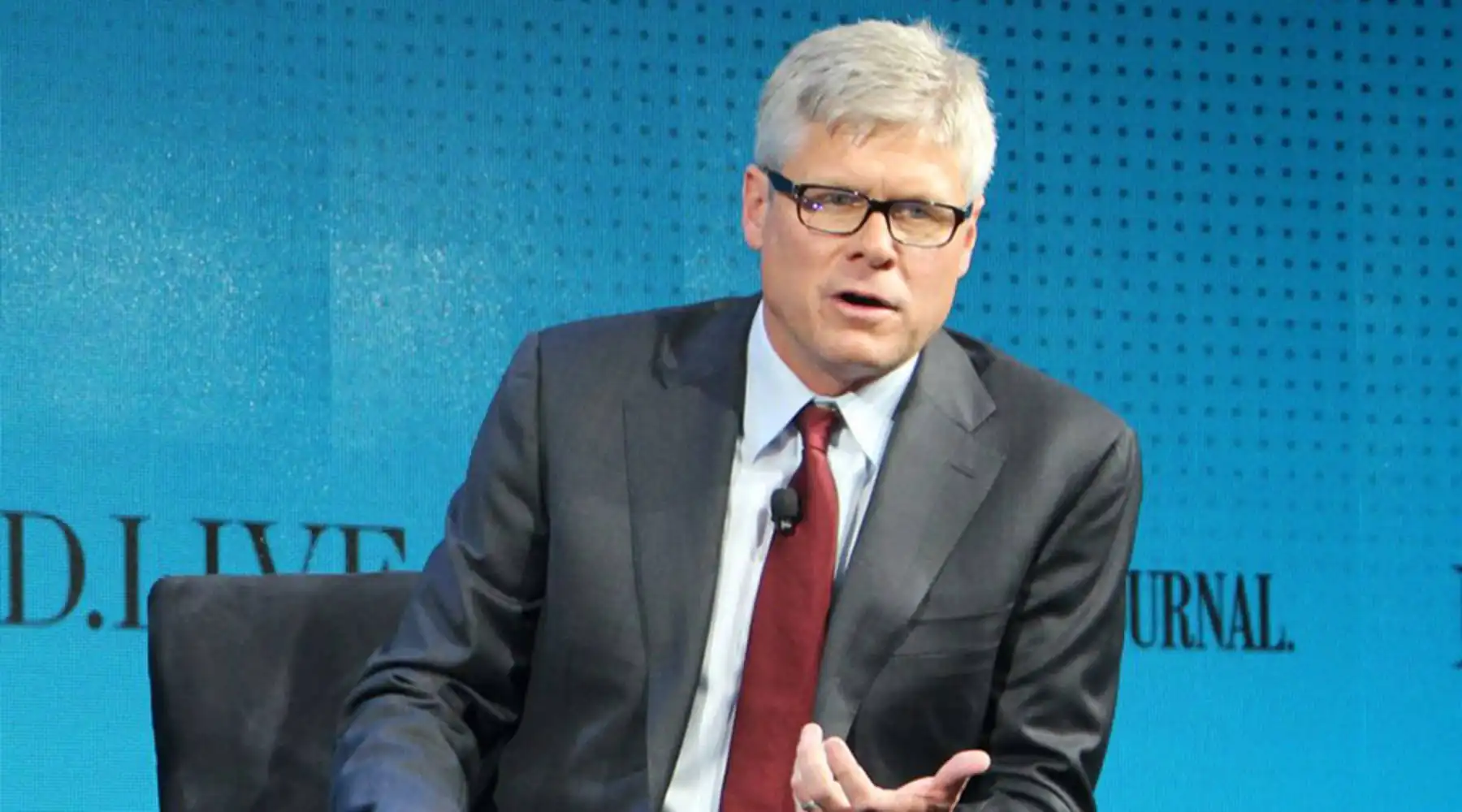
    “There is a responsibility to make sure that the technologies that you create have the proper technology built in so that it's used appropriately,” Qualcomm CEO Steven Mollenkopf says. Above, he speaks at a tech conference in October.
    GLENN CHAPMAN/AFP/Getty Images

    "We actually feel like we have a seat at the table on both sides of the trade dispute," Steven Mollenkopf says.

  • Probably not, to be honest. They have a lot of student loans. But hey, the job market is good! Well, sort of. Listen to the story, we’ll explain. Today we talk to Qualcomm CEO Steven Mollenkopf about why he isn’t worried about China and why 5G is exciting. Also on today’s show, a couple hundred business people lit up Capitol Hill this week for the Cannabis Industry Association’s Lobby Days. They asked the lawmakers to either legalize marijuana or at least ease up on some banking and tax rules so they can do business like everybody else. (05/23/2018)

  • May 23, 2018

    How good is it for the class of 2018?

    by Mitchell Hartman
    Saul Rivera has just graduated from the University of Texas-Austin with a degree in astronomy. He's been applying for entry-level jobs at planetariums, museums and observatories around the country.
    Mitchell Hartman/Marketplace

    This year's college graduates enter one of the best job markets since the Great Recession.

  • “There is a responsibility to make sure that the technologies that you create have the proper technology built in so that it's used appropriately,” Qualcomm CEO Steven Mollenkopf says. Above, he speaks at a tech conference in October.
    GLENN CHAPMAN/AFP/Getty Images

    How the company used to planning 10 years into the future is handling the hour by hour changes in tech manufacturing and trade policy.

    Download
  • May 23, 2018

    J.C. Penney’s CEO jumps to Lowe’s

    by Andy Uhler

    Marvin Ellison, who is credited with a mixed turnaround at J.C. Penney, is heading back to the home improvement space. Before joining J.C. Penney, he spent 12 years at Lowe’s biggest competitor, Home Depot. Click the audio player above to hear the full story. 

  • May 23, 2018

    Why most of our jobs are meaningless

    by Vivienne Nunis
    Why most of our jobs are meaningless
    Oli Scarff/Getty Images

    A new book called "Bullshit Jobs: A Theory," looks at how a lot of the work that people do is meaningless.

  • Laborers work at the construction site of Saudi Aramco's Al-Khurais central oil processing facility in the Saudi Arabian desert.
    MARWAN NAAMANI/AFP/Getty Images

    (Markets Edition) One Wall Street heavyweight is predicting that crude oil could top $100 a barrel, which could spark a recession here in the U.S. On today’s show, we’ll get some perspective about the trajectory of oil prices from Susan Schmidt, senior portfolio manager at Westwood Holdings Group. Afterwards, we’ll discuss how drivers will pay the most expensive Memorial Day gas prices since 2014, and then we’ll look at the Environmental Protection Agency’s plans to pursue new regulations on a class of chemicals used to make things like Teflon and Scotchgard. (05/23/2018)

  • Only the biggest financial institutions will be required to hold extra cash reserves to counterbalance risk.

  • May 23, 2018

    Gas prices head north before holiday

    by Andy Uhler

    We’re only a few days away from Memorial Day weekend, one of the busiest travel days of the year. More than 41 million Americans are expected to hit the road. You know where you’re going? Are you going to drive there? Well, you might be paying more for that gasoline than you have in a […]

  • Environmental groups, dubious of the move by the agency say new regulations could take years to come.

  • What kind of job market are college students graduating into?
    Mary Turner/Getty Images

    (U.S. Edition) President Trump is expected to sign a bill that would ease some of the rules imposed on banks after the last financial crisis. But will this be that radical of a decision? Erik Gordon, a professor at the University of Michigan, explains why he thinks most of us aren’t going to notice the changes. Afterwards, we’ll look at how the job market is for recent college graduates as part of our “Divided Decade” series, which examines how America has changed since the financial crisis. (05/23/2018)

  • How much are we earning almost a decade after the Great Recession?
    Spencer Platt / Getty Images

    A look at the state of wages for young college graduates and how wages break down by education level.

  • Even in a robust economy, all college graduates are not equal
    Mary Turner/Getty Images

    It's a good job market for the class of 2018, but not everyone with a B.A. is likely to fare well economically.

  • May 23, 2018

    Should a machine have to tell you if it’s a machine?

    by Molly Wood and Stephanie Hughes
    The Shadow Robot company's dextrous hand robot holds an Apple at the Streetwise Robots event held at the Science Museum's Dana Centre on May 6, 2008 in London, England. 
    Jeff J Mitchell/Getty Images

    Can a robot make a dinner reservation? Google is working on it, but should they?

  • The Shadow Robot company's dextrous hand robot holds an Apple at the Streetwise Robots event held at the Science Museum's Dana Centre on May 6, 2008 in London, England. 
    Jeff J Mitchell/Getty Images

    This week Microsoft bought a company called Semantic Machines which works on something called “conversational AI” – that means computers that sound and respond like humans. Mostly it’s for digital assistants like Microsoft’s Cortana, Apple’s Siri, Amazon’s Alexa or Bixby on Samsung. Last month Google showed off its own smart assistant called Duplex, which can call a hair salon to make an appointment on your behalf, or a restaurant to make a reservation. But it’s clear from what Google showed off that the people on the other end of these calls don’t know they’re talking to a computer — leading some to ask what the rights of the human on the other end of line are. Marketplace Tech host Molly Wood spoke with Jacob Metcalf of the Data & Society Research Institute about the business case for making computers sound so real. (05/23/2018)

  • We spend alot of time a work. What's the best way to navigate relationships in the workplace?
    Oli Scarff/Getty Images

    (Global Edition) From the BBC World Service … At least 11 people have been killed after police fired at protesters calling for the closure of a copper smelter in southern India. The deaths raise questions over the future of the plant in Tamil Nadu, which is owned by mining giant Vedanta. The BBC’s Sameer Hashmi explains the environmental and business implications. Then, Angela Merkel visits China this week against a backdrop of trade tensions and uncertainty over the future of a nuclear deal with Iran. We ask Jan Weidenfeld at the Mercator Institute for China Studies in Berlin about what to expect. And, being paid to do nothing at work might sound like a dream, but as one expert explains, it can also bring shame and depression. (05/23/2018).  

  • US President Barack Obama (C) stands with ASU President Michael Crow (L) during the Arizona State University commencement ceremony at Sun Devil Stadium in Tempe, Arizona May 13, 2009.  
    AFP PHOTO/Jim Watson

    Public funding for higher ed may be getting scarcer, but a college degree is only getting more valuable.

  • This is how we like to picture the hacker who contacted us. Either in a ballpit or running a butter-churn. Less scary that way.
    Sean Gallup/Getty Images

    We started following a spam email, and it took us somewhere weirder and scarier than we ever expected.

    Download
  • The House is set to take up a bill today dialing back parts of Dodd-Frank, the law regulating banks after the financial crisis. The bill, which has already passed the Senate, would change mortgage lending requirements and raise the threshold at which banks will be officially big, or “systemically important financial institutions,” if you want to get technical. We’ll start off by telling you everything you need to know, and we’ll also look at the rotating deck chairs on the American CEO cruise ship. Plus, speaking of the recession, we’ll look at what it’s like to graduate into one. The damage can last well after the economy recovers, and some young professionals never catch back up. (05/22/2018)

  • The House of Representatives Tuesday approved a bill that dials back some of the banking regulations put in place after the financial crisis. Among other things, it raises the threshold for which banks are considered to be big (“systemically important financial institutions,” as they are called). It also reduces some reporting requirements for banks regarding […]

  • Expectations run into reality after graduating during the recession
    Dan Kitwood/Getty Images

    Financial damage can be lasting, several studies suggest.

  • The Catholic Church is concerned about the world’s financial system
    Lisa Maree Williams/Getty Images

    (Markets Edition) The House is set to vote on a bill that would free dozens of small and mid-sized banks from regulations placed after the financial crisis. We’ll dive into some of the rules that could go away. Afterwards, we’ll discuss the Supreme Court’s latest workplace ruling: employees who agreed to settle disputes with their boss through individual arbitration can’t later join big class-action lawsuits. Plus: A look at what the Pope has to say about financial markets and its participants. (05/22/2018)    

  • U.S. household debt hit a record $13.2 trillion in the first quarter of 2018, but Americans seem to be handling it okay. Consumer debt levels are stabilizing, according to The New York Fed’s quarterly household debt report. But rising interest rates seem to be squeezing household finances in at least one area: credit card debt. […]

  • May 22, 2018

    China’s "professional" pick-up artists

    by Jennifer Pak
    Dating expert Cheng Zhen talks with three of his fans who caught the bullet train just to see him.
    Jennifer Pak/Marketplace

    Services promise men can get women even if they're not tall, handsome or rich.

  • Graduates from 2008 and 2018 met at the University of Central Arkansas for a roundtable discussion.
    Bryan Clifton/Marketplace

    (U.S. Edition) European politicians will get to grill Facebook CEO later today about the Cambridge Analytica scandal, over a month after U.S. Congress members questioned him. We’ll discuss what to expect from his upcoming testimony. Afterwards, we’ll talk about why a rising share of American households seem to be having trouble paying off their credit card debt. Plus: As part of our “Divided Decade” series, which looks at the financial crisis 10 years later, we asked 2008 college grads to share lessons about the job market with class of 2018. (05/22/2018)
  • May 22, 2018

    The Supreme Court just made class-action lawsuits harder to join

    by David Brancaccio and Ali Oshinskie
    The Supreme Court just made class-action lawsuits harder to join
    Zach Gibson/Getty Images

    We spoke with one of the co-founders of SCOTUSblog about the implications of the ruling.

  • Coming soon to Sony's PlayStation Vue,  ESPN, ABC and Disney Channels.
    (Spencer Platt/Getty Images)

    (Global Edition) From the BBC World Service … Oil prices are heading back toward $80 a barrel thanks to a range of geopolitical and supply factors. In India, fuel costs are a sensitive issue. We’ll explain how the country’s oil minister is working on a way to pressure prices there. Then, Sony announced a big shift in strategy, but will it pay off? It’s set to become the world’s no. 1 music publisher now that it’s purchased EMI Music Publishing for $2.3 billion. Afterward, while the economic decline in Zimbabwe has been well documented, the impact on the country’s industry hasn’t. We’ll take you to the African nation, and hear from workers who have been impacted. (05/22/2018)

  • May 22, 2018

    Why privacy settings can’t keep your location secret

    by Molly Wood, Stephanie Hughes and Shaheen Ainpour
    Why privacy settings can’t keep your location secret
    Justin Sullivan/Getty Images

    Phone carriers can sell location data to third parties, and you can't opt out.

  • May 22, 2018

    The class of 2008 offers advice to the class of 2018

    by Scott Tong and Hayley Hershman
    Graduates from 2008 and 2018 met at the University of Central Arkansas for a roundtable discussion.
    Bryan Clifton/Marketplace

    Graduates from the Great Recession at the University of Arkansas returned to give advice to this year's graduates.

  • Why privacy settings can’t keep your location secret
    Justin Sullivan/Getty Images

    Phone carriers collect a minute-by-minute record of everywhere you go. If you use GPS on your phone, that may be obvious. But carriers are also selling that information to companies that don’t do much to keep it secure. One of those companies, Securus Technologies, was hacked this month. Securus gets its information from a company called LocationSmart. On Friday, security researcher Brian Krebs reported a bug on LocationSmart’s website that would make it possible to track any phone on the four major carriers using only a phone number. Krebs spoke with Marketplace Tech host Molly Wood about the dangers this kind of data can pose in the wrong hands. (05/22/2018)

  • The United States Supreme Court handed down several rulings today — one in particular has a pretty good chance of affecting you. The court said today that employers can indeed force employees into individual arbitration to resolve workplace disputes. Specifically, arbitration agreements that bar employees from participating in class-action lawsuits. Workers’ rights group say the […]

  • May 22, 2018

    For scrap brokers, the trade war is not "on hold"

    by Kai Ryssdal and Maria Hollenhorst
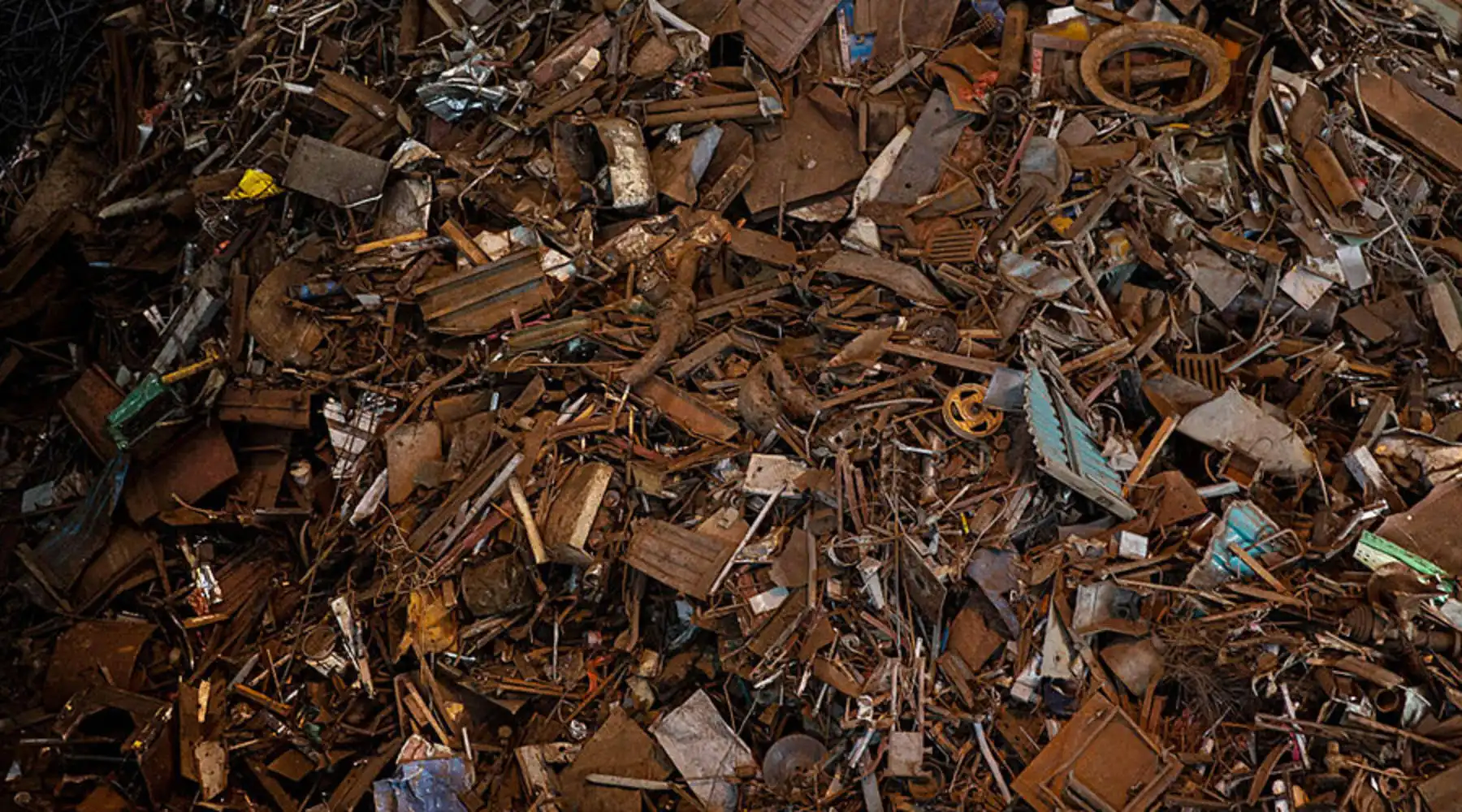
    Scrap metal to be used in steel production is piled at the Zhong Tian (Zenith) Steel Group Corp. in 2016 in Changzhou, Jiangsu.
    Kevin Frayer/Getty Images

    One broker says he'll have to do "a lot of juggling" if China won' import U.S. scrap.

  • The flag of the People's Republic of China hangs next to an American flag in New York.
    Chris Hondros/Getty Images

    The Foreign Investment Risk Review Modernization Act is likely headed for a vote in the Senate Banking Committee on Tuesday.

  • May 22, 2018

    How Theranos, a Silicon Valley star, came tumbling down

    by Kai Ryssdal and Bridget Bodnar
    Elizabeth Holmes, founder and CEO of Theranos, speaks at the Clinton Global Initiative's closing session on September 29, 2015 in New York City.
    Andrew Burton/Getty Images

    Wall Street Journal investigative reporter John Carreyrou discovered that all wasn’t as it appeared at Theranos, the biotech company founded by Elizabeth Holmes.

  • After two days of trade talks in Washington and a high-level trip earlier this month, China and the United States have announced a truce in the simmering trade war, with U.S.-imposed tariffs on hold. We’ll spend some time a the top of today’s show recapping how we got here, what’s settled and what’s not. Then: We’ll talk to the reporter who wrote the book on the failed blood-testing startup Theranos and the “scorched earth” tactics it took to cover up fraud. Plus: What you need to know about the new Supreme Court ruling that says employers can keep workers in private arbitration and out of class-action lawsuits.

  • The reason the United States is pausing tariffs on China for now appears to be a promise from China that it will increase its imports from the U.S. — primarily agricultural and energy products. That would presumably help — at least in the short term — to reduce the U.S. trade deficit with China, which […]

  • May 21, 2018

    People of color: Have you used an ancestry product?

    by Marketplace Weekend Staff
    People of color: Have you used an ancestry product?
    courtesy 23andMe

    If you've used a service like 23andMe, Ancestry or National Geographic's ancestry test, we want to hear from you.

  • Uber is changing how it deals with sexual harassment and assault claims. Employees, drivers and riders will no longer be forced into arbitration, a process that critics say often favors corporations. The decision comes after survivors of alleged assault by Uber drivers pushed the company to let their cases go to court. Rival Lyft quickly […]

  • So, you’re graduating into a financial crisis …
    Photo by Christopher Furlong/Getty Images

    Here's what notable speakers had to say to the classes of 2009 and 2010, when job opportunities were scarce.

  • The U.K.’s National Health Service provides free, universal healthcare to U.K. residents. In the past, the NHS would provide treatment without knowing patients’ residency status, but new rules put in place in October mean that clinics now must ask for identity documents up front to determine whether patients must pay for care. The most recent U.K. Department […]

  • Kroger say it’s closing about 40 stores nationwide. Many are in neighborhoods the U.S. Department of Agriculture already calls food deserts. That’s a place where food is hard to get, either because it’s too  far away or it’s not affordable. Kroger says the closed stores weren’t making money. As communities that used to depend on […]

  • May 21, 2018

    Here’s why U.S. small businesses don’t export more

    by Nancy Marshall-Genzer

    The Commerce Department kicks off World Trade Week on Monday. It’s honoring 43 U.S. exporters. Thirty-three of them are small- or mid-sized businesses. But as it turns out, small businesses could be exporting more. Click the audio player above to hear the full story. 

  • Playing good cop/bad cop with China
    Lintao Zhang/Getty Images

    (U.S. Edition) So are the U.S. tariffs on China on or off? That’ll depend on which Trump administration official you listen to. Treasury Secretary Steven Mnuchin says a trade war between the U.S. and China is now “on hold,” but the country’s top trade official, Robert Lighthizer, says Chinese tariffs remain an important tool. On today’s show, we’ll look at what came out of the latest round of trade talks between the two countries. Afterwards, we’ll discuss how changes in Britain’s universal health care policies will affect undocumented, pregnant women. The British National Health Service now has to ask for identity papers when someone comes in for care. (05/21/2018)

  • What’s next for Venezuela’s crippled economy after a Maduro win
    JUAN BARRETO/AFP/Getty Images

    (Global Edition) From the BBC World Service …Venezuela’s socialist economy is under massive strain with inflation running at 13,000 percent. So how will the country’s leader deal with these challenges, along with increasing pressure from other nations to fix its problems? Then, religion is a big business in Zimbabwe – we’ll take you there to meet a prophet who knows just how lucrative preaching can be. (05/21/2018)

  • May 21, 2018

    Is Uber disrupting itself with its bike share investment?

    by Molly Wood, Stephanie Hughes and Shaheen Ainpour
    A Jump bike sits in front of Uber headquarters in San Francisco. Uber acquired Jump for an undisclosed amount of money.
    Justin Sullivan/Getty Images

    It recently bought Jump, giving users an alternative to cars.

  • A Jump bike sits in front of Uber headquarters in San Francisco. Uber acquired Jump for an undisclosed amount of money.
    Justin Sullivan/Getty Images

    Uber is looking beyond cars in its bid to control the future of mobility. The company recently acquired electric bike share startup Jump. That means in select cities, Uber users can opt for a bike instead of a driver to help them get around. But the uptick in two-wheeled transportation sharing has some worried about pedestrian safety on sidewalks, not to mention the implications surrounding data privacy. Marketplace Tech host Molly Wood met up with Jump CEO Ryan Rzepecki on a busy street in San Francisco to get a handle on the ride share ecosystem. (05/21/2018)