Marketplace®
Every story is an economic story
  • May 12, 2018

    The swamp and the draining thereof

    by Kai Ryssdal
    Michael Cohen, President Donald Trump's personal attorney.
    Yana Paskova/Getty Images

    We break down what Michael Cohen's consulting for AT&T means. Plus, we talk NAFTA ahead of Paul Ryan's May 17 deadline.

  • May 17. Next Thursday. That’s the deadline House Speaker Paul Ryan has set for negotiators to notify Congress that they’ve reached an agreement on a revised version of the North American Free Trade Agreement if they want to get it through Congress by the end of the year. A May deadline for a December vote […]

  • The popular Boca Chica Beach sits at the end of Texas Highway 4, less than a half mile from SpaceX’s launch facility.
    Paul Flahaive/Texas Public Radio

    Some fear noise and explosions. Others see a boost to tourism and a spot on the world map.

  • President Donald Trump on Friday took the wraps off his long-awaited plan for cutting drug prices. In a speech, the president announced measures to increase competition and pricing transparency as ways to drive down costs, which have been spiraling. He did not put forward any plan to use the huge buying power of the federal […]

  • May 12, 2018

    Navigating technology in the public sector

    by Lizzie O'Leary
    Navigating technology in the public sector
    Mark Wilson/Getty Images

    How are government programs such as SNAP affected by old and new ways of doing business?

  • A new study examines the role of race in the home rental economy

  • California Chrome, ridden by Victor Espinoza, crosses the finish line to win the 140th Kentucky Derby at Churchill Downs on May 3, 2014, in Louisville, Kentucky.
    Dylan Buell/Getty Images

    Illegal betting is a $150 billion industry. Will it be taxed?

  • May 12, 2018

    U.S. scrap exports to China just came to a screeching halt

    by Kai Ryssdal and Maria Hollenhorst
    A Chinese laborer sorts plastic bottles for recycling in Dong Xiao Kou village on the outskirts of Beijing.
    FRED DUFOUR/AFP/Getty Images

    One expert says the monthlong suspension could impact an estimated $400 million worth of trade.

  • With competing content providers like Netflix and Amazon Prime offering binge-worthy content on demand with less commercial interruption, television networks are starting to rethink their advertising model as they roll out “upfronts” presentations next week, where they showcase the fall lineup for advertisers. What’s the right commercials-to-content ratio for network TV these days? And if they […]

  • The Koch sisters say they intend their store to be a feminist, sex-positive space. "I just love seeing romance readers realize that we have built this for them. It is our love letter to them, and to this genre," says Bea Koch.
    Paulina Velasco/Marketplace

    For every 100 books published by leading romance publishers in 2017, only 6.2 were written by people of color.

  • We packed a lot in the first half of this episode: What President Donald Trump said (and didn’t say) in his speech on drug prices today, the looming NAFTA deadline, the swamp and the draining thereof, it’s all here. Then: The upfronts are next week. That’s the big to-do the major TV networks have every year to show off their new lineups, and, as with most recent years, streaming makes it an uphill battle. Plus, why $5.6 billion worth of U.S. scrap exports to China just came to a screeching halt.

  • The Koch sisters say they intend their store to be a feminist, sex-positive space. "I just love seeing romance readers realize that we have built this for them. It is our love letter to them, and to this genre," says Bea Koch.
    Paulina Velasco/Marketplace

    Why is it harder for the government to innovate than for the private sector? Plus, the U.S. Supreme Court is about to rule on sports betting. And those in the romance novel industry are pushing for more diverse representation in traditional publishing.

  • A for sale sign is seen on a single family home January 30, 2008 in Vallejo, California.
    Paul Morris/Getty Images

    Home equity loans have become harder to obtain since the financial crisis.

  • President Donald Trump has promised to roll back fuel efficiency rules, but there is still no firm decision. Click the audio player above to hear the full story. 

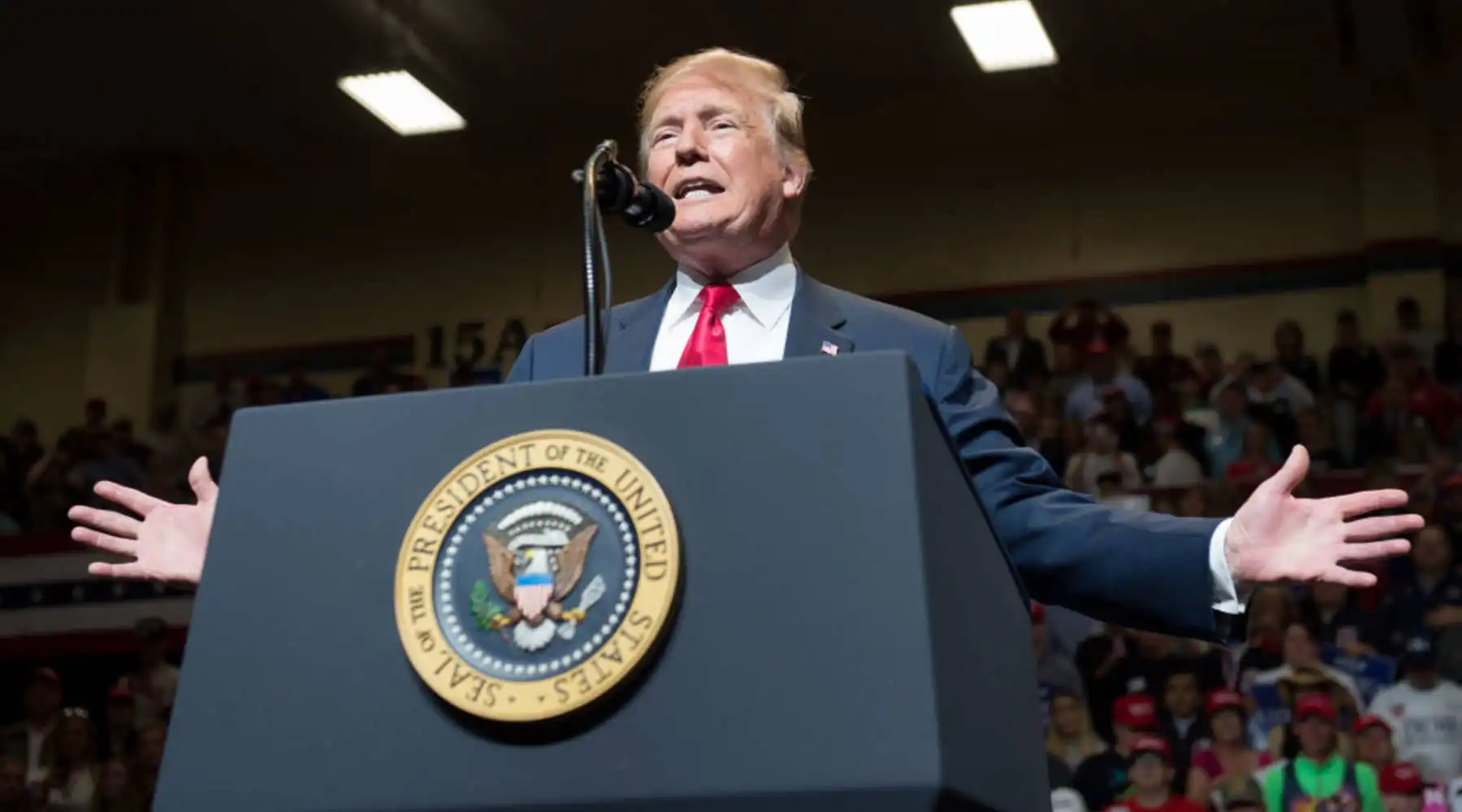
  • President Donald Trump speaks during a rally in Elkhart, Indiana, on Thursday night.
    SAUL LOEB/AFP/Getty Images

    During an Indiana rally on Thursday night, President Donald Trump and Vice President Mike Pence praised their administration's work, including the 2017 tax bill.

  • 05/11/2018: How many miles per gallon does the White House get?
    Sean Gallup/Getty Images

    (Markets Edition) Top auto industry executives meet with President Trump at the White House today. Trump’s EPA and the Department of Transportation have drafted a proposal outlining eight different options for rolling back fuel efficiency standards in new cars.  Car buyers like fuel efficient cars, though….so automakers want to see regulations relax, but, not too much. And on the two year anniversary of the Brexit announcement, there still doesn’t seem to be a consensus building about how borders will function. Plus, we take a look at a bipartisan bill aimed at prison reform that advanced in the House this week and would require that the Federal Bureau of Prisons place some 180-thousand inmates closer to home.

  • 05/11/2018: Borrowing against your house is back
    Tim Boyle/Getty Images News

    (U.S. Edition) Home equity lines of credit have hit a 9-year high…but are we forgetting the risks? Plus, we run down the Presidents’ promise to lower drug companies’ prices for consumers, a currency exchange network the U.S. government believes is funneling cash to Iran’s revolutionary guard and a scam a little closer to home you may want to pay attention to: a robo-call known as neighbor-spoofing. The FCC just fined a Florida man $120 million for making nearly 100 million such calls.

  • Iranian Mohammad Reza Saberi sits by a mound of pistachios in his shop in Rafsanjan, Iran. 
    BEHROUZ MEHRI/AFP/Getty Images

    The pistachio industry has zigzaged along with our diplomatic relationship with Iran.

  • Flags of the European Union member states in Brussels, Belgium. 
    Dan Kitwood/Getty Images

    (Global Edition) From the BBC World Service… the European Commission’s president appealed for unity in Europe at a time when a number of governments are questioning the appeal of the bloc. Then, UNICEF, the UN children’s agency, is warning that 400 thousand children in central Africa are dying of starvation. What’s contributing to the crisis and how can the agency help those in need? Afterwards, it’s 30 years since former British prime minister Margaret Thatcher laid the stone for a new financial center in London. We’ll take you there and explore how global firms are helping the area evolve. 

  • 05/11/2018: Is the cryptocurrency boom a threat to Silicon Valley’s elite?
    Dan Kitwood/Getty Images

    Cryptocurrency may have its disruptive eye cast toward venture capital. The initial coin offering is a type of crypto-crowdfunding that startups can use to raise cash quickly without kissing the Silicon Valley ring. But do ICOs really have the potential to replace venture capital for startups? Marketplace Tech host Molly Wood spoke with Yuliya Chernova, who covers venture capital for the Wall Street Journal, about the pros and cons of ICOs. 

  • May 11, 2018

    ICOs raised billions last year. Should Silicon Valley be worried?

    by Molly Wood, Stephanie Hughes and Shaheen Ainpour
    ICOs raised billions last year. Should Silicon Valley be worried?
    ROSLAN RAHMAN/AFP/Getty Images

    Initial coin offerings let startups skip venture capital funding, but will they last?

  • Mick Mulvaney, the acting director of the Consumer Financial Protection Bureau, has been on a mission to dismantle and reshape the agency. In his latest move, he’s targeting the student loan division. He’s folding that office, which is meant to protect student loan borrowers from any wrongdoing, into a different unit focused on consumer education. […]

  • They call North Korea the Hermit Kingdom for a reason: It’s not exactly easy to see what’s happening with its economy. Here are a few things we know. Or think we know. Click the audio player above to hear the full story. 

  • May 11, 2018

    3 things to look for in Trump’s speech on drug pricing

    by Dan Gorenstein and Janet Nguyen
    3 things to look for in Trump’s speech on drug pricing
    Joe Raedle/Getty Images

    The president is set to talk about his plans to lower the price of drugs on Friday.

  • President Donald Trump and Japanese Prime Minister Shinzo Abe walk to their joint press conference at the White House last year.
    Chip Somodevilla/Getty Images

    Tokyo expected treatment equal to that of the European Union, one expert says.

  • Row houses on Seventh Street in downtown Allentown are now mostly home to first- and second-generation immigrants.
    Tommy Andres/Marketplace

    What one couple found after a 100,000-mile multiyear trip crisscrossing America's small towns.

  • President Donald Trump announced today he’s going to meet Kim Jong Un on June 12 in Singapore. There are a whole lot of variables in this equation: What’s motivating who to do what? One thing that might have driven North Korea to the negotiating table is its economy. It had been growing amid sanctions, but now? We’ll talk about it. Then, another economic story couched in a geopolitical one: Now that the U.S. is re-imposing sanctions on Iran, what will the EU do? Plus: Some 2,300 families fled Puerto Rico after Hurricane Maria. Now, the program giving them temporary shelter on the mainland is coming to an end. So where will they all go? 

  • Jenny Martinez hugs her son, William Martinez, as they talk to the media about her trip from El Salvador and her need for asylum in America because of domestic violence as they join with protesters in front of the United States Citizenship and Immigration Services building on May 19, 2017 in Miramar, Florida.
    Joe Raedle/Getty Images

    (Markets Edition) A new report from the World Bank finds that not many people are in much of the developing world, where upward mobility has stalled for the past 30 years. The U.S. isn’t doing all that well either — they fall smack in the middle of a list of 140 countries when it comes to the possibility of climbing the socioeconomic ladder. In slightly more positive economic news, low unemployment has us in a tight labor market. But it may also be some of the job searching technology that is prolonging the time it makes companies to make hires. Plus, we go to Leavenworth, Kansas, where we explore why many active duty members of the U.S. military don’t have enough food to feed their families.  

  • Activists rally in support of Puerto Rican families displaced by Hurricane Maria on the steps of New York City Hall in April.
    Drew Angerer/Getty Images

    Puerto Ricans in FEMA's transitional shelter program worry about where they'll go when the program ends June 30.

  • Nearly a quarter of children in schools on military bases are eligible for free meals, according to 2015 data from the Department of Defense, the latest available. That’s just one indication that many active duty members of the U.S. military don’t have enough food to feed their families. That is in part because of the […]

  • It’s the dream of many parents that their children will grow up to have more prosperous lives than they did. A new report from the World Bank finds that’s not happening in much of the developing world, where upward mobility has stalled for the past 30 years.  Click the audio player above to hear the […]

  • 05/10/2018: Tabasco celebrates 150 years of hot-sauce success
    OMAR TORRES/AFP/Getty Images

    (Global Edition) From the BBC World Service… It’s not often a near $5 billion fine is a good thing, but for the Royal Bank of Scotland, it marks the start of what will be the biggest privatization  in UK history. Then, a rate rise at its May meeting was almost certain for the Bank of England just a couple of weeks ago. But today, the British central bank will almost certainly keep rates on hold. We’ll tell you why. Afterwards,  Tabasco is celebrating its 150th birthday this year. The CEO of the family-run Louisiana brand shares the secret sauce to success.  

  • May 10, 2018

    Vimeo pivots from a place for watching, to tools for making video

    by Molly Wood, Stephanie Hughes and Shaheen Ainpour
    Vimeo pivots from a place for watching, to tools for making video
    Monica Schipper/Getty Images for Chicken + Egg Pictures

    The online-video pioneer is shifting its focus to creators amid competition from YouTube and Netflix.

  • 05/10/2018: Vimeo pivots from a place for watching, to tools for making video
    Monica Schipper/Getty Images for Chicken + Egg Pictures

    The online video company Vimeo is switching gears, moving from being a place to watch videos … to being a place that helps people create videos. The company’s new CEO, Anjali Sud, was the person behind the pivot. She speaks with Marketplace Tech host Molly Wood about Vimeo’s change in focus.

  • May 10, 2018

    How artificial intelligence can be applied to the real world

    by Janet Nguyen and David Brancaccio
    How artificial intelligence can be applied to the real world
    CARSTEN KOALL/AFP/Getty Images

    AI can generate trillions for companies, according to a new report from the McKinsey Global Institute.

  • 05/10/2018: AI can generate trillions for companies
    CARSTEN KOALL/AFP/Getty Images

    (U.S. Edition) On the occasion of a White House summit for companies on how they can best utilize artificial intelligence, we talk about how regulations lag behind AI, which has broken out of the realm of science fiction and is being used in smartphones, self driving cars and drones. We also talk to the director of the McKinsey Global Institute, which released a new report on the real and practical uses of AI for businesses trying to understand information and supply chains. Plus, China’s fourth-largest cell phone brand has halted most of their operations less than a month after the U.S. Commerce Department banned American companies from supplying them parts like microchips, which they rely on. Is it an indicator of a new cold war between the U.S. and China?

  • With the end of the U.S. involvement in the Iran nuclear deal comes the return of U.S. sanctions. Those sanctions can affect companies in other parts of the world, because the U.S. can punish foreign companies that do deals with Iran if those companies also conduct business in the U.S. This, to put it mildly, […]

  • An “Artificial Intelligence for American Industry” summit is being hosted at the White House today. Executives from Amazon, Facebook, Ford and IBM will be there. One big topic on the agenda? Government regulation. Turns out the federal government hasn’t written any regulations just for artificial intelligence.  Click the audio player above to hear the full story. 

  • The news coming out of Facebook this week is maybe a bit friendlier than it has been: The company announced some leadership shuffles yesterday, along with a new department focused on blockchain technology. We’ll kick off today’s show with everything you need to know. Plus, we’re still talking all things trade, exploring the effects of new Iranian sanctions and a new bill to give companies a break on tariffs on imported goods. Then: Would you subscribe to a car the way you would subscribe to Netflix? Some brands are offering monthly payments that cover the car, insurance and maintenance.

  • The Walt Disney Company Chairman and CEO Robert Iger, who we talked with in 2007.
    Chip Somodevilla/Getty Images

    Bob Iger was less than two years into his role as CEO of Disney when he talked to host Kai Ryssdal back in 2007. For the first time, hear their extended conversation on everything from buying Pixar, experimenting with streaming, and why Iger really wanted to work with George Lucas.

    Download
  • Canvas is a subscription service that lets drivers rent Ford and Lincoln vehicles by the month. 
    Photo courtesy of Ford

    What do BMW, Cadillac, Ford, Lincoln, Mercedes, Porsche and Volvo have in common? They're all offering car subscriptions that let drivers rent vehicles by the month for a flat fee that includes maintenance and insurance.

  • The California Energy Commission is expected to vote today on a proposal that would make the state the first in the country to require new homes be built with solar panels. The proposal, which is expected to pass, would go into effect in 2020 and apply to most new residential buildings of up to three stories. […]

  • May 9, 2018

    Senate Democrats seek vote to restore net neutrality

    by Nancy Marshall-Genzer

    A group of senators — mostly Democrats — plans to file a petition Wednesday to force a Senate vote on restoring net neutrality, the Obama-era rule that said all internet traffic must be treated equally. The Federal Communications Commission repealed the rule late last year.  Click the audio player above to hear the full story. 

  • Iranians burn an image of US President Donald Trump during an anti-US demonstration outside the former US embassy headquarters in the capital Tehran on May 9, 2018.
    ATTA KENARE/AFP/Getty Images

    (Markets Edition) Now that the U.S. is out, it’s up to other global forces to make the nuclear agreement survive. We discuss that possibility, and also take a look at the impact the sanctions could have on the markets. Plus, the California Energy Commission is set to vote on a proposal to require solar panels on new single family homes. The construction costs are steep, but could be outweighed by the amount the solar panels could save in utilities costs.

  • 05/09/2018: Energy companies profit when oil prices soar…but what else?
    Chip Somodevilla/Getty Images

    (U.S. Edition) European countries including Russia say they’re still in the nuclear agreement, and the U.S. Treasury has given companies 90 or 180 days to wind down business with Iran. This affects banking, finance, commodities, shipping, insurance and, of course, oil exports. But the markets are doing okay so far, meaning maybe everyone’s getting used to President Trump’s fractious moves being smoothed over later by more reasonable decisions. And in other news, we bring you the findings of a venture capitalist who visited schools in all 50 states and has a lot to say about standardized testing and the way we treat teachers. 

  • Instructor Blanca Claudio (C) teaches a history lesson in Spanish in a Dual Language Academy class at Franklin High School in Los Angeles, California, on May 25, 2017. 
    ROBYN BECK/AFP/Getty Images

    Ted Dintersmith argues that these tests are more about rote memorization.

  • German Foreign Minister Heiko Maas leaves after giving a statement on May 9, 2018 in Berlin after US President Donald Trump pulled the United States out of a landmark deal curbing Iran's nuclear program and reimposed crippling sanctions, defying European pleas and prompting international outcry. 
    ODD ANDERSEN/AFP/Getty Images

    In Germany, officials are confident that the European leaders will broker a deal that avoids U.S. punishment.

  • German Foreign Minister Heiko Maas gives a statement on May 9, 2018 in Berlin after US President Donald Trump pulled the United States out of a landmark deal curbing Iran's nuclear program and reimposed crippling sanctions, defying European pleas and prompting international outcry.
    ODD ANDERSEN/AFP/Getty Images

    (Global Edition) From the BBC World Service… As the US exits the Iran nuclear deal, European nations hope to stick with it. But what’s the feeling from business leaders on this side of the world, and how are they weighing the risks of potentially losing access to the world’s biggest economy? Then, Argentina is looking for a deal with the International Monetary Fund to help stabilize a plunge in its currency and high inflation. But how will the IMF respond after a meeting with the country today? Afterwards, we explore the root of the problem forcing Madagascar vanilla prices higher. 

  • Federal Communications Commission Commissioner Mignon Clyburn uses a megaphone to address demonstrators outside of the 31st Annual Chairman's Dinner to show their support for net neutrality on December 7, 2017. The protesters gathered in opposition to FCC Chairman Ajit Pai's plans to scrap Obama-era net neutrality protections.
    Chip Somodevilla/Getty Images

    Mignon Clyburn says she can be a more effective consumer advocate outside of the agency.

  • May 9, 2018

    The Source Code: Mignon Clyburn

    by Molly Wood and Stephanie Hughes
    Federal Communication Commission Commissioner Mignon Clyburn addresses protesters outside the Federal Communication Commission building to rally against the end of net neutrality rules December 14, 2017 in Washington, DC.
    Chip Somodevilla/Getty Images

    A retiring FCC commissioner on how politics and technology have both gotten a little out of hand.

  • 05/09/2018: When a government agency meets politics, what happens to tech?
    Chip Somodevilla/Getty Images

    Mignon Clyburn has been a commissioner on the Federal Communications Commission for nine years — which is forever if you think of how technology has changed in that period.  During her tenure, she’s been a staunch advocate for consumers, backing net neutrality rules and an expansion of the Lifeline Program. But some of the policies she backed have since been reversed. Commissioner Clyburn spoke with Marketplace Tech host Molly Wood about her tenure at the FCC — and the partisan nature of the agency. 

  • May 9, 2018

    My Economy: Leaving the big city life behind

    by Marketplace Staff
    Matt Schewel traded a job in Washington, D.C., interviewing senators and congressman for work in the family furniture business. 
    Saul Loeb/AFP/Getty Images

    One former journalist left the newsroom for the family business. The reason? A lower cost of living.

  • Iran agreed to a slew of limits on its nuclear program three years ago in exchange for lifting decades of international sanctions from the United States and five other countries. The year after the deal went into place, Iran’s real GDP grew by 12.5 percent. Growth has certainly fallen off since then, and there were protests in Iran this winter over economic inequality. Now that President Donald Trump has withdrawn from the deal and threatened new sanctions, what happens to U.S. companies doing business there? And businesses of other countries in the deal? That’s where we’re starting today. Then, we’ll examine the story of New York Attorney General Eric Schneiderman, who positioned himself as an ally of #MeToo before stepping down today amid allegations of abuse. Plus, the Parkland shooting has renewed demand for a whole range of products and services to make schools safer from gun violence. We’ll take a look at that market.

  • President Donald Trump signs a document reinstating sanctions against Iran after announcing the U.S. withdrawal from the Iran Nuclear deal, in the Diplomatic Reception Room at the White House in Washington, D.C., on May 8, 2018. 
    SAUL LOEB/AFP/Getty Images

    Trump’s decision means Iran’s government must now decide whether to follow the U.S. and withdraw or try to salvage what’s left of the deal.

  • One of Glen Weyl's ideas for fixing inequality in this country? Rethinking one person, one vote.
    J.D. Pooley/Getty Images

    Maybe the problem is that our “free” markets are *not free enough.*

    Download
  • Two of the big media companies are reporting earnings this week. The Walt Disney Co. reports after the close of the bell today and 21st Century Fox’s earnings report is expected tomorrow . That means plenty of talk about Disney’s recent box office successes and its pending acquisition of Fox’s entertainment assets. But next week, […]

  • Former U.S. Republican presidential candidate Donald Trump speaks at a rally organized by the Tea Party Patriots against the Iran nuclear deal in front of the Capitol in Washington, DC, on September 9, 2015.
    NICHOLAS KAMM/AFP/Getty Images

    (Markets Edition) With a decision on the way from Washington about the Iran deal, we look at what’s next depending on if President Trump makes a hard or soft exit. If he decides to punish everyone who does business with Iran, it could be a very tricky situation for U.S. allies to negotiate. Plus, there’s a liquidity problem in real financial markets, including some bonds. We talk with a chief economist at investment adviser Payden & Rygel about why this is occurring.

  • This glass and steel vestibule at the entrance to Norton Middle School in Norton, Ohio is designed to prevent people from entering the building without authorization.
    Adrian Ma for Marketplace

    As schools look for safety solutions, the security industry grows.

  • Traders at the Chicago Board Options Exchange.
    Joshua Lott/Getty Images

    Is there a liquidity problem in some real financial markets?

  • Prescription drug wholesalers, who sit between pharmaceutical manufacturers and health care providers, are expected to get an earful about their role in the opioid epidemic Tuesday. Executives from five companies will testify in front of the House Energy and Commerce Committee. Click the above audio player to hear the full story.

  • Kentucky Poor People's Campaign: A National Call for Moral Revival.
    Courtesy of Steve Pavey

    Low-wage workers have jobs, but many still live in poverty. So thousands of them, along with clergy and activists, are working to try and change that.

  • British Foreign Secretary Boris Johnson (L) and U.S. Secretary of State Mike Pompeo arrive for a photo opportunity ahead of meetings at the U.S. State Department's Harry S. Truman headquarters building May 7, 2018 in Washington, DC. Johnson is in the United States in part to argue for the Trump Administration to continue to be a party to the 2015 Iran nuclear deal.
    Chip Somodevilla/Getty Images

    (Global Edition) From the BBC World Service… President Trump today will decide the future of America’s participation in the Iran nuclear deal. Ahead of any announcement, Iran’s president has this morning vowed to continue the country’s domestic development in the face of any possible new sanctions from the US. So if the US exits the pact, how will Iran respond? Then, exporting charcoal from Somalia has been banned since 2012, but the illegal trade and use of the product has led to ongoing environmental destruction in the region and exacerbated a humanitarian crisis. We’ll talk to a UN representative taking part in meetings this week in  Mogadishu to try and stop the illegal practice and money flowing through militant groups. Afterwards, a new study says global tourism accounts for 8% of carbon emissions – three times higher than previous estimates. So, how can you be a more economically-sensitive traveller?

  • A man reads a full-page advertisement, taken out by Mark Zuckerberg, the chairman and chief executive officer of Facebook to apologize for the large-scale leak of personal data from the social network on March 25, 2018.
    OLI SCARFF/AFP/Getty Images

    The data we generate daily could be seen as labor. "I do think people are starting to wake up to this," one researcher says.

  • 05/08/2018: Trump to propose cutting $15 billion in federal spending
    Mark Wilson/Getty Images

    (U.S. Edition) We’ve got some big decisions coming out of the White House today: President Trump will announce whether he’s pulling out of the Iran nuclear deal and he’ll be sending up a “rescission” package asking Congress to claw back their spending. We discuss what programs this money will come from. Plus, executives from five prescription drug wholesalers will testify in front of the House Energy and Commerce Committee today regarding pill dumping, or how 30 million doses of opioids ended up in a rural Kentucky county with 27,000 inhabitants over 6 years. And we go to Memphis, where a revival of Dr. Martin Luther King, Jr.’s Poor People’s Campaign is kicking off to bring attention to low-wage workers under the poverty line.

  • 05/08/2018: Should we be getting paid for providing data?
    OLI SCARFF/AFP/Getty Images

    Facebook may be considering an ad-free subscription model that would let you pay to opt out of sharing your habits and personal information. But that raises the question: Why should we pay Facebook not to take our information instead of the other way around? A new book, called “Radical Markets: Uprooting Capitalism and Democracy for a Just Society,” suggests that all of us are working as unpaid data laborers. Glen Weyl, one of the authors and a principal researcher at Microsoft, spoke about the topic with Marketplace’s Molly Wood.  

  • The National Urban League’s State of Black America report is an equality index that looks at gains and losses across sectors, including economics, health and education. According to the report, if we looked at equality with whites in the United States as a whole pie, black Americans are missing nearly a quarter of it, achieving […]

  • A fireboat welcomes the Godspeed, a 17th-century replica ship, as it sails past the Statue of Liberty in New York Harbor in 2006.
    Photo by Mario Tama/Getty Images

    Someone had to pay for American colonies. Enter the British merchants adventurers.

  • May 8, 2018

    Say bye-bye to the short-lived fiduciary rule

    by Marielle Segarra

    The Department of Labor’s fiduciary rule was set to disappear Monday. The short-lived, Obama-era regulation required the professionals who give you advice on your retirement investments to put your best interest first. A federal court overturned the fiduciary rule in March, and was expected to make it official today. Also Monday the Department of Labor put out a […]

  • Jess Phoenix and husband Carlos canvass a Lancaster neighborhood ahead of the June 5 primary.
    Jed Kim/Marketplace

    Many candidates fear the Trump administration is actively stifling science.

  • Or maybe it’s a grande deal? Whatever. It’s a very big deal. The Swiss food brand is paying more than $7 billion for the rights to distribute Starbucks coffee. We’ll talk about what Nestle does (or doesn’t) get for its money. Probably it means no one will write “Nestly” on their cups again. Then: Tomorrow is the first big primary day for elections in the country and a preview of what may come in November’s midterms. A lot of the people running this year are political newcomers from the science community. They worry that the people in power now are discounting science when they make policy, but they’re learning that running a lab and running a campaign are two very different things. Plus: Why fast food restaurants like McDonald’s, KFC and Taco Bell are experimenting with modern architecture and comfy furniture in their stores.

  • May 7, 2018

    Quiz: Can you guess how many calories are in a meal by looking at it?

    by Danielle Chiriguayo and Arjuna Soriano
    Quiz: Can you guess how many calories are in a meal by looking at it?
    Cate Gillon / Getty Images

    Restaurants and other food outlets with more than 20 locations have to publicly display calorie counts. Test your calorie count prediction talents with our quiz.

  • 05/07/2018: Is it worth the calories?
    David McNew/Getty Images

    (Markets Edition) Starting today, restaurants with more than 20 locations must post calorie counts, meaning we could see companies change up recipes and portion sizes to shave down those numbers. That’s what happened when New York started requiring them a decade ago. Plus, what the rising price of oil has to do with sanctions on Iran, industrial material costs and wage stagnation. And later today, we’ll hear the Federal Reserve’s tally of total consumer debt, which has us wondering… who cares?

  • The day's numbers are displayed after the closing bell of the Dow Industrial Average at the New York Stock Exchange on May 3, 2018 in New York.
    BRYAN R. SMITH/AFP/Getty Images

    An official recommendation was made to not put retirement plans at risk by investing in stocks that focus on environmental social governance, or ESG.

  • Starting today, fast food restaurants, grocery store chains, convenience stores and even movie theaters must start posting calorie counts. The law — which was a provision tucked into Obamacare — applies to food retailers with 20 locations or more. How will this affect businesses?    Click the audio player above to hear the full story. 

  • 05/07/2018: Is ethical investing unethical?
    Jeff Swensen/Getty Images

    (U.S. Edition) That’s what the Labor Department is suggesting with a new announcement that socially responsible investments could be a violation of a company’s fiduciary responsibility. In other words, considering values other than traditional measures like profits and losses when running a retirement plan is frowned-upon, though not outlawed. What does this mean for the future of “ethical” investing? We talk to Senior Economics contributor Chris Farrell to find out. Plus, the price of crude oil crossed above $70 per barrel today, the highest it’s been since 2014.

  • May 7, 2018

    Country roads pose a particular challenge for driverless cars

    by Amy Scott and Stephanie Hughes
    A biker passes a pilot model of the Uber self-driving car in 2016 in Pittsburgh, Pennsylvania.
    ANGELO MERENDINO/AFP/Getty Images

    How do we teach autonomous vehicles to navigate rural roads, where every bump hasn't been mapped?

  • 05/07/2018: Dealing with bumps in the road … literally
    Justin Sullivan/Getty Images

    Lots of companies are working on self-driving car technology, and whoever gets there first will be positioned to make billions. But as the recent fatal accident in Arizona involving an Uber autonomous vehicle made clear, the technology is still faulty. One of the things that needs to get a lot better is how cars take in and respond to the world around them. Part of that is learning how to navigate back roads, where every bump and pothole hasn’t been intricately mapped. MIT’s Daniela Rus has research out today to help solve the problem — she talks about it with Marketplace’s Amy Scott. 

  • 05/07/2018: Madagascar vanilla now more expensive than silver
    RIJASOLO/AFP/Getty Images

    (Global Edition) From the BBC World Service…Russian President Vladimir Putin, who’s been in power for 18 years, has been sworn in for another term. But it’s fuelling criticism he’s more like a czar than an elected leader. Then, as you brew your morning cup of Joe, sip on this: Starbucks and Nestle have agreed to a new $7 billion deal. We’ll tell you what it means for your daily coffee ritual. Afterwards, saffron has long been the world’s most expensive spice. But did you know Madagascar vanilla is now second on that list? We’ll explain what’s boosting the price, and how it’s likely to impact dessert lovers all over the world.