Marketplace®
Every story is an economic story
  • President Donald Trump looks on after delivering his speech to the World Economic Forum annual meeting today in Davos, Switzerland.
    FABRICE COFFRINI/AFP/Getty Images

    Plus: A rising GDP but a "weak" dollar?

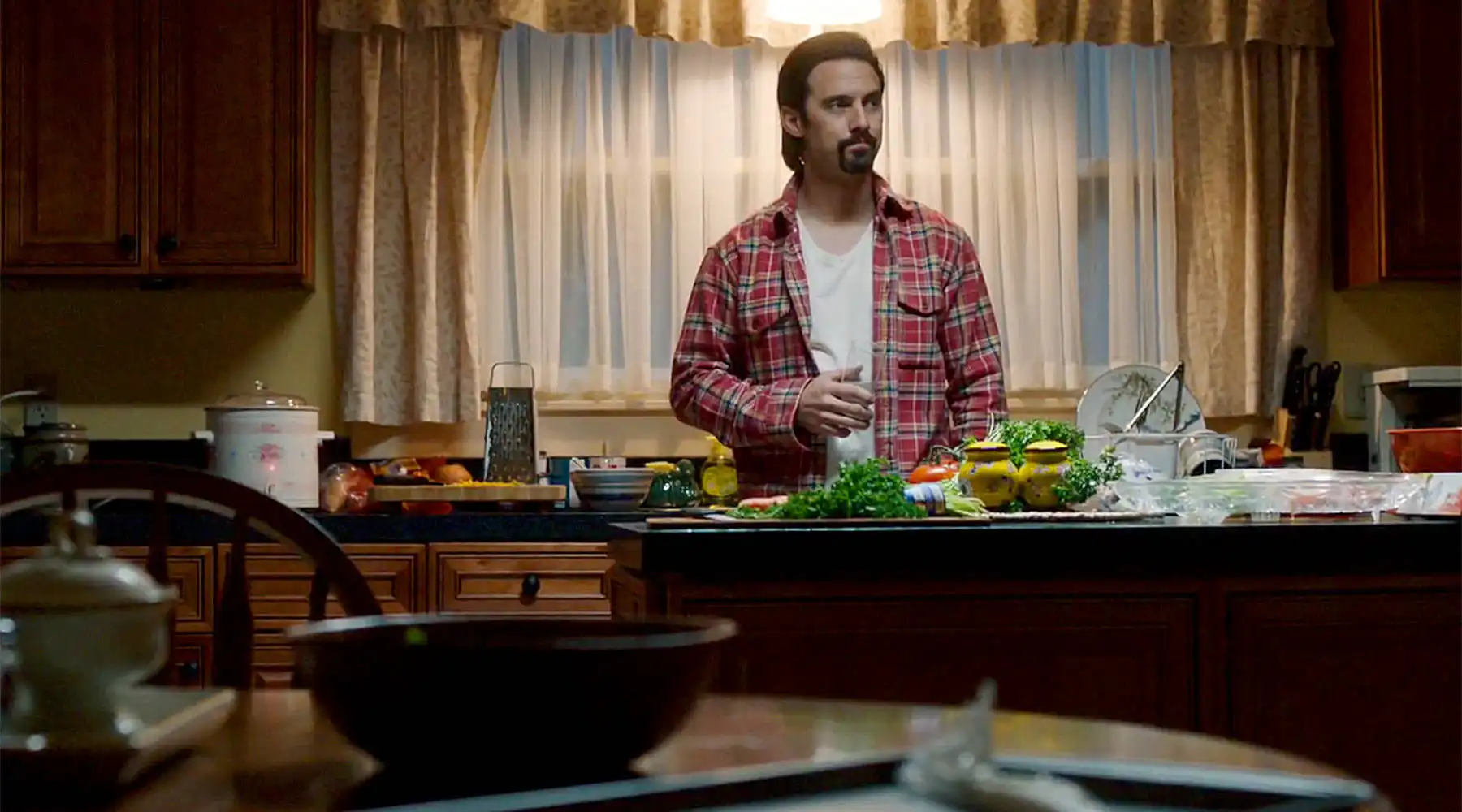
  • R.I.P.
    Courtesy: NBC

    #CrockPotIsInnocent, the company says.

  • There are lots of costs involved in getting a car: insurance, gas, the car itself. And for teens, there’s another cost: driver’s education. According to Kathi Valeii, a Pacific Standard Magazine contributor, this last cost is not insignificant; in Valeii’s home state of Michigan, the various fees that go into driver’s ed for teens can […]

  • This week, Montana and New York made moves to counter the federal repeal of net neutrality that the Federal Communications Commission enacted last month. And so far 21 states and the District of Columbia have sued to overturn the FCC decision. What will these legal battles look like? Click the audio player above to hear […]

  • Gross domestic product in the fourth quarter of 2017 rose 2.6 percent on an annualized basis, compared to 3.2 percent in the third quarter, according to the Bureau of Economic Analysis. The rate of economic growth for the 2017 calendar year was 2.3 percent, compared to 1.5 percent in 2016. Several components of GDP were particularly strong […]

  • Marketplace's Aaron Schrank reports.

  • This week in Baltimore, the school board approved a new plan to fund city schools based on poverty rates. Previously, funds were distributed based on test scores, with schools getting extra money for advanced students as well as for low-performing students who might need more services. The new plan aims to address the ways that […]

  • Jan 27, 2018

    5 things you need to know about the Super Bowl economy

    by Marketplace Weekend Staff
    Head coach Pete Carroll of the Seattle Seahawks holds the Vince Lombardi Trophy after his team won Super Bowl XLVIII at MetLife Stadium on February 2, 2014 in East Rutherford, New Jersey. 
    Elsa/Getty Images

    It's not always worth it for the host city.

  • A small group of protestors supporting net neutrality protest against a plan by Federal Communications Commission (FCC) head Ajit Pai, during a protest outside a Verizon store on December 7, 2017 in Los Angeles, California. 
    Robyn Beck/AFP/Getty Images

    The stage is getting set for a fight over net neutrality. The Federal Communications Commission rolled back the federal rule last month, clearing the way for internet service providers to throttle or favor content. But states have other ideas. The governors of Montana and New York have signed executive orders to mandate net neutrality under their jurisdictions, and 21 states and the District of Columbia have sued to overturn the decision by FCC Chairman Ajit Pai. Plus, we’ll talk about the GDP numbers, the latest on California’s mudslides and Trump’s speech in Davos, Switzerland.

  • At Cold Springs Basin in Montecito, private contractors clear boulders with excavators and dump trucks. Under FEMA's orders, the Army Corps of Engineers is on a mission to clear 11 impacted basins by the end of February.
    Aaron Schrank/Marketplace

    Clearing 11 basins filled with dirt and rock will take until the end of February at least, federal officials say.

  • President Donald Trump looks on during a discussion after delivering his speech during the World Economic Forum.
    FABRICE COFFRINI/AFP/Getty Images

    Proposed immigration policy, a discussion about funding schools based on poverty rates and a visit to Montecito after fires and mudslides. Plus, new stories from Marketplace’s Divided Decade coverage.

  • President Trump delivers a speech during an annual meeting at the World Economic Forum (WEF). 
    NICHOLAS KAMM/AFP/Getty Images

    The numbers he brought up don’t paint the whole picture.

  • 01/26/2018: Is economic growth actually all that good?
    Stephen Morton/Getty Images

    (Markets Edition) Trump delivered a 15-minute speech at the World Economic Forum, where he touted the performance of the U.S. economy. Figures for global economic growth have also been looking good, but BBC reporter Joe Miller joins us to explain why things may not be as positive as they seem. Afterwards, we’ll hear from Chris Low, chief economist at FTN Financial, about the weakening dollar, and then look at the state of the manufacturing industry. 

  • A worker carries lumber as he builds a new home in Petaluma, California. 
    Justin Sullivan/Getty Images

    Growth was spurred by a surge in consumer spending, but the gain was slightly below economists’ 2.8 percent forecast.

  • Soda selection at one grocery store in Miami.
    Wilson Sayre/ for Marketplace

    Could Topo Chico, Ironbeer and Jarritos help save Coke and Pepsi?

  • Young immigrants and supporters walk holding signs during a rally in support of Deferred Action for Childhood Arrivals (DACA) in Los Angeles, California on Friday.
    FREDERIC J. BROWN/AFP/Getty Images

    (U.S. Edition) The White House has released a framework that would create a path to citizenship for people who arrived in the U.S. as undocumented immigrant children, but the plan comes with some caveats. We’ll talk about what those are, and the pushback this proposal is receiving from both Republicans and Democrats. Afterwards, we’ll discuss Apple’s foray into the smart speaker market through the release of its HomePod, which comes with a price tag of $349. Then to cap off today’s show, we’ll look at how some states are taking a cue from Germany’s apprenticeship model to fill manufacturing jobs.

  • Georgia Piedmont Technical College received funding to open a new Advanced Manufacturing Center in Covington. It includes five labs for training in machine tools, electronics, mechanics, automation and process control, as well as industrial wiring and motor controls.
    Tasnim Shamma/ for Marketplace

    Manufacturers are worried they will not have enough skilled workers in the future, so they have started to create apprenticeship programs to train high school students.

  • 01/26/2018: Auctioning players for the world’s richest cricket league
    Tom Shaw/Getty Images

    (Global Edition) From the BBC World Service…The British economy expanded more than expected in the last three months of 2016, but it’s experiencing a short-term Brexit drag, according to Bank of England governor Mark Carney. What can be done to combat it as trade negotiations continue this year? Then, Blockchain has made a big splash on Wall Street but it’s so much more than bitcoin. We went to the fourth annual Blockchain Week in London to find out how businesses are using the technology. Afterwards, more than $10 million will be spent at auction of more than a thousand top cricket players for the Indian Premier League. 

  • 01/26/2018: Can the crowd be trusted to find trustworthy news?
    JUSTIN TALLIS/AFP/Getty Images

    Facebook is asking its users what news sources they consider trustworthy. They’re asking two questions: Do you know this website, and how much do you trust it? On Marketplace Tech, our the two questions are: Will that yield useful information, and isn’t the crowd part of the problem? Molly Wood talks about it with Sarah Frier, a tech reporter for Bloomberg.

  • Law and Odor: a crime story about orchids, pig smell, refineries and you
    Joanna Neborsky/Marketplace

    There are people who argue there are just too many federal regulations with criminal consequences, that with thousands of potential criminal acts on the books, how can you know if you’re doing something wrong? And that argument has some very powerful forces behind it. In this episode, we look at the issue that’s come to be known as “overcriminalization,” and the debate about what’s a crime worth enforcing and what’s bureaucratic overreach.

    Download
  • Jan 26, 2018

    The craft beer industry may be a model for us all

    by Kai Ryssdal and Sean McHenry
    The number of breweries in the U.S. expanded by a factor of six between 2008 and 2016, says Derek Thompson of The Atlantic.
    MANJUNATH KIRAN/AFP/Getty Images

    The business is booming. And the reason may have to do with regulations.

  • With the world’s major economies chugging along, people are using more oil. That means more demand for crude, just as some places that supply it are cutting back. Some production cuts are intentional — like Saudi Arabia’s — but other hiccups in supply are due to political chaos, like Venezuela. If U.S. fracking steps up […]

  • In an interview President Donald Trump did with CNBC on Thursday after getting to Davos, Switzerland, for the World Economic Forum, he said he prefers bilateral trade deals — the U.S. and one other country. But, he added, that he’d be open to bigger treaties, like the Trans-Pacific Partnership, an agreement that was created by […]

  • Members of Immigration and Customs Enforcement.
    Spencer Platt/Getty Images

    Businesses are making plans in case they are raided by ICE.

  • U.S. President Donald Trump leaves the White House for the World Economic Forum in Davos, Switzerland, January 24, 2018 in Washington, DC. 
    Chip Somodevilla/Getty Images

    Ahead of his big speech in Davos, Switzerland, tomorrow, President Donald Trump told CNBC that while he prefers bilateral trade deals, he’d be open to a bigger agreement like the Trans-Pacific Partnership if the U.S. gets a “substantially better deal.” Catch is, the 11 Asia Pacific countries still in the TPP came to an agreement this week without the U.S. Then: Ten years ago this week, the American housing market posted its biggest year over year drop since 1973. The housing crisis was in full effect, the spillover into the financial system was coming and we were already a month into the Great Recession, even though we didn’t know it at the time. We’ll take a look back. Plus: The economics of beer.

    Download
  • A builder works on a new home at a subdivision in North Aurora, Illinois, in 2007. Residential mortgage debt doubled between 2000 and 2008 in the U.S.
    JEFF HAYNES/AFP/Getty Images

    Lessons learned from the Divided Decade.

  • Protesters rally against foreclosures on Puerto Rican families affected by Hurricane Maria, outside the offices of TPG Capital, Dec. 20, 2017 in New York City. The activists claims that TPG Capital's mortgage service companies are aggressively foreclosing on families in Puerto Rico after many people were displaced from their homes following Hurricane Maria.
    Drew Angerer/Getty Images

    A foreclosure wave is coming.

  • Jan 25, 2018

    10 years later, Cleveland is still digging out of the foreclosure crisis

    by David Brancaccio, Katie Long and Adrian Ma
    A view of Broadway Avenue in Cleveland, Ohio.
    Tim Evanson/Visual hunt

    Some neighborhoods saw prices fall 85 percent.

  • Security issues and faulty fixes have vexed computer giant Intel, and that’s just in January. But analysts say the problems probably won’t dent profits in the long term. Intel releases its quarterly earnings report later today. The company has generated a lot of not-so-great headlines in recent weeks over major security vulnerabilities in its processors. […]

  • A view of San Francisco's famed Painted Ladies victorian houses. 
    Justin Sullivan/Getty Images

    (Markets Edition) President Trump is set to give his speech tomorrow about “America First” at the World Economic Forum in Davos, a gathering of the world’s political, business and thought leaders. Could all of the rhetoric and policy coming from the Trump administration set the country up for a trade and currency war? We’ll dive into that question, and then look at a more domestic issue: housing. There’s been talk that another bubble could arise, based on factors like the country’s sky-high housing prices.

  • Jan 25, 2018

    Student loan changes ahead

    by Renata Sago

    Congress is going to change how much graduates need to pay back and how quickly. Pell Grants and loan forgiveness are part of the Republican overhaul, too. A Senate committee will hold a hearing today with new details of an ambitious plan to reboot the nation’s student financial aid system. Until now, proposals for how […]

  • President Donald Trump displays a Section 201 action as US Trade Representative Robert Lighthizer witnesses, in the Oval Office, at the White House, January 23, 2018, in Washington, DC. The administration is issuing tariffs on imported solar panels and washing machines to protect American manufacturing companies against dumping by foreign countries, mainly China, and including South Korea.
    Mike Theiler-Pool/Getty Images

    (U.S. Edition) Earlier this week, the Trump administration announced plans to raise tariffs on imported solar panels and washing machines. While these measures could actually end up hurting workers, some manufacturing areas like Greenville, Michigan, see it differently. Mike Huckleberry, formerly of the Michigan State House of Representatives, joined us to explain why. Afterwards, we’ll discuss Congress’ plan to reboot the nation’s student financial aid system.

  • Jan 25, 2018

    Another housing bubble could be ready to erupt

    by David Brancaccio
    A view of San Francisco's famed Painted Ladies victorian houses. 
    Justin Sullivan/Getty Images

    Millennials are now entering those prime house-buying years.

  • 01/25/2018: What world leaders would tell Trump if they had two minutes with him
    Olivier Douliery-Pool/Getty Images

    (Global Edition) From the BBC World Service … If you had two minutes with President Trump, what would you say? We put that question to world leaders at the World Economic Forum in Davos.  Then, before the 2016 Brexit referendum, JPMorgan Chase CEO Jamie Dimon warned about shifting thousands of his bank’s London jobs elsewhere in the European Union. Now, he shares revised forecasts for his operations doing business in Europe. Afterward, a chat about cutting plastic waste with Procter & Gamble’s head of global sustainability, Virginie Helias. 

  • President Donald Trump displays a Section 201 action as US Trade Representative Robert Lighthizer witnesses, in the Oval Office, at the White House, January 23, 2018, in Washington, DC. The administration is issuing tariffs on imported solar panels and washing machines to protect American manufacturing companies against dumping by foreign countries, mainly China, and including South Korea.
    Mike Theiler-Pool/Getty Images

    A former Democratic state politician says the taxes are one of the few things the president has done that he can support.

  • Jan 25, 2018

    Does YouTube’s revenue model encourage crazy stunts?

    by Molly Wood and Stephanie Hughes
    YouTuber Logan Paul in his now infamous video.
    Youtube

    Outrageous behavior gets lots of views — and could push others to do the same.

  • YouTuber Logan Paul in his now infamous video.
    Youtube

    People have been posting increasingly controversial videos to YouTube. YouTube star Logan Paul posted a video showing the body of a suicide victim. Other videos show teenagers eating detergent-filled Tide Pods. In the wake of these incidents, YouTube has changed the way it shares revenue with creators. But does the money involved with YouTube just provide incentive for crazier stunts? Marketplace Tech host Molly Wood talks with Sarah Roberts, a professor of information science at UCLA. 

  • Fannie Mae CEO reflects on housing 10 years after the financial crisis
    Mark Wilson / Getty Images

    Timothy Mayopoulos joined Fannie Mae a few months after it was taken over by the government. Today, he's the CEO.

  • Jan 25, 2018

    Why the Do Not Call list won’t save you from robocalls

    by Kai Ryssdal and Sean McHenry
    A pedestrian using his cellphone walks past a boarded establishment showing skeleton heads with cellphones in Los Angeles in January.
    FREDERIC J. BROWN/AFP/Getty Images

    It was a great idea when it started. Now, it's become a bit of a joke.

  • George Washington on the front of the one dollar USD note in Washington, DC. 
    Karen BLEIER/AFP/Getty Images

    We’re gonna spend some time today with the dollar. The greenback. The world’s reserve currency. Treasury Secretary Steven Mnuchin said something truly extraordinary today: “Obviously, a weaker dollar is good for us, as it relates to trade and opportunities.” It’s been the stated policy of the American government for decades that we want a strong dollar that inspires confidence in the American economy. So we’ll start today’s show looking at all the different angles of the value of the dollar. Plus, why the Do Not Call list won’t save you from robocalls, and an interview with Fannie Mae CEO Tim Mayopoulos. 

  • Farmers David Fulton ,left, and Larry Williams inspect a sprig of indigo in Fulton's field. They primarily farm tobacco.
    Emily Siner, WPLN

    (Markets Edition) Now that the U.S. Farm Bill is up for authorization this year, we’ll take a look at what exactly the measure entails. It turns out that it’s not a bill that just impacts farmers, but one that arguably intersects with the lives of every single American. Afterwards, we’ll discuss a policy change happening at the railroad freight company CSX, following the death of its CEO late last year. CSX will now require its chief executive officers to get annual physical examinations. Plus: As part of our new series Divided Decade, we’ll hear from Nikki Jackson, a resident from Waldorf, Maryland, about how the financial crisis affected her.

  • The secretary of agriculture will be in Pennsylvania today to lay out the USDA’s legislative priorities. The farm bill accounts for nearly a half trillion dollars in spending over a five-year period — with most of it going to food assistance. Based on projections, around 80 percent of farm bill spending goes to nutritional programs, with the […]

  • A view of Broadway Avenue in Cleveland, Ohio.
    Tim Evanson/Visual hunt

    (U.S. Edition) At the big gathering of politicians and business leaders in Davos, Switzerland today, France, Germany and Italy are set to speak. We’ll tell you what’s on their agenda. Afterwards, we’ll take you to the Cleveland, Ohio, neighborhood of Slavic Village as part of our new series “Divided Decade,” which looks at how the financial crisis and aftermath changed America. On this day, 10 years ago, the National Association of Realtors showed the first annual drop in median home prices in four decades. Slavic Village was hit particularly hard with foreclosures. What was it like for the region back in 2008, and how’s it doing now?

  • 01/24/2018: Mobile banking a sea change for Nigeria’s citizens
    theglobalpanorama on VisualHunt

    (Global Edition) From the BBC World Service…A Brazilian court will decide today whether to uphold a corruption conviction of former president Luiz Inacio Lula da Silva, who has become the frontrunner in the presidential election taking place this October. Then, as tech behemoths continue to see potential in India’s online market, Google is on the hunt for its next million users. We’ll tell you what a partnership with one local start up could mean for its growth in the country. Afterwards, mobile banking is changing the way people live, work and transact in Nigeria. The leader of Diamond Bank, an attendee at the World Economic Forum in Davos, explains how the technology is playing a vital role in helping lift citizens out of poverty.

  • Jan 24, 2018

    The convenience store of the future is always watching

    by Stephanie Hughes and Molly Wood
    Shoppers scan the Amazon Go app on their mobile devices as the enter the store Monday in Seattle. Amazon opened the cashier-less store to the public after more than a year in beta.
    Stephen Brashear/Getty Images

    Sure, no lines sounds great, but is being constantly monitored worth the trade-off?

  • Shoppers scan the Amazon Go app on their mobile devices as the enter the store Monday in Seattle. Amazon opened the cashier-less store to the public after more than a year in beta.
    Stephen Brashear/Getty Images

    Amazon just opened its first automated convenience store with no lines and no checkouts. The company uses computer vision and sensors to monitor what people are taking. But in order to avoid the lines, people are giving up their ability to shop without constantly being monitored. Marketplace Tech host Molly Wood talks about it with Joe Turow, the author of the book “The Aisles Have Eyes.” 

  • Jan 24, 2018

    No such thing as free checking?

    by Nancy Marshall-Genzer

    Bank of America is eliminating free checking for customers who keep low balances. Free-checking accounts are getting harder to find. Instead, more banks are offering customers accounts with an upfront fee. How will these changes affect consumers who already have limited access to bank services?

  • The president built our trade wall a little bit higher this week. He signed off on new import taxes, or tariffs, on foreign-made washing machines and solar panels. China dominates the solar market but at the White House, Trump declared, “there won’t be a trade war.” Is he so sure the Chinese won’t retaliate?

  • The president will attend the annual World Economic Forum in Switzerland this week. His appearance is a rarity. He’ll become the only sitting U.S. president to go there in almost two decades and will deliver the closing speech at this year’s gathering of heads of state and business leaders. Will Trump be a breath of […]

  • Some of you out there will recognize this: The tops of boxes in your pantry are missing, like just cut out. The culprit? Probably your kids. The Box Tops for Education program from General Mills is one of various big consumer products programs in the United States that offers schools an incentive for box tops. […]

  • A server farm at CERN.
    Dean Mouhtaropoulos/Getty Images

    Wrangling internet privacy, media consolidation and “filter failure.”

    Download
  • Federal Reserve Board Chairman Ben Bernanke testifies during a hearing before the House Budget Committee Jan. 17, 2008 on Capitol Hill in Washington, D.C. Bernanke was on the Hill to give his views on the outlook of U.S. economy and he said the economy has been growing slow.
    TIM SLOAN/AFP/Getty Images

    Ten years ago this week, the Fed unexpectedly slashed interest rates at an unscheduled meeting. It was the first of many "bold" actions by the Fed during the financial crisis.

  • Federal Reserve Board Chairman Ben Bernanke testifies during a hearing before the House Budget Committee Jan. 17, 2008 on Capitol Hill in Washington, D.C. Bernanke was on the Hill to give his views on the outlook of U.S. economy and he said the economy has been growing slow.
    TIM SLOAN/AFP/Getty Images

    Ten years ago this week, the Fed unexpectedly slashed interest rates at an unscheduled meeting. This was early in the slow-motion collapse of the American economy, and it was in some ways a warning of how bad the recession was gonna get, and a giveaway as to how little we actually knew about what was coming. We’re looking back at that decision today as we kick off Divided Decade, our yearlong project on the financial crisis and its aftermath. We’re also bringing you a story about how the crisis changed one Dreamer, and we’re hoping you’ll share yours. Plus, what you need to know as the World Economic Forum kicks off in Davos, Switzerland. 

  • A 30 percent tariff on solar panels imported from China will help U.S. manufacturers, but even with ramped-up production those companies won’t be able to meet domestic demand. Solar power companies will still use lots of imported panels, and pay up to a billion dollars in tariffs this year, by one estimate.

  • 01/23/2018: The growing gap between the rich and the poor
    KAREN BLEIER/AFP/Getty Images

    (Markets Edition) With the Trump administration deciding to hit imported washing machines and solar products with tariffs, we’ll chat with Michael Webber — deputy director of the Energy Institute at the University of Texas, Austin — about whether this will actually help the solar industry. Afterwards, we’ll talk to David Kelley, chief global strategist at JPMorgan Funds, about how the market is doing now that the government shutdown is over and the economic stability of different countries around the world. Plus: A look at the growing gap between the rich and the poor, despite the global economy’s growth.

  • TD Ameritrade has started to offer individual investors around-the-clock weekday trading for some popular funds. The company said one driver for the change is Asian clients who want to trade U.S. stocks during their daytime hours. The company also wants to satisfy U.S. clients who want to trade in off hours. Analysts point out that […]

  • 01/23/2018: Foreign solar panels and washing machines are about to get pricier in the U.S.
    ROSLAN RAHMAN/AFP/GettyImages

    (U.S. Edition) The Trump administration is trying to impose new tariffs on imported washing machines and solar products. We’ll look at the White House’s reasoning behind this, and how China and South Korea are taking the news. Afterwards, with today’s kickoff of the World Economic Forum, we’ll discuss how global economic growth is doing, and how world leaders feel about President Trump.

  • 01/23/2018: Why cocoa smuggling is a problem for the biggest exporting country
    Hulton Archive/Getty Images

    (Global Edition) From the BBC World Service …There’s “grand synchronization” in global growth and a doubling down on efforts to reduce inequality of all kinds. We’ll bring you the very latest from the World Economic Forum in Davos, Switzerland.  Then, the Ivory Coast exports more cocoa than any other country in the world…but why is as much as one-fifth of it now smuggled east into neighboring Ghana? 

  • Jan 23, 2018

    How does a government shutdown affect our ability to innovate?

    by Molly Wood and Stephanie Hughes
    In this NASA handout, the SpaceX Falcon 9 rocket, with the Dragon spacecraft on board, launches at Kennedy Space Center in Cape Canaveral, Florida, on June 3, 2017.
    Bill Ingalls/NASA via Getty Images

    Even a short shutdown can have lasting effects on science and technology.

  • 01/23/2018: How a short shutdown has lasting effects on science research
    Visualhunt

    This government shutdown was only three days long, but the budget impasse is not over. Agencies that are reliant on the government for funding are still left wondering how much money they have to spend — and when it’ll be available. Marketplace Tech host Molly Wood talks about the loss to innovation with Nicol Turner-Lee, a fellow at the Center for Technology Innovation at the Brookings Institution.  

  • The government may be funded for another three weeks, at least, but there’s already another debate that seems to be looming on the horizon, and with it, another possible shutdown. While uncertainty appears to be the new normal in Washington, the U.S. economy appears to be, for all intents and purposes, healthy. According to Patricia […]

  • The Department of Labor has a new rule it wants to get on the books that would change the way restaurants treat tips. It’s called the tip-pooling rule, and would let workers in the back of the house, like dishwashers and prep cooks, share the tips made by the servers in the front of the […]

  • The next round of negotiations over the North American Free Trade Agreement officially begins tomorrow in Montreal. It’s the sixth of seven rounds, and the stakes are high. Now that the government is back open, the United States will have a full roster of negotiators at the talks. They’ll be trying once again to hammer […]

  • President Donald Trump has backed proposals to cut legal immigration by up to half. For companies that employ many immigrants, that could mean it will be harder for them to find workers to fill jobs, especially as the economy nears full employment.  Click the audio player above to hear the full story. 

  • The U.S. Capitol at dusk on Jan. 21 in Washington, D.C.
    Drew Angerer/Getty Images

    Lisa Goldenberg, president of the Delaware Steel Co., on how "the bar's been pushed way out."

  • An idle forklift and building supplies are seen infront of the Lincoln Memorial in Washington D.C. on Jan. 22, 2018.
    MANDEL NGAN/AFP/Getty Images

    When all is said and done, this week’s government shutdown will have lasted 60 hours, give or take. There’s a deal in place that’ll get things back to normal by tomorrow morning. But what’s “normal” even mean? We might be getting used to government run on a deadline, three weeks at a time or so, but that’s not exactly “normal.” And yet, the economy seems to be giving that not-normalcy a pass. That’s where we’re starting today’s show. Then, we’ll get the real issue underpinning the shutdown, one that hasn’t been resolved yet: What’s the vision for immigration in this country? President Donald Trump and some Republicans in Congress are pushing to dramatically reduce legal immigration to the United States, and to move the overarching concept from family reunification to a skills-based system. That means fewer workers in an already tight labor market, and it’s making some businesses anxious. Plus, introducing our latest project: Divided Decade.

  • Jan 22, 2018

    End to government shutdown in sight

    by Associated Press
    An idle forklift and building supplies are seen infront of the Lincoln Memorial in Washington D.C. on Jan. 22, 2018.
    MANDEL NGAN/AFP/Getty Images

    The temporary funding bill would reopen the government through Feb. 8.

  • Randall Kroszner of the Federal Reserve System Board of Governors (R) testifies before the House Financial Services Committee along with Federal Deposit Insurance Corporation Chairman Sheila Bair on Capitol Hill Dec. 6, 2007 in Washington, D.C. The committee held the hearing about accelerating loan modifications, improving foreclosure prevention and enhancing enforcement in an effort to stem damage from the subprime mortgage crisis.
    Chip Somodevilla/Getty Images

    (Markets Edition) The GOP may have succeeded in passing a bill to overhaul America’s tax system, but there are still obstacles in the way. Namely the government shutdown that happened on Friday. We’ll look at how the shutdown will affect the IRS and its ability to implement the new tax law. Afterwards, we’ll talk to Randall Kroszner, a University of Chicago professor who served as a governor of the Federal Reserve from 2006 to 2009, about what the atmosphere was like during the financial crisis. Our interview is part of our new series Divided Decade, where we’ll look at how the financial crisis and its aftermath changed America.

  • A visual representation of the digital cryptocurrency, bitcoin alongside U.S. dollars.
    Dan Kitwood/Getty Images

    What's a would-be cryptocurrency investor to do?

  • Traders work on the floor of the New York Stock Exchange January 22, 2008 in New York City. The Federal Reserve, in reaction to a severe downturn in worldwide stock markets and concern about a United States recession, reduced its interest rate by three-quarters of a percentage point before the opening NYSC bell. 
    Stephen Chernin/Getty Images

    (U.S. Edition)  Now that the federal government has been shut down, some federal agencies have furloughed workers. With over half of the staff at the Centers for Disease Control deemed “nonessential,” we’ll look at some of the tasks that may go unmanaged. Afterwards, we’ll talk to Yale professor Andrew Metrick about whether the Federal Reserve could have handled the financial crisis better — a conversation that’s part of our new project Divided Decade. In the series, we’ll explore how the financial crisis and its aftermath changed America. 

  • Senate Majority Leader Mitch McConnell (R-KY) leaves the Senate floor and walks to his office on Capitol Hill, January 21, 2018 in Washington, D.C. 
    Drew Angerer/Getty Images

    The White House and GOP leaders said they would not negotiate with Democrats on immigration until the government is reopened.

  • Jan 22, 2018

    Sinking markets, emergency meetings: A Fed governor recalls 2008

    by David Brancaccio and Katie Long
    Randall Kroszner of the Federal Reserve System Board of Governors (R) testifies before the House Financial Services Committee along with Federal Deposit Insurance Corporation Chairman Sheila Bair on Capitol Hill Dec. 6, 2007 in Washington, D.C. The committee held the hearing about accelerating loan modifications, improving foreclosure prevention and enhancing enforcement in an effort to stem damage from the subprime mortgage crisis.
    Chip Somodevilla/Getty Images

    For Randall Kroszner, 2008 was all about doing the exact opposite of what the Fed did in the 1930s.

  • Jan 22, 2018

    Could the Federal Reserve have prevented the financial crisis?

    by David Brancaccio and Katie Long
    Traders work on the floor of the New York Stock Exchange January 22, 2008 in New York City. The Federal Reserve, in reaction to a severe downturn in worldwide stock markets and concern about a United States recession, reduced its interest rate by three-quarters of a percentage point before the opening NYSC bell. 
    Stephen Chernin/Getty Images

    A look at what the Fed was doing — and wasn't — before the crisis hit the headlines and your bank account.

  • 01/22/18: Should you invest in something that calls itself Ripple?
    Screenshot via RippleNet

    There are LOTS of cryptocurrencies. Yes, bitcoin, but also: Ethereum, Ripple, Litecoin, IOTA, Dash, TRON and Bitcoin Cash. What’s a new investor to do? Read Reddit threads, of course. And starting this week, there are now official financial ratings of the coins, as well. Weiss Ratings is going to assign letter ratings to cryptocurrencies, though, because of their volatile nature, the grades could change daily. Marketplace Tech host Molly Wood talks with Martin Weiss, who’s behind the ratings. 

  • A view of George Weah in Monrovia, Liberia.
    Chris Hondros/Getty Images

    (Global Edition) From the BBC World Service … Liberia is suffering from rampant unemployment and endemic poverty, but residents are optimistic today about the inauguration of a soccer star-turned-president’s celebrity status, which they hope will bring about a restoration of the nation’s economy. Then, a new report says 82 percent of the world’s wealth went to the richest 1 percent. We’ll dive into income inequality as the World Economic Forum in Davos, Switzerland, kicks off this week. Afterward, Australia has more electronic poker machines than any other country, and it  racks up the biggest gambling losses. We’ll talk about why slot machines ensnare society’s most vulnerable citizens. 

  • Jan 22, 2018

    Small talk: Pink lights, games with cats, Google ads

    by Brendan Francis Newnam and Rico Gagliano

    The news that didn't quite make the headlines. This week: using pink lights to deter criminals, an interspecies iPad game you can play with your cat, Google replacing ringtones with ads.