Marketplace®
Every story is an economic story
  • Jul 1, 2017

    A tale of two minimum wages

    by Paulina Velasco
    Protesters gathered at a rally for minimum wage in New York City. 
    Spencer Platt/Getty Images

    Young women in Louisiana and Los Angeles talk about getting by in the bottom tax brackets.

  • U.S. Federal Reserve Chair Janet Yellen speaks at a press conference after the Federal Open Market Committee meeting in Washington, D.C., on June 14.
    ANDREW CABALLERO-REYNOLDS/AFP/Getty Images

    The mid-point of the year is kind of an artificial time to reflect, but here we are.

  • A dog wearing an American flag.
    Hector Retamal/AFP/GettyImages

    Firework pharmacopeia for our furry friends.

  • Do imports of foreign steel and aluminum compromise national security? President Trump told the Commerce Department to speed up its investigation of that question and come back with some answers today. It didn’t happen. Officials said that was due to “unanticipated complexities.” But China, the European Union and other steel-exporting nations, fearing the U.S. could  […]

  • Many investors focus on the stock market. But the bond market’s been doing some interesting things lately, things that are getting investors’ and economists’ attention. Since the beginning of this year, there’s been a decided flattening of the yield curve on Treasuries — the difference between the interest rates on short-term bonds and those that […]

  • An electric bus pulls up to the Pomona, California transit center. Proterra sold its first electric buses on the west coast to Foothill Transit, the group in charge of running Pomona's buses.
    Andy Uhler/Marketplace

    It sounds like a thing of the future, but many cities and counties are trading in their diesel mass transit vehicles for electric ones.

  • Jun 30, 2017

    Kidnapping and extortion insurance — for your computer

    by Ben Johnson and Olga Oksman
    Kidnapping and extortion insurance — for your computer
    Rob Engelaar / Getty Images

    Insurance companies are offering cyber polices for when your data is the hostage.

  • Patients at Totally Kids Sun Valley live in the sub-acute hospital so that they can receive 24/7 care. All are dependent on either feeding tubes, breathing machines, dialysis or some combination of these treatments to stay alive. 
    Eliza Mills/Marketplace

    The economics of small hospitals are more complex than you'd think.

  • “Sometimes my husband jokes that I’m running a gelato non-profit, and it certainly does feel that way,” said Uli Nasibova, owner of Uli’s Gelato.
    David Paul Morris/Getty Images

    Journalist Amy Ettinger writes about the history of the frozen treat in her book 'Sweet Spot.'

  • Advanced scheduling is coming to Oregon.
    Jean-Sebastien Evrard/AFP/Getty Images

    Oregon is the first state to pass such a law.

  • Japan and the European Union are close to signing a trade agreement that would offset the dearth created by the U.S. pulling out of the Trans Pacific Partnership. Health care stocks are slightly up as the Senate reworks the health care bill ahead of next week's vote. Because the bill is not expected to pass, health care companies can likely write off a radical overhaul of the system. And finally, today kicks off the U.S. conference of mayors, where city leaders from all over the country will look for answers on the Trump administration's infrastructure improvement plans and how they'll be paid for.

  • US President Donald Trump and US Vice President Mike Pence stand alongside Commerce Secretary Wilbur Ross as he speaks about Trump signing executive orders on trade policies in the Oval Office of the White House.
    SAUL LOEB/AFP/Getty Images

    Today was the deadline for an Trump-ordered national security investigation into steel and aluminum imports. The Commerce Department missed it, thanks to what the administration called “unanticipated complexities.” To paraphrase the president, who could have imagined running the world’s largest economy could be so complicated? Then: It’s the Friday before a holiday weekend, so what better time to revisit our series “Summer, Brought to You By” with an honest-to-god ice cream historian. Plus, Teslas, Volts, Leafs and the rest are almost commonplace on American roads now, so what’s the next frontier for electric vehicles? The bus lane. Correction (June 30, 2017): A previous version of this podcast description named the wrong president. We were just testing you.

  • Whole Foods Market employees and union activists protest outside a Whole Foods Market store, calling on the company to increase its wages to $15 an hour.
    Scott Olson/Getty Images

    Is federal minimum wage still a thing?

  • 06/30/2017: Hot dogs and health care on America’s birthday
    Michael Bocchieri/Getty Images

    Our country’s birthday is coming up, so we’re checking on the vital signs of the body politic. First, our progress on health care, or lack thereof, with a look at Medicaid expansion in Ohio. We also visit the tiny “invisible” hospitals and long-term facilities people go to for care. Plus: what the minimum wage is all about, and what it’s like to try to live off it around the country. Finally, we spend some time talking hot dogs (sandwich or no?) and real dogs (how do you keep them from freaking out when the fireworks go off?).

  • A Metropolitan Transportation Authority worker in New York City exits a Harlem subway station where a morning train derailed on June 27.
    Spencer Platt/Getty Images

    The economic repercussions go beyond the metropolitan area.

  • Activists and family members of loved ones who died in the opioid/heroin epidemic take part in a "Fed Up!" rally at Capitol Hill on Sept. 18, 2016, in Washington, D.C.
    John Moore/Getty Images

    At the epicenter of the opioid crisis, a Medicaid rollback could be terrible for Ohioans

  • Jun 30, 2017

    What’s your weird workplace habit?

    by Tony Wagner

    This is a safe space to share.

  • 06/30/2017: Halfway there
    Mark Wilson / Getty Images

    The Senate’s last push of the first half of 2017 is toward passing the new health care bill. Republican Majority Leader Mitch McConnell expects a tight margin in the upcoming vote, so he’s trying to appeal to both sides — adding funding for opioid addiction treatment and low-income Americans, as well as higher tax deductions for health savings accounts. We discuss a newly released study that calculates the financial impact of unchecked climate change and talk to one of the study’s authors, who says that climate change’s impact will be much bigger in hotter regions. These areas tend to be poorer, meaning climate change has the potential to aggravate America’s inequality. And speaking of inequality, we play some of your responses to last week’s story on America’s divide between people who leave their hometowns and those who stay.

  • Swamp grass and standing water take over the front yard of a home in Tangier, Virginia, May 15, 2017, where climate change and rising sea levels threaten the inhabitants of the slowly sinking island.
    Jim Watson / Getty Images

    Hotter regions in the U.S. tend to be poorer, meaning the worst effects could spur increased economic inequality.

  • Advocacy groups prepare to petition Senators undecided on the health care bill.

  • Some economists say businesses would find the workers they need if they simply raised wages.

  • 06/30/17: Battling a cyber attack…with an insurance policy
    Kirill Kudryavtsev / Getty Images

    As this week’s massive cyber attack continues to play out in more than 70 countries, we’re looking at one area in which it could engender growth — the cyber liability insurance industry. Currently valued at 4 billion dollars annually, it’s expected to reach 20 billion in coming years. But what exactly does a cyber liability policy cover? We talk to Smita Bhargava,  vice president of programs and special risk for the insurance company Clements. They’re seeing an increase in inquiries about whether cyber liability policies would cover events like this week’s attack. Plus, quiz yourself on the latest tech news in this week’s installment of Silicon Tally featuring Katherine Gorman, co-host of artificial intelligence podcast The Talking Machines.

  • The nation’s biggest banks all passed their annual stress tests and bank stocks today took off. Earlier in the week, Federal Reserve Chair Janet Yellen offered additional reassurance about the financial sector, saying she doesn’t think there will be another massive financial crisis in her lifetime. But traditional banks are only part of the picture […]

  • You’ve seen the headlines: the death of retail, the retailpocalypse, the end of the shopping mall as you know it. Well, add another line to that narrative: Staples, the office supply store, has agreed to sell itself off for nearly $7 billion. Sales and profits at Staples have been dropping steadily for four years. So […]

  • The former Illinois state capitol building in Springfield.
    Photo by Mark Wilson/Getty Images

    Decisions about who gets paid are 'life and death,' says the Illinois comptroller.

  • Attacks on currency have real economic consequences
    STR/AFP/Getty Images

    The recession of 2008 was prolonged and worsened by China's currency manipulation.

  • Plans by Indian Prime Minister Narendra Modi to reform the nation’s tax system have sparked fiery protests across the country. For the first time, many small traders must pay tax. Businesses say they aren’t ready for the new system, which goes into effect this weekend. The government maintains the overhaul is needed to finance infrastructure […]

  • Exxon investors want a bank-style stress test for climate change
    ERIC PIERMONT/AFP/Getty Images

    Shareholders have voted for transparency on climate risk.

  • Josh Larson and his friends cook breakfast at Rose Valley Campground in the Los Padres National Forest. The campground is under private management.
    Kathryn Barnes

    Officials say they need the private operators because of budget cuts and increased spending on fighting wild fires.

  • Pedestrians pass a Staples store in New York City.
    Spencer Platt/Getty Images

    No health care on the show today — and very little President Trump — just some good ol’ fashion corporate news up top. The office supply store Staples, has agreed to be acquired for nearly $7 billion. If the private equity deal goes through, it’ll be the biggest buyout of the year to date. But it’s also been a grim year for retail; sales and profits at Staples have been dropping for years. So who’s buying? And why? Then: We’re talking about a lot of stress tests today, not just on the nation’s big banks but on energy companies.  Investors at Occidental Petroleum and Exxon Mobil voted last month for more transparency around climate change, and how it’ll affect the bottom line. Plus: National Parkas and Forests make for popular camping spots over any summer, but that public campground might be privately run these days.

  • Jun 29, 2017

    06/29/17: Graduation day for big banks

    by David Brancaccio

    All 34 big banks should be strong enough to endure another financial crisis, according to their scores from the Federal Reserve stress tests. So what's next? Time to deregulate? We talk to Diane Swonk, CEO of DS Economics, about what these results really mean. Plus, how the Congressional Budget Office (CBO) dodges the debt ceiling and why Nike's move to reach customers directly has sporting goods retailers' shares falling.

  •  Paddington attends the German premiere of the film, "Paddington," on November 30, 2014 in Berlin, Germany. 
    Christian Marquardt/Getty Images

    Toys and TV deals can bring in billions.

  • 06/29/17: What makes a tech company a tech company?

    The cooking ingredient delivery service Blue Apron goes public today. They are listed as a startup tech company, but we discuss whether or not they really merit this status and the high value that comes with it. Plus, Nintendo re-releases more games from their coveted vault and we announce the winners from our audio quiz earlier this week on Atari 2600 game sounds.

  • 06/29/2017: Big banks in the safe zone
    Nicholas Kamm / Getty Images

    All 34 big banks passed their Federal Reserve stress tests, which were implemented after the last financial crisis to test how these banks can withstand future disasters. Marketplace’s Marielle Segarra explains just how safe this should make us feel. And we explore the opposite end of the spectrum from America’s biggest banks — the world of those who are unbanked — with Lisa Servon, who worked as a check casher and payday lender to better understand the system.

  • Shoppers exit the Nike SoHo store in New York City.
    Drew Angerer/Getty Images

    The shoemaker is cutting its workforce and will sell in its own space.

  • Jun 29, 2017

    Who are the unbanked?

    by David Brancaccio
    Who are the unbanked?
    Oli Scarff/Getty Images

    Income volatility is increasingly driving low- and middle-income Americans to check cashers and payday lenders.

  • The Congressional Budget Office is expected to release a report today on the country’s debt ceiling. The debt limit, which caps the amount the United States can borrow, was reinstated back in March. And the Treasury Department began using what are called “extraordinary measures” to help cover its obligations. But those will run out at […]

  • How did we end up with health insurance being tied to our jobs?
    Three Lions/Getty Images

    It started with a national wage cap during WWII.

  • What the nightmare cybersecurity scenario looks like
    KIRILL KUDRYAVTSEV/AFP/Getty Images

    This week's hack shows the potential for attacks targeting pipelines, oil rigs and transportation systems.

  • The window is closing on Blue Apron’s IPO. The do-it-yourself meal-kit delivery service is going public tomorrow. Today they cut the initial price target for their shares by about a third. That puts the company’s valuation below the estimated $2.2 billion valuation in their last round of private venture capital funding. There are no inside […]

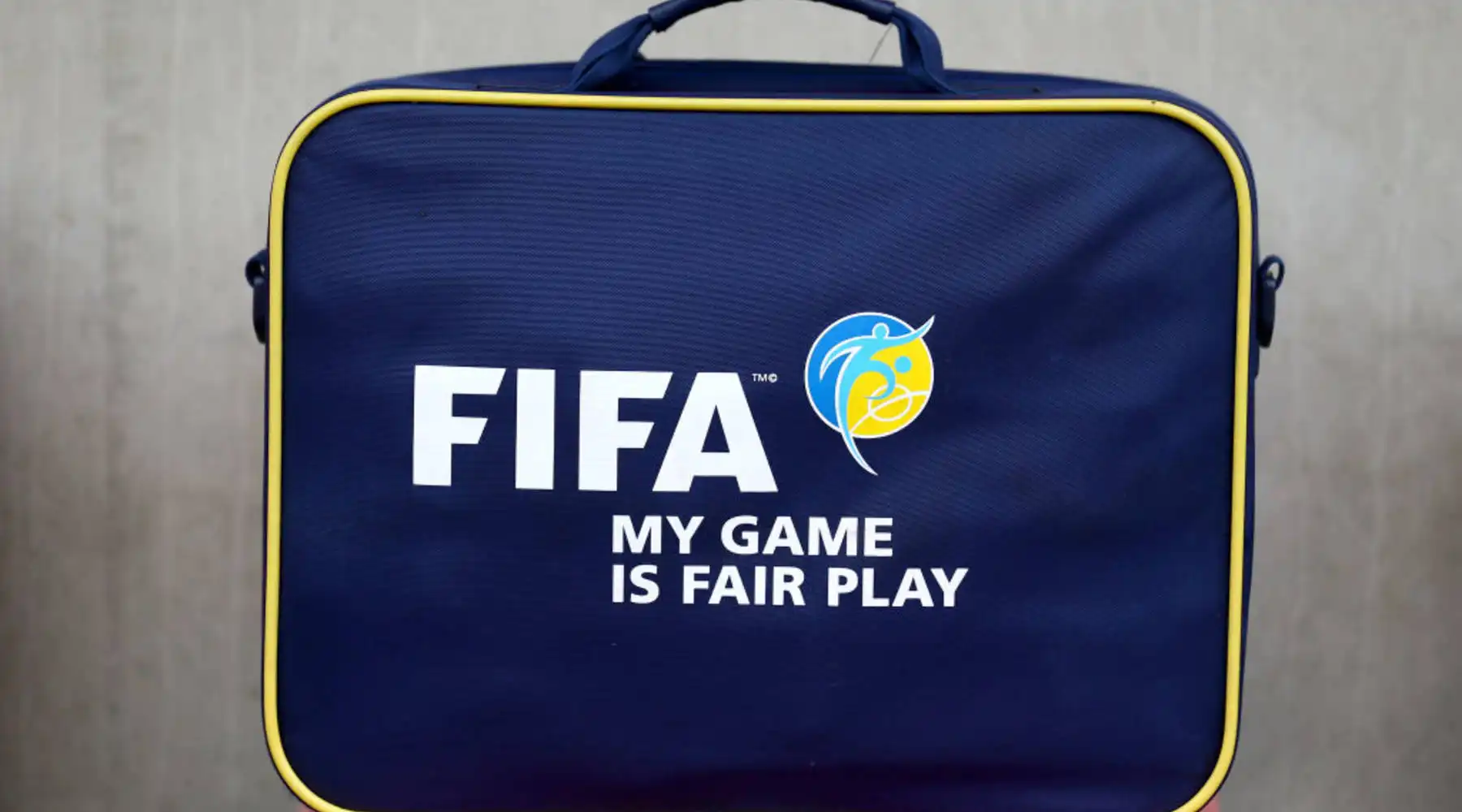
  • A FIFA suitcase.
    Christof Koepsel/Getty

    FIFA released a 2014 report looking at ethics violations in the World Cup host nation selection process for 2018 and 2022.

  • President Trump speaks at a rally on June 21 in Cedar Rapids, Iowa.
    Scott Olson/Getty Images

    Investigations and turmoil have potential economic costs, experts say.

  • Immigrant services staffers at a community center in Stamford, Connecticut, sign as witnesses after Ecuadorian parents signed a legal document giving custody of their children to friends in case they are deported .
    John Moore/Getty

    Parents living in the U.S. illegally are confronting the possibility they could be separated from their children.

  • President Donald Trump announces his decision to withdraw the U.S. from the Paris Climate Accords in the Rose Garden of the White House in Washington, DC, on June 1, 2017.
    BRENDAN SMIALOWSKI/AFP/Getty Images

    If you can count on anything, it’s that you can’t count on Washington for anything right now. You’ve got inconsistent statements, intra-party squabbling, ambitious legislative goals with real policy differences and, oh yeah, a special prosecutor and a few congressional investigations. The potential economic costs really start to add up. Plus: We’re on Day Two of another high-profile ransomware attack that’s hit a bunch of shipping companies, law firms and other businesses. We’ll try to sort out what’s going on. Then: How’d so many of us end up getting health care from employers? You’ve always wondered.

  • A malware attack that started yesterday in Ukraine has spread to more than 60 countries. Companies including Russian oil giant Rosneft, Danish shipping firm Maersk and Ukrainian government agencies have been hit. Ransomware victims are prompted to pay $300 in bitcoin to get the key to unlock their data. Also on today's update, Monsanto released better-than-expected earnings this morning. The agricultural giant has enjoyed solid growth over the first half of the year, despite pushback on its use of chemicals linked to cancer.

  • Jun 28, 2017

    Millennials of color are worse off financially

    by David Brancaccio and Jana Kasperkevic
    Millennials of color are less like to own a credit card.
    Justin Sullivan/Getty Images

    Financially secure white millennials feel held back.

  • Is your computer safe?
    Sean Gallup/Getty Images

    A ransomware attack hit servers around the world yesterday. The infected computers displayed a message in red type over a black screen that read, “Oops, your important files are encrypted,” demanding a $300 bitcoin ransom from users to recover the data. This comes just one month after the WannaCry ransomware attack that affected more than 150 countries in May. We talk to Chester Wisniewski of the cybersecurity firm Sophos about this attack. Also on today’s show: It’s been 10 years since the first iPhone shipped out. It’s been called the most unique and disruptive invention of all time, but just how original was it?

  • Jun 28, 2017

    Why this ransomware attack is more alarming than the last

    by Ben Johnson and Kristin Schwab
    Is your computer safe?
    Sean Gallup/Getty Images

    Chester Wisniewski, senior security researcher with Sophos, talks to us about the latest cyber breach.

  • Millennials are now more anxious than they were in 2015, the first year of our poll.
    Sean Gallup/Getty Images

    Millennials are the largest and most diverse generation of Americans, with about 19 percent of them identifying as Latino or Hispanic, 13 percent as black or African-American and six percent as Asian-American. According to a new report called “Gen Forward,” African-Americans and Latino millennials are more likely to be economically vulnerable than their white and Asian-American counterparts. We talk to one of the study’s authors about these findings. Also, yesterday Federal Reserve Chair Janet Yellen said “asset valuations are somewhat rich,” which is Fed speak for “stock prices are high.” But does that mean we are heading for a bubble? 

  • Congress has sent auditors to several U.S. territories in the Caribbean and Pacific Ocean, including the U.S. Virgin Islands, Guam and American Samoa. They want to avert the kind of financial mess Puerto Rico got into with $123 billion in bond debt and unfunded pensions.  Click the audio player above to hear the full story.

  • Monsanto’s earning reports beat expectations today. The agricultural giant has enjoyed solid growth over the first half of the year, with operating earnings up more than 50 percent year on year. The company’s planned acquisition by German agricultural giant Bayer is also on investors’ minds.  Click the audio player above to hear the full story.

  • A new book looks at what economists can learn from literature.

  • The rise of ride-sharing apps has been tough for old-school rental car agencies. Who wants to pay for a car and parking when a couple of rides might be cheaper? But this week some rental car companies are getting a boost from partnerships with tech firms. Google’s Waymo announced a deal with Avis Budget Group […]

  • You thought your commute was bad? More than 30 New York City subway riders got hurt this morning after two cars derailed, scraped the side of the subway tunnel and came to a stop. Delays spread throughout the system. It’s the kind of hang-up New Yorkers are sadly accustomed to, with about 70,000 subway delays per […]

  • Alberto Martinez welds steel at a maquila owned by Metal Industries of Florida.
    Lorne Matalon

    Maquila owners say the current version makes it a harder to operate in Mexico compared to the U.S.

  • Seattle Mayor Ed Murray signs a bill that incrementally raises the city's minimum wage to $15 an hour on June 3, 2014, in Seattle.
    David Ryder/Getty Images

    The city is making its way towards a $15-an-hour minimum wage, but are employers cutting hours to compensate?

  • Massive ransomware attack in Europe all but promises more to come
    DAMIEN MEYER/AFP/Getty Images

    Dozens of databases are hit in the cyber attack. The thing they all have in common? Vulnerable networks.

  • Jun 27, 2017

    Blog: How to write better work emails

    by Kai Ryssdal and Molly Wood
    We all have to send email for work. Here's how to get better at it.
    PAUL J. RICHARDS/AFP/Getty Images

    Kai and Molly spoke to Jennifer Romolini, chief content officer of Shondaland.com, about her new book, “Weird in a World That's Not: A Career Guide for Misfits, F*ckups, and Failures”

  • Jun 27, 2017

    Happy Birthday, ATMs!

    by Marielle Segarra
    People gather to see a demonstration of the "robot cashier" in Enfield, England. 
    Courtesy of Bernardo Batiz-Lazo

    The first automatic teller was installed outside London 50 years ago. Here's how it's changed us.

  • Art and Diana Ramirez of Austin with their pistols in custom-made holsters during and open carry rally at the Texas State Capitol on January 1, 2016 in Austin, Texas. On January 1, 2016, the open carry law took effect in Texas, and 2nd Amendment activists held an open carry rally.
    Erich Schlegel/Getty Images

    Even the Wild West had gun control

  • A doctor checks an X-Ray.  
    FRED DUFOUR/AFP/Getty Images

    Senate Majority leader Mitch McConnell pumped the brakes on health care today, delaying the vote on the GOP’s Obamacare replacement until after the July Fourth holiday. Stocks took a little dive today amid all the uncertainty, in no small part because the health care bill is actually a tax bill. Something we’ll try to hash out today: This plan is all about making health care more affordable, but once you get past all the politicking, what’s that even mean? Then: the latest on ransomware attacks that are spreading across Europe today. Plus, looking back at the legacy of ATMs on their 50th anniversary.

  • Jun 27, 2017

    Tell us how the minimum wage affects you

    by Marketplace Weekend Staff
     A Service Employees International Union member celebrates after California Governor Jerry Brown signed landmark legislation SB 3 into law on April 4, 2016 in Los Angeles, California.
    David McNew/Getty

    Share your experience of living on minimum wage with Marketplace Weekend.

  • Jun 27, 2017

    06/27/17: Too much Google?

    by Molly Wood

    The European Comission imposed $2.72 billion — fine on internet giant Google on Tuesday for breaching antitrust rules with its online shopping service, claiming that the company "abused its market dominance as a search engine." Also on today's show: A look at home health monitoring devices that improve care and cut costs for chronically ill patients.

  • Greek tragedies — like that of, say, Orestes — can teach us a lot about bankruptcy.
    Punch Magazine circa 1858/Hulton Archive/Getty Images

    'The Wisdom of Finance' aims to discover the humanity at the heart of high finance.

  • Jun 27, 2017

    How do Uber drivers feel now that Travis Kalanick is gone?

    by Ben Johnson and Kristin Schwab
    Uber CEO Travis Kalanick speaks onstage during an event at the Vanity Fair New Establishment Summit in San Francisco, California last October.
    Mike Windle/Getty Images for Vanity Fair

    Harry Campbell, Uber driver and blogger at The Rideshare Guy, talks about how Uber's CEO's departure has affected drivers.

  • One of TV's finest weirdos, at work, just like the rest of us.
    Warner Bros. Television/Getty Images

    Eye on the ball, people!

    Download
  • Jun 27, 2017

    EU fines Google a record 2.42 billion euros

    by Marketplace Contributor
    European Commissioner for Competition Margrethe Vestager gives a press conference on an antitrust case againts US search engine Google the European Commission in Brussels, on June 27, 2017. The European Commission fined Google 2.42 billion Euros for abusing dominance as search engine by giving illegal advantage to own comparison shopping service. 
    EMMANUEL DUNAND/AFP/Getty Images

    European regulators say Google is breaching antitrust rules.

  • An Uber SUV waits for a client in Manhattan a day after it was announced that Uber co-founder Travis Kalanick will take a leave of absence as chief executive on June 14, 2017 in New York City. The move came after former attorney general Eric H. Holder Jr. and his law firm, Covington & Burling, released 13 pages of recommendations compiled as part of an investigation of sexual harassment at the ride-hailing car service.
    Spencer Platt/Getty Images

    Profile hackers are stealing the photos and other profile information from a high rate of female Facebook users in India. To combat this issue, Facebook has built a tool that makes it harder to download or screenshot a person’s profile picture. We talk to Ankita Rao from Motherboard who has been following this story. Plus: A check-in on rideshare drivers. After a lot of drama at Uber in the past couple of weeks and changes to the company’s tipping policy, we ask how drivers are feeling right now. 

  • 06/27/2017: Where finance meets humanity
    Spencer Platt/Getty Images

    Here’s a thought: What if a wider reading of the humanities can help you understand finance? We talk to Harvard Business School Professor and economist Mihir Desai who wrote a book about just that, called “The Wisdom of Finance: Discovering Humanity in the World of Risk and Return.” Also on today’s show: A record week for IPOs. Ten companies are expected to go public this week, making it the busiest week for IPOs in two years. 

  • A new study says high schools should not be a one-size-fits-all.

  • Cheryl and Steven Larson stand in front of a fountain. Cheryl Larson jumped at the chance to volunteer for a remote monitoring program, ImagineCare, that Dartmouth-Hitchcock health system in New Hampshire was launching.
    Joy Hafen

    Remote monitoring allows doctors to keep an eye on their patients with chronic conditions and intervene before a health crisis.

  •  Senate Majority Leader Mitch McConnell (R-KY) (C) talks to reporters with (L-R) Sen. Cory Gardner (R-CO), Sen. John Barrosso (R-WY) and Sen. John Thune (R-SD).
    Chip Somodevilla/Getty Images

    So what's next?

  • Jun 26, 2017

    Why the US buys all its rare earth metals from China

    by Kai Ryssdal and Maria Hollenhorst
    A rare earth refinery.
    Ed Jones/AFP/Getty Images

    The obscure minerals are much more costly to mine in America.

  • Activist investor Daniel Loeb announced over the weekend that his hedge fund, Third Point, has taken a $3.5 billion stake in the Swiss food conglomerate Nestle, and he wants some changes at the company. That may sound like a lot of money, but the investment represents just over a 1 percent stake in the company. […]

  • In yet another branded White House initiative, it’s Energy Week. President Trump will be focused on American “energy dominance,” and touting the boom in U.S. fossil fuels and plans to support and increase energy exports. A ban on exporting U.S. oil and gas was lifted under the Obama administration. Energy companies may appreciate less oversight and more […]

  • South Carolina’s political elite turned out today to celebrate an expansion of BMW’s facility in the Palmetto State. It’s now BMW’s largest in the world. At the event, Sen. Lindsey Graham had this to say on Twitter: “to those who fear globalization, embrace it b/c it’s not going away…if you want to see the good […]

  • John Paul Rollert, a professor of business ethics, says President Trump, above, with Vice President Mike Pence, has been chafing at a “series of customs and norms around public disclosure.”
    Alex Wong/Getty Images

    The president has been met with levels of scrutiny that he probably wasn't ready for.

  • Mickey Mouse and his friends celebrate the 60th anniversary of Disneyland Park during a ceremony at Sleeping Beauty Castle in Anaheim, California.
    Disney parks handout/Getty

    It was created by Walt Disney and fellow illustrator Herb Ryman in just one weekend to woo theme park investors in 1953.

  • Violins in a workshop. 
    Christopher Furlong/Getty Images

    One woman is holding off on growing her small business, even though the demand is there.

  •  Senate Majority Leader Mitch McConnell (R-KY) (C) talks to reporters with (L-R) Sen. Cory Gardner (R-CO), Sen. John Barrosso (R-WY) and Sen. John Thune (R-SD).
    Chip Somodevilla/Getty Images

    The Senate Republican health care bill was first shown to the public Thursday, with an eye on voting a week later. Today we got the Congressional Budget Office score. The headline numbers are 22 million people losing coverage and a $321 billion deficit reduction by 2026. We’ll talk through what it all means and what to keep an eye on as the bill hurtles toward a vote Thursday. Then: The president is a former CEO who wants to run the company like a business, so let’s tease out how the U.S. government is and isn’t like a public company. Plus, the first in a series of stories we’re doing on globalization.  

  • Faced with labor shortages, some dairy farms are increasingly using automation to get work done. We visit one operation where robots are milking cows all year round. Plus, Italy's bailout of its banking system, which could cost the euro equivalent of $19 billion.

  • U.S. Commerce Secretary Wilbur Ross (L) moderates a discussion with General Motors CEO Mary Barra during the Select USA 2017 Investment Summit on June 19 in National Harbor, Maryland.
    Mark Wilson/Getty Images

    Senate Republicans are reportedly planning to put a penalty in the health care bill that would lock people out of the market for six months if they drop their coverage. Why are they doing this? Health care reporter Dan Gorenstein fills us in. Also, the most expensive bailout of failing banks in Italy’s history and what to expect from Indian Prime Minister Narendra Modi’s first meeting with President Trump. Lastly, the president has been a vocal critic of foreign trade, but states are making their own deals. We drop in on a big, three-day convention in Maryland, just outside Washington, to see how states, counties and U.S. territories are coming together with foreign investors.

  • Dairy farmer Vickie Baker stands in the holding area in her barn, where cows wait to be milked by a robot. They go through the gate behind her to stand in a cow-sized chamber where the robot attaches milkers to them.
    Annie Baxter/Marketplace

    Facing labor shortages, some farms are increasingly using automation to get work done.

  • Indian Prime Minister Narendra Modi will be in Washington today for his first meeting with President Trump. The two are likely to stick to subjects both countries agree on — defense and counterterrorism — but the issue of H-1B visas can’t be ignored.  Click the audio player above to hear the full story.

  • An Atari Super Pong retro games console is seen at the 2014 Gamescom gaming trade fair on August 14, 2014 in Cologne, Germany.
    Sascha Steinbach/Getty Images

    Atari was born 45 years ago this week. Michael Z. Newman, the author of “Atari Age: The Emergence of Video Games in America,” says the gaming company didn’t just change video game history, it changed the way people thought of personal computing. Plus: we learn about how one company, BioCatch, is using biometrics to detect fraud. CEO Eyal Goldwerger says the company can use your online behavior to identify you, adding a layer of security. It tracks your physical attributes, including how fast you scroll on a page or how you hold you phone, to build your profile.