Marketplace®
Every story is an economic story
  • I teach high school. Although I am a science teacher, I assigned a personal finance project to my students. I was horrified to find out they didn't know what loan terms were or in some cases what interest rates were… Many objected to paying taxes, which I set at 30% for state, federal and Social Security combined. They didn't understand that there were some bills they HAD to pay each month, and a few didn't understand why they couldn't get everything they wanted and just spend as much as they wanted each month, even if it was more money than they made. My question: How do we teach kids these things — these kids are not learning at home — and in conversation, some of their parents may need the training, too. Are there (free- since K-12 schools have no money) programs to teach kids? I'm sure a program designed by a professional finance person would be better than the one I designed. Can you share you ideas what the kids need to know? Thanks, Judi

  • It’s a big weekend in mental health — the diagnotic bible, the DSM5 is set to be released. Scientific controversy aside, what is the book really worth? On Wall Street, banks are taking on Bloomberg in the wake of news that  the news service’s reporters snooped on clients through Bloomberg trading terminals. We look at the business implicatins for the company. Also, before you hit the road this weekend, car makers are setting up a new campaign to get you to stop texting and driving. How good has the technology side of this gotten?

  • May 17, 2013

    A week of scandal and taxes

    by Kai Ryssdal

    Check out weekend reading picks (not about the IRS scandal) from our Weekly Wrap.

  • Facebook's initial stock offering was a debacle for the company and the NASDAQ, but things are looking up

  • May 17, 2013

    Could Bloomberg lose the trust of Wall Street?

    by Stacey Vanek Smith
    Traders work on the floor of the New York Stock Exchange on May 6, 2013 in New York City.
    Spencer Platt/Getty Images

    Wall Street banks are taking on Bloomberg in the wake of news that the news service’s reporters snooped on clients. Could there be business implications for the company?

  • May 17, 2013

    How much is the DSM-5 worth?

    by Dan Gorenstein

    The diagnostic mental health bible comes out this weekend and as doctors' manuals go, it's high profile and big money.

  • Fossil fuels, the new apartheid? University students want their schools to divest. One college calculates the cost.

  • May 17, 2013

    Shanghai smog: Life in a polluted city

    by Kai Ryssdal and Rob Schmitz

    Marketplace's Rob Schmitz tells Kai what it's really like to live in smoggy, hazy Shanghai, masks and all.

  • May 17, 2013

    How to survive severe student loan debt

    by Barbara Bogaev

    The new face of debt is young and worried. Student loans affect nearly 15 million Americans under the age of 30 and many debtors are facing tens of thousands of dollars in repayment.

  • Connecticut may not have the glitz and glamour of L.A. or New York, but what it does have is an increasing number of TV shows.

  • This is a Marketplace.org Reader

  • With one in five Americans on food stamps, some in Congress want to cut back on the program. There's talk in high places about the Fed ratcheting back on policies it hoped would add pep to the wheels of commerce. It's no surprise farmers and home builders want more immigrant labor, but horse breeders? Texas lawmakers decide whether to allow craft beer sales at grocery stores and brewery tours. It could mean a big boost for craft breweries.

  • Comedian Bill Hader’s exit from "Saturday Night Live" prompted us to ask, "Would Stefon's clubs work out in the real world?"

  • What can you do if a debt collector is after you? Take some advice from someone in the industry and know your consumer rights.

  • Debt. Don’t let it ruin your life. Even if you feel like you’re swimming in student loans or can’t get ahead of what you owe to credit card companies, we’ve got some advice on what to do when you’ve got a mountain of debt.  One tip: as much as you’d like to, don’t hang up when a bill collector calls.  And don’t take your personal relationships for granted when money enters the mix. Debt doesn’t have to destroy your ties with friends or family. Plus, a special report on why struggling military families opt to do business with risky payday lenders over low-interest government loans.

  • May 17, 2013

    Medical costs in America by the numbers

    by Matt Berger

    This is a Marketplace.org Reader

  • May 17, 2013

    Fed may ease off on stimulus

    by David Brancaccio

    There's talk in high places about the Fed ratcheting back on policies it hoped would add pep to the wheels of commerce.

  • The Federal Reserve Bank of New York says the country now owes close to $1 trillion in student loan debts. But in some states, the problem is worse than others.

  • But that comes with an asterisk.

  • With one in five Americans on food stamps, some in Congress want to cut back on the program.

  • Finland's only oil refiner has now been ensnared into the investigation.

  • Revelations the IRS gave extra scrutiny to conservative groups applying for tax-exempt status has raised their profile, and for some, their fundraising.

  • The late internet activist and a New Yorker reporter worked together to develop a way for sources to anonymously share documents.

  • The two tech giants go head-to-head over advertising on Google's YouTube app.

  • In a blow to the fledgling digital currency, U.S. government officials have frozen an account tied to the world's largest Bitcoin exchange.

  • From "The Payback" by James Brown to The Smiths' "I Don't Owe You Anything" to "Bills, Bills, Bills" by Destiny's Child, we've compiled a playlist of tunes all about borrowing and lending.

  • A probe by the European Commission into possible manipulation of oil prices has just gotten bigger. Finland’s only refiner has also been asked to help with the investigation. And, with an aging population in the U.S., a look at the cost of an older person taking a fall.

  • Aaron Swartz left behind a considerable online legacy before his suicide earlier this year at age 26. But a posthumously-released collaboration with the New Yorker might be among his most profound innovations and it might just be the first step towards guaranteeing true online anonymity. Plus, why U.S. officials froze an exchange for the online Bitcoin currency, and what happens next.

    Download
  • Paying off student loans can be a long and scary venture. But one way to get a handle on how to make it an affordable experience is to take a tip from the Pilgrims.

  • Texas lawmakers decide whether to allow craft beer sales at grocery stores and brewery tours. It could mean a big boost for craft breweries.

  • Does debt have to destroy family ties and friendships? Personal finance expert Liz Weston weighs in on whether its a good idea to mix personal finance with personal relationships.

  • It's no surprise farmers and home builders want more immigrant labor, but horse breeders?

  • May 17, 2013

    What’s behind the uptick in consumer spending?

    by Stacey Vanek Smith
    Joseph Klein of Sayville, N.Y., is assisted by Lowe's employee Ormani Rivera after his purchase of a generator in Hicksville, N.Y.
    Bruce Bennett/Getty Images

    Retail sales rose a tenth of a percent in April. Why are people spending more and are they going back into credit card debit over these purchases?

  • When a senior citizen falls to the ground, the resulting injury can cost tens of thousands of dollars. So health care professionals are working to eliminate the risk of falling down.

  • The government provides countless resources to help military families with financial literacy and even offers low interest loans to help them in times of emergency. So, why are many troops opting to take out risky payday loans instead?

  • Walmart could be liable for millions in damages because it controls the supply chain, even if it doesn't employ the workers directly.

  • This is a Marketplace.org Reader

  • We’ve got former Defense Secretary Donald Rumsfeld on the show to talk about the release of his new book, “Rumsfeld’s Rules: Leadership Lessons in Business, Politics, War, and Life,” but in other news, the IRS scandal has heated up. How did it get itself into such a mess? Plus, Bitcoin again. The U.S. has made its first move to crackdown, by using anti-money laundering laws to freeze a bank account of the biggest Bitcoin exchange. What impact will that have and what’s yet to come?

  • Sometimes the government has to kick in to convince developers to reclaim "brownfield" sites. The EPA says it's developed a good partnership in Atlanta.

  • The IRS was already in trouble even before this current scandal

  • The U.S. has made its first move to crackdown on Bitcoin, by using anti-money laundering laws to freeze funds of the biggest Bitcoin trading exchange.

  • Researchers have figured out how to clone human embryonic stems cells, which can be used to develop tissue for many uses. Will investors jump in?

  • Walmart sales are down and so are housing starts, but the weather could be to blame. Plus, a small film about breast cancer research gets an unexpected boost from Angelina Jolie's preventive mastectomy.

  • Space scientists say Kepler has already found enough potential and confirmed planets to keep them busy for years.

  • May 16, 2013

    Japan’s economy grows under Shinzo Abe’s leadership

    by Rupert Wingfield-Hayes

    Policies taken by the head of Japan are helping the country finally bounce back after decades of trouble. But is it enough — and will it continue?

  • Temperatures were down across much of the United States, causing consumers to huddle at home instead of going out.

  • BP said they were just trying to make it for easier for claimants, but now they're in over their heads.

  • Republicans in the House are expected to hold a vote today to repeal President Obama's health care initiative. It will be their 37th vote on the issue.

  • In Mexico, social media outlets such as Twitter have sprung up as tools used by the public to battle public corruption.

  • In the latest series of 'not in my backyard' or NIMBY protests in China, hundreds took to the streets in Kunming to oppose a petrochemical plant.

  • Ever been at a concert or game and wondered what the view looks like from the front row? There's now an app for that. Krowds helps strangers at public events share unlimited video.

  • May 16, 2013

    What’s ahead for the IRS?

    by Krissy Clark

    To say the Internal Revenue Service is having a bad week is an understatement. And to top it all off, IRS Commissioner Steven Miller was just forced to resign. So how will that effect the rest of the agency responsible for collecting taxes to keep the U.S. government running?

  • May 16, 2013

    Your Brain = Lake Michigan

    by Molly Wood
    Your Brain = Lake Michigan
    Wikimedia Commons

    Here's a calculation that might take some time to process. If you were to measure the computing power of the human brain and convert it to fluid ounces, you'd get the volume of of Lake Michigan.

    Download
  • In a recent story for Mother Jones, writer Kevin Drum says by the year 2025 robots will take all of our jobs.

  • Military brass, consumer advocates and lawmakers are trying to close loopholes in the Military Lending Act.

  • May 16, 2013

    Have we entered cupcake deflation?

    by Kai Ryssdal

    Cupcake prices have dropped eight-tenths of a percent over the past year.

  • Today, hundreds of protesters shut down traffic in the Chinese city of Kunming to dramatize their opposition to a proposed petrochemical plant. It’s the latest in a series of ‘not in my backyard’ or NIMBY protests in recent weeks throughout that country. And, we heard yesterday that military families have some extra protections when it comes to consumer credit — the Military Lending Act caps interest rates and bans certain short-term loans. But creative lenders are still finding ways to prey on military families. Today, we look at how military brass, consumer advocates and lawmakers are trying to close loopholes in the legislation.

  • Lately, it seems like we talk about Moore’s law at least once a week on our show. It’s the idea that our computing power jumps forward by leaps and bounds every two years — so fast that soon our computers will be as smart as we are. Kevin Drum is a writer at the magazine Mother Jones. He’s just written a long piece about intelligent robots. Drum thinks by the year 2025, they’ll be smart enough to take almost all of our jobs. Don’t worry though — he says that’s a good thing.

    Download
  • Who else has given millions to universities? Dr. Dre and Jimmy Iovine are in good company.

  • Secretary of Agriculture Tom Vilsack hopes organic farming will help financially strapped small-scale farmers.

  • May 16, 2013

    Acting IRS commissioner Steven Miller resigns

    by Nancy Marshall-Genzer

    Acting IRS commissioner Steven Miller has resigned from his position, President Barack Obama announced Wednesday.

  • France today entered a double-dip recession. It depends on exports to Italy and Spain and they, like many eurozone nations, are still feeling the pinch. Europe's slump is dragging down the global economy.

  • The good news was the deficit is shrinking, but some think it’s bad news and the deficit is shrinking “too” fast. How can that be? On television, the sitcom “The Office” ends this week. What happens at the end of a show’s life and how can it live on? Overseas, France just entered a double dip recession which goes to show Europe is still struggling to find the fix for its economic woes.

  • Until days ago, 'Decoding Annie Parker' — a film about a genetic researcher and a cancer patient — was a low-key production with modest ambitions. Then Angelina Jolie revealed she had the very genetic mutation that stars in the film.

  • May 15, 2013

    How not to take over a company like Sony

    by Mark Garrison

    If the history of foreign investor activism in Japan is any indication, the outlook for hedge fund manager Daniel Loeb is not too loving.

  • A look at the afterlife of a sitcom like "The Office," which ends this Thursday night. Can anything be gained from internet royalties and syndication?

  • As the House prepares to scrutinize the IRS over its targeting of conservative social welfare groups, the Ways and Means chair wants answers.

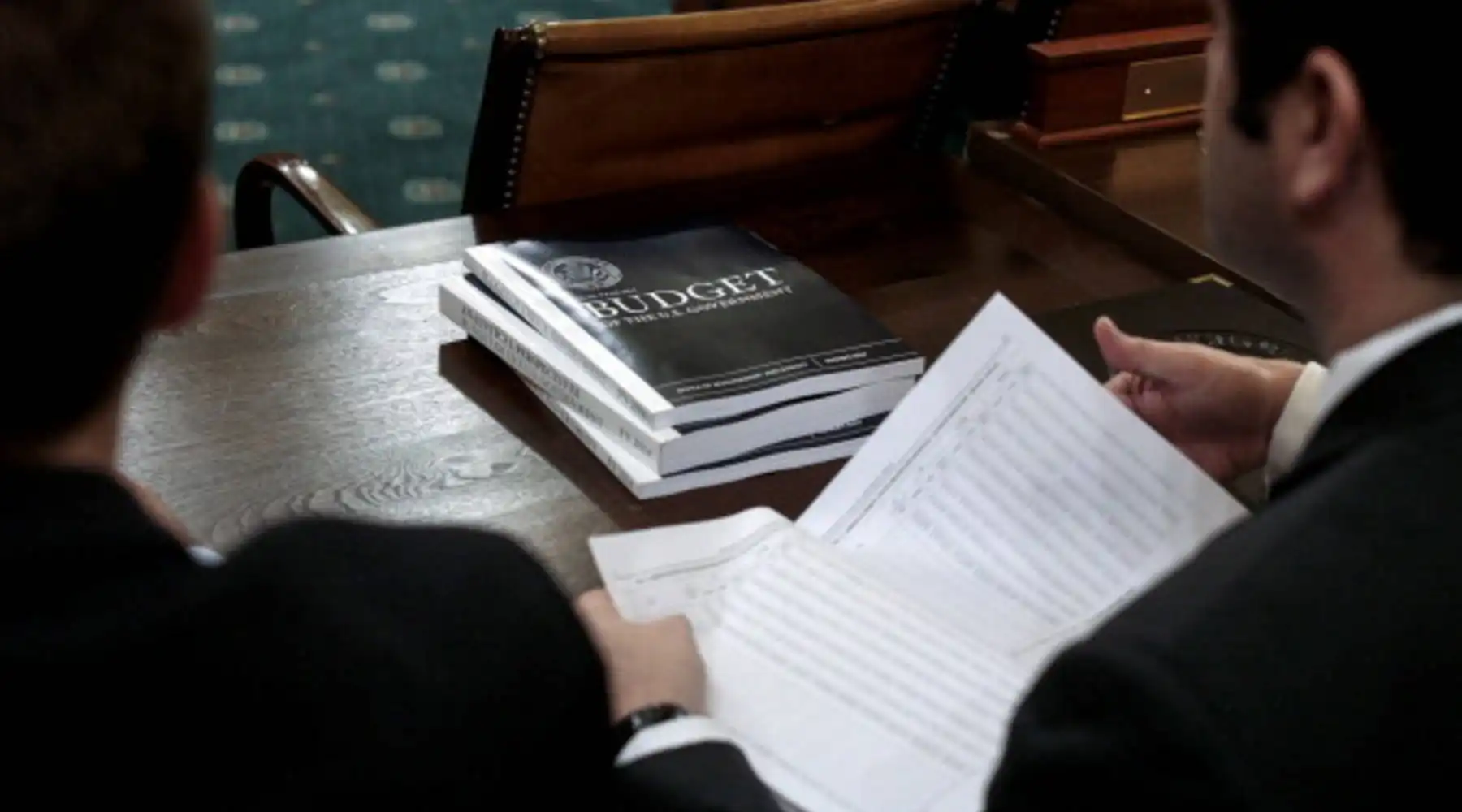
  • A congressional aid looks over the fiscal year 2014 budget proposal documents.
    T.J. Kirkpatrick/Getty Images

    The Congressional Budget Office reports that this year's federal budget will be the smallest in years — but don't uncork the champagne yet.

  • This is a Marketplace.org Reader

  • May 15, 2013

    The life of an online professor

    by Aarti Shahani

    For the growing number of professors teaching Massive Open Online Courses, it means a lot of work, and sometimes stardom, too.

  • A look at how new retail figures impact the economy. After last month's collapse at a garment factory, retailers around the world are responding in different ways. The European Commission is investigating a potential price manipulation scheme among oil companies. A Senate committee on governmental affairs looks at 380 ways “to make Washington more efficient.”

  • Google unveiled the next step in voice recognition technology today at its developers' conference. The race is on for computers to really understand us.

  • How cord-cutters are impacting TV ad revenue.

  • May 15, 2013

    Retail makes modest gains

    by David Brancaccio

    A look at how new retail figures impact the economy.

  • Today, Christie's will auction off a rare 101 carat diamond that is expected to fetch $20 million to $30 million.

  • The European Commission is investigating a potential price manipulation scheme among oil companies.

  • After last month's collapse at a garment factory, retailers around the world are responding in different ways.

  • France is in recession, while Germany's economy has expanded.

  • Last year, Google introduced Project Glass. What will be next?

  • New figures out today from euro zone countries show the European Union’s economy has been getting weaker for six straight quarters — a year and a half of contraction. France was officially in recession. We take you to the continent to find out what it all means. And, seven years ago, Congress passed the Military Lending Act to prevent financial abuse of soldiers. But is it helping? Creative lenders are still finding ways into this lucrative market, and military families continue to fall into high-interest, quick-cash loans.

  • Sony Pictures Entertainment and Rovio are gonna team up for a full-length animated 3-D version of the game.

  • May 15, 2013

    380 ways to make the government more efficient (Video)

    by Nancy Marshall-Genzer

    A Senate committee on governmental affairs looks at 380 ways “to make Washington more efficient.” What’s likely to be the fate of this cost-cutting initiative?

  • Five years ago, the U.S. military banned payday and title-loans to military families, but small-dollar, high-interest lenders are getting around the Military Lending Act.

  • It's a big week for department-store earnings. How are they faring in the stutter-step economic recovery?

  • Today marks the beginning of Google’s three day conference for developers, called Google I/O. Last year the company unveiled its tech-boosted spectacles, Google glass. It was perhaps one of the most extravagant unveilings in tech history — glass-wearing Googlers streamed live video of themselves jumping out of a plane and riding into the convention on trick bikes. Plus, a look at TV’s Upfronts, where the major networks unveil new programing for advertisers.

    Download
  • Mitchell Hartman describes the story of one soldier and how he helped others with financial challenges.

  • Ken Ilgunas spent two years obsessively paying off the $32,000 he owed on his student loans. And when he decided to go back to school for a graduate degree, he figured out a way to come out the other side debt-free.

  • Just in case you want to write an email to your Klingon relative about the new Star Trek movie, Bing's there for you.

  • Today we continue our series on the cycle of debt created by installment loans. In the news, Angelina Jolie’s move to get a preventative double mastectomy will probably spur others to do the same. The problem? Only one company offers the genetic test and it costs $4,000 Plus, America will soon be energy independent – but what change, if any, does that signal for actual consumers? Or does this just mean more profit for energy exporters?

  • Actress Angelina Jolie leaves Lancaster House after attending the G8 Foreign Minsters' conference on April 11, 2013 in London, England.
    Oli Scarff/Getty Images

    Angelina Jolie's double mastectomy is likely to boost demand for a medical test that determines the probability of breast cancer. That test is currently available from just one company, Myriad Genetics, which charges more than $4,000.

  • "America’s Funniest Home Videos" is opening its 23-season deep library to advertisers. Nothing sells like pets, babies and humor.

  • America's closer to energy independence, but the days of $2 gas are history.

  • The IRS is now facing a criminal investigation over its targeting of conservative groups that applied for tax exempt status.

  • May 14, 2013

    Unemployed steelworker is back in a job

    by Kai Ryssdal

    One small economic data point: a steelworker in the Midwest, back on the job.

  • From singing pets in Subaru ads to a Ragú campaign featuring 'Charlie Bit Me!,' here's a look at how advertisers are using home videos to sell just about anything.

  • This is a Marketplace.org Reader

  • We're hosting a live chat on our investigative series "Beyond payday loans" and we'd like you to join.

  • A new report says North America will once again dominate fossil fuel production. Cell phone theft in this country is on the rise, but there’s not really any incentive for the industry to help curb the increase. Housing seems to be in recovery mode in places like Phoenix, Arizona. But it may be tough for homebuilders to lure back construction workers.

  • When fossil fuel gets cheap.

  • A new report says North America will once again dominate fossil fuel production