Marketplace®
Every story is an economic story
  • Reporter’s notebook: Clearing up the $600,000 average white wealth
    iStockPhoto

    You asked us about numbers in a story about black wealth. Here's the outcome.

  • May 4, 2013

    Quiz: They sell that in SkyMall?!

    by Barbara Bogaev

    You've probably browsed through the in-flight shopping catalog SkyMall. Have you seen the bizarre things they sell? See if you can tell which products are real and which are made up with our quiz.

  • May 3, 2013

    Use HSA or pay out of pocket?

    by Marketplace Staff

    I moved to my companies high deductible plan this year. I typically have very few medical expenses and this was also a great way to add to my retirement as I already max out my 401k contributions and I also maxed out my HSA contributions. I am in a position that I can pay my expenses without going into my HSA or other savings. I already have 9 months living expenses in a saving account, so this would not take away from money that would go to my safety net. If I am considering my HSA as a way to save for retirement, it seems to me I would want to minimize withdraws and let the amount accumulate into retirement. Do I pay with the HSA withdrawing money from a tax deferred account to pay the bills and invest the money not used in another investment? Or do I pay out of pocket and leave the money where it is safely tucked away for major medical expense or retirement?

  • May 3, 2013

    How to Semi-Retire Early

    by Marketplace Staff

    My husband and I are striving to "semi-retire" in about 10 years at the age of 40, where both of us will drop to working part time (20 hrs a week) until age 65. We have a "rainy day" fund of about $28,000, and currently feel very secure with our 401(k) and Roth IRA savings plans, but we don't want to take the penalty that goes along with withdrawing these funds before age of 59-1/2 years old. We are now trying to figure out the best place to save the money that we will need to live between age 40 and age 65. The options we have considered so far are a money market account, investing in index funds or a "safe" mix of mutual funds and stocks. What is the best way to save/grow our money? Thank you for your advice!

  • Crystal Kornegay, Prom Queen 2013, checks out her royal hairdo.
    Amy Scott/Marketplace

    When a high-poverty school in Cincinnati added a high school seven years ago, prom was essential.

  • This is a Marketplace.org Reader

  • What do you do if you’re a lobbyist and want to create a message for an audience of one? Get creative, apparently. We look at the unexpected ways interest groups have gotten the eye of the White House. In housing news, big investors have been snapping up foreclosed homes and turning them into rentals. But, now some of those investors are hoping to capitalize on their bottom feeding – and share the spoils with the general public – by going public.      

  • Futurist Ray Kurzweil pushes for far-out technological advances to become reality. Now at Google, he says search has much further to go. In 20 years, our brains will be indexed and online.

  • As the NRA hosts its annual meeting in Houston, a look at its charitable programs for shooting sports. Fundraisers for "Friends of the NRA" have seen record crowds.

  • A young woman takes action to feel safe in an oil boomtown filled with lonely and sometimes aggressive men.

  • There is no shortage of interest groups trying to catch the attention of the president and White House advisers, but it can be a tough slog. A look at the unexpected ways lobbyists go about pitching the president.

  • May 3, 2013

    Wall Street revives foreclosed homes as rentals

    by Stacey Vanek Smith
    A 'bank foreclosure sale' sign is posted in front of townhomes on August 12, 2010 in Los Angeles, Calif.
    Kevork Djansezian/Getty Images

    Big investors have been snapping up foreclosed homes and turning them into rentals. Now some of those investors are hoping to capitalize on their distressed buys — and share the spoils with the general public — by going public.

  • May 3, 2013

    New college grad: How to save my money?

    by Marketplace Staff

    I'm graduating with a BS in Chemical Engineering this year. I have a job lined up in the Twin Cities, MN where I will be working for a company I love and finally making money to pay off student loans (salary ~$55,000/yr before taxes). My question to you is: how should I be handling my money while working? I will be renting for a few years before (hopefully) having enough saved up to put a down payment on a home. Realistically, what portion of my salary is appropriate to spend on living during these few years, and how much should I be saving for my home down payment? How quickly should I be paying off student loans? Is this an area that should take priority over others? How much money should I then be putting away? Retirement plans, investments, emergency funds, etc. How much should I try to save for "fun" things? A new road bike, baseball games, travel, etc. Are there other areas that I'm also completely neglecting when considering this? I haven't had much experience with finances, and I'm really looking for all the help I can get! Any advice would be great. Bear in mind, I grew up a farm boy, so luxury/expensive hobbies/etc. are not a part of my background. I would just like to live comfortably and plan appropriately for the future. Let me know what you think and if there's any advice you have for a guy finally getting out into the real world. Thanks!

  • It pays to shop around for prescription drugs.

  • May 3, 2013

    Positivity in the April jobs report?

    by Kai Ryssdal

    The Bureau of Labor Statistics reports that the economy added 165,000 jobs last month, beating analyst expectations. The unemployment rate fell to 7.5 percent, the lowest since December of 2008.

  • Does paying for getaways get you down? We welcome the challenge of finding the best summer travel deals and we’re passing on some expert advice to you. Even if you’re working in a trip around your kids’ school calendars, aren’t sure what kind of cash to carry abroad and live nowhere near a hub city, we have helpful tips for taking a vacation on the cheap. Plus, if it’s lodging that’s eating up your travel expenses, check out some of our suggestions for scoring a comfortable place to stay that won’t part you from all your cash. All that and an update on the latest unemployment numbers and helping “housewives” qualify for credit cards.

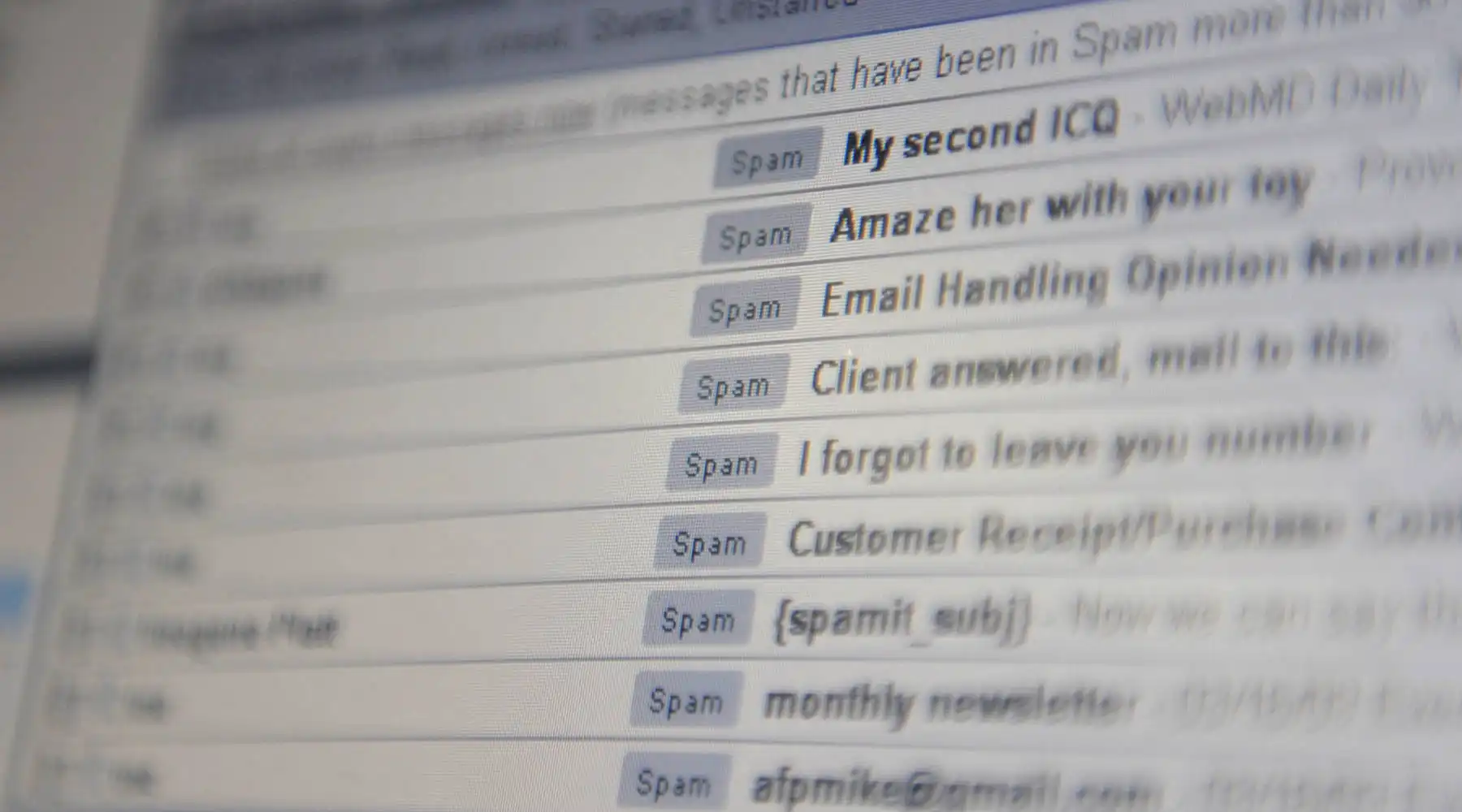
  • A computer screen inbox displaying spam emails.
    MIKE CLARKE/AFP/Getty Images

    Thirty five years ago today, Gary Thuerk sent out the first spam email. We mark the anniversary by trying to track down a spammer ourselves.

  • The next generation unfriends Facebook. The Bureau of Labor Statistics is reporting the economy added 165,000 jobs last month and the unemployment rate fell to 7.5 percent, beating analyst expectations.

  • May 3, 2013

    Travel advice from the airfare watchdog

    by Barbara Bogaev

    A lot has changed about air travel since Greg Hobica founded the site airfarewatchdog.com in 1998. But, he says, it's still possible to score a great travel deal if you follow his advice.

  • The Department of Defense wants to spend nearly $200 million to upgrade facilities at Guantanamo Bay. President Obama wants to shut it down for good. We take a look at the numbers behind the planet's most expensive prison.

  • Lodging can quickly eat up your summer travel budget. Anne Banas of SmarterTravel.com shares her tips for redeeming hotel loyalty points, alternatives to traditional lodging, traveling with pets and keeping your money safe when going abroad.

  • Big data helped the President Obama's campaign team identify potential voters and get them to the polls. Now Teddy Goff, who was digital director of Obama's 2012 campaign, is taking his ideas to the business world.

  • It happened 35 years ago.

  • Understanding your salary can be like trying to read a foreign language. Even economists can't agree on whether higher wages boost the economy, or discourage employers from hiring.
    PHILIPPE HUGUEN/AFP/Getty Images

    Economists don't agree on whether higher wages boost the economy, or discourage employers from hiring.

  • May 3, 2013

    Quitting the Internet cold turkey

    by Molly Wood

    Ever tried to quit something cold turkey? What about the Internet? On May 1, 2012, Paul Miller of the tech site The Verge cut himself off from the Internet. No web, no streaming, no email, no texts, or voicemails.

  • For the first time in history, the 17 nations that use the euro are headed for two years of back-to-back recession, according to the European Commission.

  • The Bureau of Labor Statistics is reporting the economy added 165,000 jobs last month and the unemployment rate fell to 7.5 percent, beating analyst expectations.

  • May 3, 2013

    Your travel questions answered

    by Anne Banas

    You asked so many travel-related questions we couldn't let them go unanswered. Here are more tips on everything from paying for airline tickets to why carriers change their flight schedules so much.

  • For the first time in history, the 17 nations that use the euro are headed for two years of back-to-back recession, according to the European Commission. And what are the kids doing these days? It’s an age old question. But when it comes to technology, it’s an important one. To get some insight, we went to the source — high schoolers. We found out what apps they use (…Snapchat), what devices they like (iPhones, iPhones, iPhones), and whether they are concerned at all about privacy (that would be a YES).

  • May 3, 2013

    The next generation unfriends Facebook

    by Jeremy Hobson

    What are the kids doing these days? It's an age old question. But when it comes to technology, it's an important one.

  • May 3, 2013

    This week in personal finance

    by Stacey Vanek Smith
    There is one anomalous data point in the overall job-market recovery: wages. Above, job seekers in San Francisco get information on openings.
    Justin Sullivan/Getty Images

    We analyze the latest jobs report and get an update on how the Consumer Financial Protection Bureau is helping stay-at-home parents earn lines of credit.

  • May 3, 2013

    Cancel your 401(k)?

    by Marketplace Staff

    Is it possible to cancel my 401(k) without showing hardship?

  • A slice of digital cold turkey: On May 1 of 2012, Paul Miller at the tech site The Verge cut himself off from the Internet. No web, no streaming, no email, no texts or voicemails either. It’s now a year later, and Paul has just woken up. He says we should all be impressed at how well we use something as complex as the Internet, but also describes his own euphoria after cutting himself off. 

    Download
  • May 3, 2013

    10 tips for traveling with kids

    by Barbara Bogaev

    Nobody likes to hear a screaming kid on a flight or deal with difficult children while on vacation. Here are some sanity-saving tips on how to travel with children.

  • Ronald Smothers in front of Denny's on Crenshaw Blvd in Los Angeles, Ca.  He has owned and operated this franchise store for seven years.
    John Ketchum/Marketplace

    Barriers to minority franchise ownership remain, but some black entrepreneurs are leading the way.

  • The high-profile prosecution of a Phoenix-area woman has cost taxpayers nearly $1.7 million in legal fees. But local and national media outlets have seen a ratings boost due to the coverage.

  • In his new book "The Power Surge," Michael Levi says ending our dependence on foreign oil won't solve all our energy and economic woes.

  • President Obama visits Mexico today and will hold talks with President Enrique Pena de Nieto. Among the likely topics: Mexico's vast oil and gas reserves. Production could increase with foreign funding, but that is a touchy move in Mexico.

  • Tomorrow we’ll learn how many Americans were unemployed in April. Today, we explain what the rate at which Americans quit their jobs says about the labor market. On the web, GM and Mountain Dew have pulled ads perceived to be offensive. Were the ads the result of pressure to make a big, edgy splash; or weak vetting for digital ads; or possibly a more deliberate strategy?

  • It's been nearly a year since Richard Crowe was laid off from his job as a steelworker. And because of the sequester, his unemployment check was cut 10 percent. But a new job might be in his future.

  • May 2, 2013

    The risks of making online ads

    by Mark Garrison

    GM and Mountain Dew have pulled ads perceived to be racist. Were the ads the result of pressure to make a big viral splash, or of weak vetting for digital ads?

  • The rate at which Americans are quitting their jobs is rising. That can be a good sign for the economic and labor market outlook.

  • This is a Marketplace.org Reader

  • May 2, 2013

    The worst jobs in history

    by Chau Tu

    From leech gatherer to factory worker, breaking down some of history's worst jobs.

  • ESPN and the SEC team up for a new sports network. What's ahead for Mexico and the U.S.? And Facebook is making more money, but it's spending more, too.

  • If you work for Rapid Realty in New York City, it's a possibility.

  • President Obama heads to Mexico today to meet with that country's new President Enrique Peña Nieto. The two leaders will discuss immigration reform, trade, and economics.

  • There’s good news and bad news from Facebook. Facebook’s revenues only grew 38 percent in the first quarter, while its costs were up 60 percent.

  • The president has nominated Penny Pritzker to run the Commerce Department, and Michael Froman as the next U.S. trade representative.

  • What is appropriate language to use online and in everyday life? Janell Burley Hofmann, a mother of five who helps us figure out how to behave with technology, shares her advice.

  • The Federal Communications Commission has a new chairman, Tom Wheeler. If confirmed by the Senate, he'll replace Julius Genachowski, who resigned in March.

  • The European Central Bank (ECB) has cut interest rates to a record low of 0.5 percent. But how much stimulus can the ECB really provide?

  • A new study out of Switzerland finds carpenter ant colonies have some startling similarities with the structure of our own corporate ladder.

  • May 2, 2013

    Oh, the places David Petraeus could go

    by Mark Garrison

    After accepting a teaching post at CUNY, the exalted and shamed former general is reportedly in talks with private equity giant KKR. What are the real job prospects for David Petraeus?

  • Former CIA Director David Petraeus considers his next move. Will the European Central Bank follow the U.S. Federal Reserve’s lead? And a new study out of Switzerland finds the corporate structure of carpenter ants has some similarities to our own.  

  • May 2, 2013

    Fisheye lens gets a bug-eye makeover

    by Molly Wood

    Researchers at the University of Illinois and Northwestern University have developed a unique hemispherical digital camera based on the eye of a fly.

  • May 2, 2013

    Why inflation can be a good thing

    by Paddy Hirsch
    Why inflation can be a good thing
    Mark Wilson/Getty Images

    "A little bit of inflation is our friend, not our enemy," says Prof. David Blanchflower

  • Bill Ford says he hopes his company will help develop public transportation in urban areas and get rid of the gridlock.

  • May 1, 2013

    Data is the economy’s new oil

    by Stacey Vanek Smith
    A worker assembles a data center module container at the Rittal stand at the 2013 CeBIT technology trade fair the day before the fair opens to visitors on March 4, 2013 in Hanover, Germany.
    Sean Gallup/Getty Images

    Consumer data is becoming a commodity like oil and, like oil, it needs refineries so that companies can profit from it. Meet the data analytics industry.

  • A look at the finances behind the author of "The Great Gatsby" and its film adaptations.

  • We love zombies as much as the next show, but zombie inflation? In February, we declared inflation dead after years of easy monetary policy and negligible consumer price increases. Today, as the Federal Reserve concludes another meeting likely to keep inflation six feet under, we ask is it time to bring inflation back from the dead? Plus, more haunting news, Freakonomics Radio stops by to tell us how your advanced degree may be hurting your chances at a job. Over in China, a different version of Iron Man 3, catered to Chinese audiences, is set to release. What does that say about the Chinese film industry?

  • Critics have blamed the U.N. for not reacting faster to the 2011 famine in Somalia because the international community feared that relief would be confiscated by Islamic militants.

  • In Oregon, researchers followed 10,000 new enrollees in Medicaid. They used more health care services, but had more to spend on other necessities.

  • Disney is releasing two distinct versions of "Iron Man 3" this week: The international version and the Chinese version. How is Hollywood tailoring movies for the growing Chinese audience?

  • ESPN and the SEC are announcing the SEC Network, a lucrative TV deal for college sports. What’s so valuable about the SEC? And what’s in the deal for the schools?

  • In February, we declared inflation dead after years of easy monetary policy and negligible consumer price increases. As the Federal Reserve concludes yet another meeting to keep inflation six feet under, we ask if it's time to bring inflation back from the dead.

  • The hidden side the unemployment numbers? Folks with advanced degrees are climbing down the ladder.

  • May 1, 2013

    529 plans and foreign schools

    by Paddy Hirsch
    College graduates sit and read programs during the 2012 Syracuse University Commencement.
    Nate Shron/Getty Images

    This is a Marketplace.org Reader

  • What will the Federal Reserve do next? Out-of-state enrollment grows at state universities. And are smells coming to a theater near you?

  • UW-Madison mascot Bucky Badger waves a rally towel during the 2012 Rose Bowl football game between the University of Wisconsin-Madison Badgers on Jan. 2, 2012.
    Jeff Miller/UW-Madison

    Many parents are opting for 529 savings plans — college savings accounts that aren’t subject to any tax as long as the money’s used for tuition. Are they right for you?

  • Protestors in Greece are rallying against austerity. The gathering comes just days after the country's government voted to allow 15,000 public employee layoffs.

  • Putnam Investments says certain words used on social media can trigger regulatory scrutiny.

  • The Federal Reserve isn't expected to lower rates any more than it already has.

  • It's decision day for students, and many of them will be going out of state. Who loses in this equation?

  • What are the unintended consequences of pilotless drone aircraft used to kill suspected terrorists overseas?

  • There are some unexpected newcomers to the digital video world as advertising grows. Magazine publisher Condé Nast is one of the new big names rolling out a suite of original video content.

  • Maybe you saw the ‘Google Nose’ April Fool's prank, where users clicked on 'wet dog' and sniffed their laptops to find out what it smells like. Well new smell technology is not a joke — or not only a joke.

  • TV and video producers are trying to lock in advertising money for shows that will stream online at the Digital Content New Fronts. This year, some old-media players are in attendance. Today is International Workers Day, and to mark the occasion, protestors in Greece are rallying against austerity. And what is a 529 plan, and is it a good option for college savings?

  • A month ago, ‘Google Nose’ was an April Fool’s prank: Sniff your laptop for eau de wet-dog or scent of Egyptian tomb. But it turns out real engineers have been working on smell tech. John Laurenson reports from a film festival in the Austrian city of Linz, where a smelly movie has just premiered. And, when Yahoo’s CEO Marissa Mayer curbed the ability of employees to work from home, she got rapped by those who saw this as old-thinking. Now, the company is trying to make Yahoo a more attractive place to work by, among other things extending maternity and paternity leave.

    Download
  • There’s been a lot of talk online about Jason Collins, the NBA player from the Celtics and the Wizards who came out as gay this week — and some of that talk is offensive. What is appropriate language to use online and in every day life? Janell Burley Hofmann, a mother of five, gives her advice. And you’ve probably heard of the fisheye camera lens, but how about a bug-eyed one? Researchers at the University of Illinois and Northwestern University have developed a unique hemispherical digital camera based on the eye of a fly. It takes photos with nearly 200 tiny lenses to put together one giant wide-angle almost three-dimensional image that is in focus at all depths of field.

    Download
  • Apr 30, 2013

    Comparing CEO-to-employee pay ratios

    by Kai Ryssdal

    Bloomberg breaks down the CEO-to-worker pay ratios of the top companies in the S&P 500 index.

  • Siri is now up against some stiff competition. Google’s personal assistant, Google Now, has gone live on the iPhone, and we got the participants in this showdown to talk a little trash. In the world of states and money, state tax receipts are set to exceed the pre-recession peaks. So what are states spending that money on? Also, catch the next installment of our series on “raiteros” and the underground labor market in Chicago.

  • The application form to apply for Obama's Health Care plan went from 21 pages to 3.
    Marketplace

    Federal health agency releases shorter, less confusing applications for health care reform programs.

  • Siri has some stiff competition in Google's Google Now, which just hit iPhone.

  • Faculty at Duke and Amherst reject online partnerships — for now.

  • State tax receipts have rebounded and are set to exceed the pre-recession peaks. After severe budget cutbacks, states are spending the new money on…what?

  • The new health care law requires individuals to carry health insurance beginning next year, or pay a small fine. Behavioral economists say even a little punishment may go a long way to get people to sign up.

  • Dr. Francis Collins, the director of the National Institute of Health, on how sequester cuts have caused anxiety for young researchers.

  • Home prices are up, Twitter has got the markets moving, and disaster apps are all the rage.

  • Home prices rose 1.2 percent in February and were up 9.3 percent since last year, according to the S&P Case-Shiller Index.

  • Social networks are growing in China, but are they still on the up and up in the U.S.?

  • Apr 30, 2013

    U.S. pays down debt for first time in six years

    by Nancy Marshall-Genzer

    The Treasury Department is expected to start paying down U.S. government debt this quarter for the first time in six years.

  • Best Buy is pulling out of a big joint venture in Europe. The company is selling back its 50 percent stake in the mobile phone retailer Carphone Warehouse, at a significant loss.

  • Apr 30, 2013

    Emergencies? There’s an app for that

    by Stacey Vanek Smith and Katie Long
    East Village residents sit on corner of Avenue C that gets cellphone reception and make calls November 1, 2012 as New Yorkers cope with the aftermath of Hurricane Sandy.
    TIMOTHY A. CLARY/AFP/Getty Images

    A new market is emerging for apps that can connect people to emergency services and family members during a crisis.

  • XM/Sirius dominate the car satellite market, and car sales have bounced back right along with the rest of the economy. But will their success continue against a future of Rdio, Pandora and Spotify?

  • One tweet sent the stock market downward, but just for a minute. Now the Commodity Futures Trading Commissions is looking at how social media and the markets should interact.

  • Apr 30, 2013

    Undocumented workers pay special fees

    by Jeff Tyler

    Undocumented workers are vulnerable to exploitation and often get nickeled and dimed as a result of their status.

  • As the immigration debate continues in Washington, we take a look at people who are in this country illegally, people who work in the shadows, and who often face exploitation by employers because of their legal status. Can satellite radio win the long-term battle against Internet streaming services? And Best Buy says adios to Europe.

  • It has been six months since the savage storm dubbed Sandy wrecked and flooded a stretch of the East Coast. As people increasingly carry smartphones and Internet-linked tablets, how can digital devices help during an emergency? Developers are creating a growing number of crowd-sourcing disaster apps in the hopes of making a difference during natural and manmade disasters.

    Download
  • Major American brands and some of the country's largest temp staffing companies profit from undocumented workers while keeping them at arm's length.