The Pension Protection Act passed by Congress last year allows companies to automatically enroll their employees into a 401k. But regulators still have to decide what plans work best. Tess Vigeland talks to Charles Ruffle of PlanSponsor.com.
You're unhappy with your current cell phone service and you want to switch to another carrier — but then you get burned with a $200 fee. Tess Vigeland talks to Janine Kenney of Consumer's Union about how to get out of your contract without a penalty.
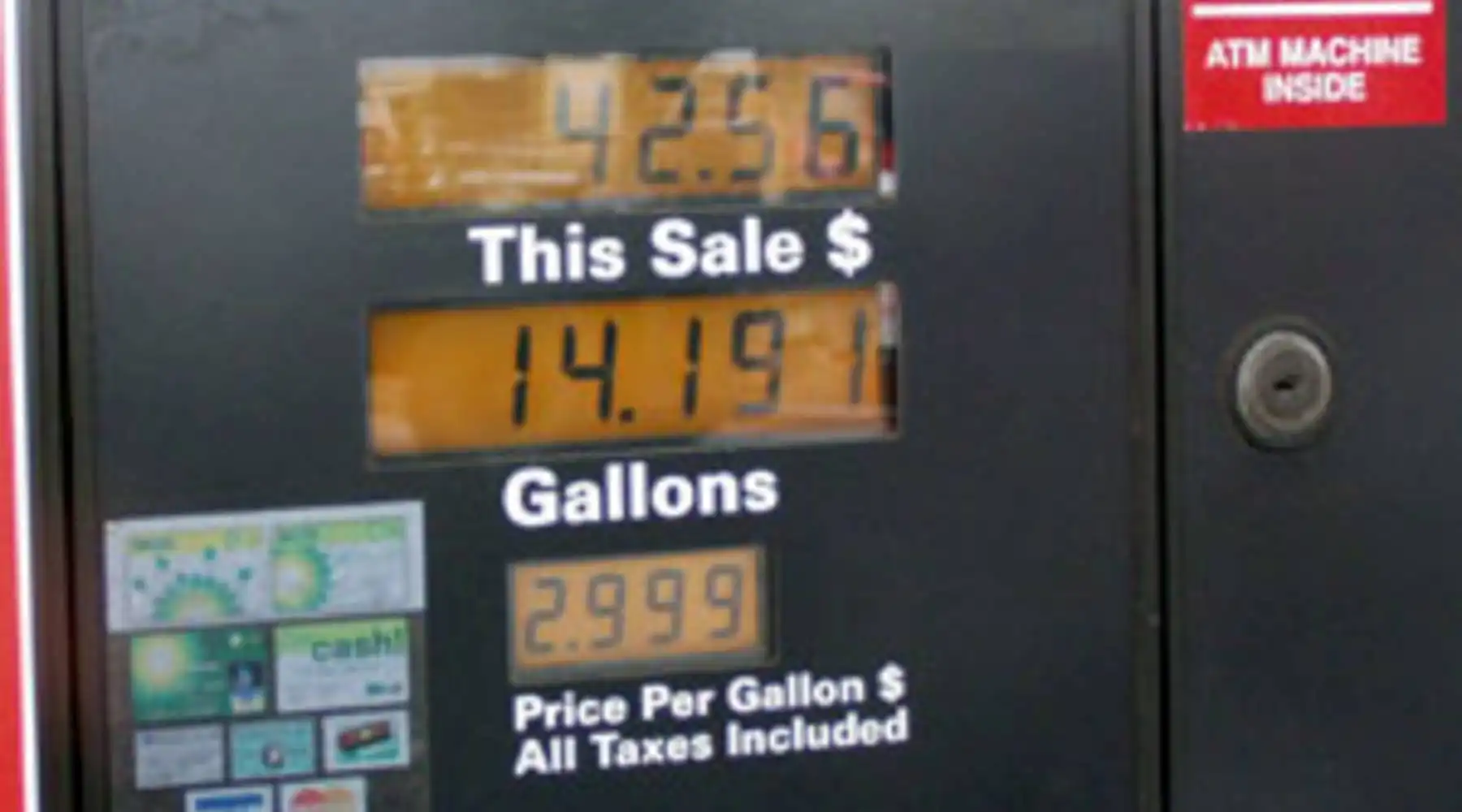
Just when you thought it was safe to get a quick, full tank of gas, the credit card companies shut you down. Tess Vigeland talks to the Associated Press's Ieva Augstums about how some consumers are finding out that their cards won't let them fill all the way up.
Debt collectors have found a new way to get their cash: an electronic service that lets everyone you owe know when you're making payments. Critics say this could cause things to get ugly. Ashley Milne-Tyte has the story.
In today's low-inflation, rising interest-rate environment, cash investments like CDs and money markets are looking more attractive. Steve Tripoli reports on the quieter side of investing.
This week, Chris Farrell answers listener questions about choosing a closed end fund, investing as a teenager and taking care of a child with a disability.
You've got your degree and you're ready to take on the world. But are you ready to pay for it? We got some advice from the class of 2006 on how to manage your cash in the real world.
TV networks that offered to pay Paris Hilton for an exclusive post-jail interview have apparently backed away from their plans due to negative reaction. Jill Barshay reports on what the networks could reap in ad sales for the interview.
This week the House Appropriations Committee approved $153 million worth of legislative earmarks. Commentator Amity Shlaes says such funding certainly isn't new. There's a lot of history behind the pork barrel.
New York City is shutting down a system of temporary, alternative programs for pregnant teenagers. The city and other districts say the schools no longer serve their intended purpose. Alisa Roth reports.
Susan Lobsinger has been baking wedding cakes for 30 years. But now she's also renting them. She talked with Tess Vigeland about what appears to be her tiered recipe for success.
Hitachi has new technology that lets you operate electronics without lifting a finger. Rico Gagliano looked into how it works, including some of its remote possibilities.
Kim Clark, personal finance columnist for U.S. News and World Report, discusses with host Tess Vigeland what happened on Wall Street this week and what may lie ahead.
With The Blackstone Group going public today, Kohlberg Kravis Roberts may be next. But Congress is looking into how private-equity earnings are taxed. So how can anyone know what the companies will be worth? Steve Tripoli reports.
Lots of people seem to be excited about July 7, 2007 and its ties to lucky 777. But companies in search of the Asian consumer have an even bigger day to look forward to: 8/8/08. Lenora Chu reports.
Homeowners in some 21 states are holding their breath, hoping for reform that'll bring property tax relief. Four states have already slashed property taxes. But not everyone shares the joy, particularly schools and other local agencies that rely on tax dollars. Dan Grech reports.
E.U. leaders are working to finalize a basic set of agreed upon principles, but if it stands, a decision to leave free market competition out of the treaty could have far-reaching implications inside Europe and out. Stephen Beard explains.
New York City health officials say smoking has fallen 20 percent over the past few years, mostly due to ads featuring cancer victims and a tough ban on smoking in bars and restaurants. Amy Scott reports.
T.G.I. Friday's is bucking casual dining's super-size-me trend to offer a new "Right Portion, Right Price" menu. Customers get about 2/3 the food for about 2/3 the price. And for Friday's it's meant more customers, higher profits. Jeremy Hobson reports.
Players and fans from around the globe are in Las Vegas for the annual World Series of Poker — or they're watching it on TV. It's become wildly popular, says Diana Nyad, because it's a brand of reality TV we can all relate to.
The creators of the hyper-violent Grand Theft Auto video game series may have gone too far this time. A sequel to a best-selling gorefest has been banned in the U.K. and won't be sold in the U.S. Stephen Beard reports.
You might think all those thank you e-mails and free e-cards and party Evites you receive would pile up and start weighing down the greeting card industry's bottom line, but profits are soaring. Jill Barshay looks at how they're keeping paper cards alive.
Hundreds of U.S. schools are using changes made to the federal Title IX law last fall to extend boys- and girls-only classes beyond gym and sex ed. But critics say that could lead to the very stereotyping and discrimination the law's meant to prevent. Sally Herships reports.
The storefronts are a hallmark of lower-income neighborhoods. "Payday loan" operations offer short-term loans to people who need emergency cash, but often at outrageously high interest rates. Now the government's looking for better options. Alisa Roth reports.
The law that requires colleges receiving federal money to provide equal opportunities for men and women went into effect 35 years ago this weekend. Business-of-sports commentator Diana Nyad takes a look at its impact.
The EPA announced new recommendations today on tightening limits on ground-level ozone. But, as Sarah Gardner reports, the agency's decision was about as clear as a summer day here in Los Angeles.
An 8-1 Supreme Court ruling will make it more difficult for investors to bring class action lawsuits that allege they've been ripped off by companies committing securities fraud. Steve Henn reports.
Hedge funds have drawn fire recently for their methods in buying companies and selling off the pieces. But one London-based fund has largely escaped criticism, depite its fearsome reputation. Stephen Beard reports.
Is the rapidly increasing use of microscopic nanomaterials safe? A green group is joining with a chemical company to lay down some guidelines. Janet Babin reports.
President Bush has stated that the job of recovering shareholders' money from banks involved in the Enron scandal should be left to SEC attorneys. But commentator Jamie Court contends the best path to justice is through the private sector.
The Stax record label got its start 50 years ago and featured such legends as Otis Redding, Isaac Hayes and Booker T and the MGs. Now, after a bankruptcy and two buyouts, it's about to get another spin. Trey Kay reports.
Almost two years and more than $1 billion has been spent in New Orleans since Hurricane Katrina to fix the city's levees. But the Army Corps of Engineers says some neighborhoods are still vulnerable to floods.
A new UN report says an influx of investment in green technologies will help us reach renewable energy goals faster than expected. But, environmental groups point out, it's still just a drop in the fuel bucket. Stephen Beard has details.
Major private equity firms are awash in profits, but all that cash flowing around has brought some unwelcome attention from Congress. And that's sent the industry scrambling for cover, where else? K Street. Steve Henn reports.
China has announced a nationwide inspection of labor conditions following revelations of widespread human trafficking and forced labor in brick-making facilities there. But that doesn't mean change is at hand. Scott Tong explains.
AT&T just came out with a high-speed Internet bargain that they aren't exactly going out of their way to promote to consumers. It had to begin offering the cut-rate service to get the FCC to agree to its merger with BellSouth. Rachel Dornhelm reports.
Someone at the Federal Reserve has been talking to the Wall Street Journal and the word is out: Don't expect an interest rate cut anytime soon. Oh yeah, and there could even be a rate hike when the Fed meets next week.
Nanotechnology could radically change medicine, electronics and even help clean up the environment. But those tiny particles could also be a threat to human health. Amy Scott reports on a new nonprofit-corporate effort.
The Blackstone Group today will announce share prices for its upcoming IPO, and it's not the only private equity firm maneuvering to go public. But will regular investors really get their piece of the private equity profit pie? Bob Moon reports.
The largest U.S. auto parts maker may get its wish to slash wages by as much as half. Delphi and the United Auto Workers reportedly are very close to reaching a new labor contract deal. And workers are expected to accept it, Jill Barshay reports.
Today the Senate Education Committee voted to reauthorize the Higher Education Act. Jeremy Hobson has a report card for what the proposed changes would mean for student loan lenders large and small.
Execs from five of the world's largest private-equity firms went before the British Parliament today to address questions on how their deals should be taxed. Francesco Guerrera of the Financial Times has the details.
What to do about global warming and how to wean ourselves off of oil is on the minds of many presidential candidates. But commentator David Frum says, so far, their solutions fall short of the mark.
China's government has announced a crackdown on enslavement after reports of widespread human trafficking. Scott Tong tracked down two laborers who shared their experiences of being abducted and forced to work.
A small but growing number of drivers are starting to convert their diesel cars to run on vegetable oil. Yet, many states are cracking down on these gasoline refuseniks with special taxes and penalties. Jessica Jones reports.
Two hedge funds managed by Bear Stearns are on the brink of collapse, victims of the subprime mortgage market going south. Amy Scott reports that the trouble could spread beyond big banks.
A lot of misinformation about immigration reform has trickled down to the folks living and working here illegally, and con artists have wasted no time taking advantage of the situation. Dan Grech explains.
Even as big private equity firms suffer serious public image problems, some investment groups that buy up small to mid-sized businesses say they consider those companies to be partners, not resources to pillage. Bob Moon reports.
The crisis in the subprime mortgage market continues to take its toll on Wall Street. Merrill Lynch will sell off the assets of two hedge funds that relied on subprime loans that are now going south. Amy Scott reports.
Rupert Murdoch is reportedly offering to make an old-fashioned swap. He'll give away MySpace for a 25 percent stake in Yahoo. It's about making moolah, says Dan Sabbagh who broke the story for the also News Corp-owned Times of London.
The EPA today is expected to release more stringent ozone standards in an effort to improve public health problems such as asthma, but some businesses are crying foul since we haven't even met the existing standard. Rachel Dornhelm reports.
Profits are soaring at private equity firms around the globe, but as more and more jobs are cut and news of their substantial tax advantage makes headlines, private equity's popularity keeps sinking further into the mud. Stephen Beard has details.
Robert Reich has a suggestion for the 2008 presidential candidates: Forget the carbon tax. Forget the cap-and-trade system. If you want to clean up the atmosphere and win votes, the carbon auction is the idea to get behind.
A study released yesterday says most parents would support a federal crackdown on TV sex and violence. Pressure's building for Congress to act, but TV companies say censorship should be left to individuals and the marketplace. Jill Barshay reports.
In April 2006, Massachusetts became the first state to require its residents to have some kind of health insurance. Now, the deadline's looming. Our Helen Palmer gives us an update on people are taking to the plan.
Expedia announced it will spend about $3.5 billion to buy back almost half of its outstanding shares. Jeff Tyler reports on what the move says about the state of the company and the Internet travel industry overall.
In President Evo Morales, Bolivia's indigenous majority finally has one of its own in charge. And he's brought change. But he's also angered much of the country, which is threatening to secede. Mary Stucky reports.
YouTube apparently shares its parent company's goal of world domination. It's expanding its services into nine other countries, giving it nine more places to collect advertising revenue. Janet Babin reports.
After five years of work, the Doha trade negotiations have boiled down to one issue: agricultural subsidies. Commentator Benjamin Barber says it's time to rethink how we govern global trade.
The Senate is expected to resume debate on immigration and border security, perhaps as early as next week. Our Washington bureau chief John Dimsdale takes a look at its chances for passage.
Boeing got a $9 billion order today, mostly for its new 787 Dreamliner aircraft. But the company's having some problems as it prepares to deliver the jet. Jeremy Hobson reports.
Expect a temporary rise in gas prices. The price of oil has surged, partly because labor unions in Nigeria, the world's eighth largest exporter of crude, have called for a strike. Jeff Tyler reports.
The Senate Finance Committee today is scheduled to vote on legislation that would rev up research into green energy at the expense of the oil industry. Rachel Dornhelm reports.
The company behind 7-Up, Dr Pepper and Snapple says it's likely to sell the U.S. unit that makes those beverages. And it'll shed thousands of workers in a major cost-cutting move. Stephen Beard reports.
Wendy's has made it official: It's hanging out the "for sale" sign. But the fast food company's been hinting that it might be looking for a buyer since April and speculators may have pushed the stock price too high. Jill Barshay reports.
Companies across the globe are increasingly touting their efforts to reduce carbon emissions. But are they for real? A new Web service, soon available on cell phones, offers a reality check. Amy Scott reports.
Starting July 1, some restaurants in New York City will have to display calorie counts in type as large as the menu items themselves. The state's restaurant association has filed suit, saying the rule change is unfair. Alisa Roth reports.
Business isn't going so well, but how do you know when to cut your losses? It's a difficult decision, and the serial entrepreneurs among our listeners have some smart advice for the first-timers. Steve Tripoli reports.
A tour company in India is opening a new world to visitors. It's offering guided tours through the Dharavi squatter settlement, the largest urban slum in Asia. Miranda Kennedy has the story.
Yahoo CEO Terry Semel stepped down today and the company named co-founder Jerry Yang to take his place. We tracked down Fortune magazine's Adam Lashinsky on the roads of Silicon Valley to size things up.
Vietnam's president starts a six-day U.S. visit this week. Chris Runckel of the U.S.-Vietnam Chamber of Commerce talked with Kai Ryssdal about the issues on the agenda: trade and attracting American business.
A report out today details how scores of House of Representatives members have used campaign funds to enrich their relatives. Steve Henn has the details.
Supreme Court justices have ruled that Wall Street investment banks and stock brokers are immune from antitrust lawsuits that challenge the banks' and brokers' cooperation when they float IPOs. John Dimsdale reports.
The United States and the European Union have decided to restore direct aid to the Palestinian Authority. We asked Middle East peace negotiator Dennis Ross whether the money will change much for the Palestinians.
A lot of married couples find themselves having to figure out who gives up what so the other can take the job of a lifetime. Jane Lindholm reports it's a problem especially common in academia.
A worldwide competition is going on now to name a "New 7 Wonders of the World." For many countries, particularly those in Latin America, it's not just their national pride that's at stake. Dan Grech reports.
If you just can't put down that PSP… you may need psychiatric help says the AMA. It's considering adding video game addiction to its diagnostic manual. But don't expect gamers to take the new label too seriously, Alisa Roth reports.
Vietnam's President Nguyen Minh Triet arrives in the U.S. today, marking the first post-war visit by a Vietnamese head of state. It's an occasion that carries a lot of economic and symbolic weight, Jeremy Hobson reports.
It's the Beta vs. VHS battle of our time… two rival formats for high-definition DVDs are vying for market share. A move by the nation's biggest DVD rental retailer could tip the balance. Dan Grech reports.
In Europe, a copy of the Financial Times is as essential to business as the Wall Street Journal is in America. And the publisher might raise the single-issue price to $4. Stephen Beard reports.
Major banking institutions are seeing profits to be made in microfinance — and they're capable of doling out far more than the organizations currently making the loans — but Michaela Walsh worries they won't reinvest in the poor local communities.
It's taken much longer than expected, but with a little help from Russia U.S. officials have managed to get North Korea the $25 million it was promised as part of denuclearization negotiations. Daniel Schearf has the story.
Both Democrats and Republicans are working to make their 2008 national conventions the greenest ever. It may be all about appealing to voters, but regardless of motivation, activists happily point out, the environment wins. Jill Barshay reports.
The weeklong Paris Air Show began today in Europe. Airbus has already announced a couple big orders for its planes, but rival Boeing is in such a dominant position, it's certain to stay on top of the industry for now, Stephen Beard reports.