
A Simple way to bank
Share Now on:
A Simple way to bank


Tess Vigeland: Round one goes to the consumers. Most of the big banks decided within the last couple of weeks to scrap their plans for a monthly debit card fee. But the costs really just shifted elsewhere. Bank of America is charging five dollars for a replacement if you lose your debit card. U.S. Bancorp is charging 50 cents to deposit checks with your cell phone.
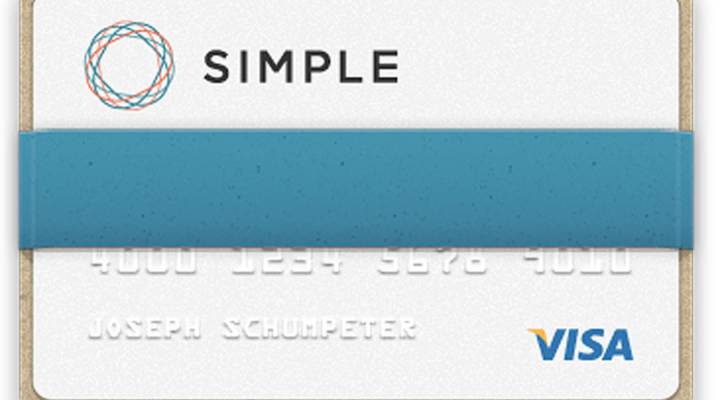
There are plenty of alternatives, of course, including credit unions. And here’s another one: It’s called Simple. Not exactly a bank, but kind of works like one. Without all the fees, the hassle, the headaches.
Joshua Reich is the CEO. Welcome to the program.
Joshua Reich: Thank you so much for having me Tess.
Vigeland: So first things first: What is Simple? Are you a bank, are you not a bank?
Reich: So Simple is designed to replace your bank. When you are a customer of a bank today, you’re likely to open a checking account, a savings account. The more accounts that a customer has at a bank, the more likely that bank is to make money. Banks make most of their money when customers make mistakes, namely from fees. We give customers one card and one account. And one thing that we do that is quite different is we don’t make any profits from the fees that we charge. And for the most part, we remove most of the fees that consumers would come across on their day-to-day banking.
Vigeland: So there is only one card, then how do you know if your using it as debit or credit?
Reich: So the card itself is a debit card. And what that means is whenever you swipe it, it goes over the debit network, which is actually the cheapest network for most merchants to process.
Vigeland: Right.
Reich: It arrives at our systems in real time and we then look at that transaction and say, “OK, if you have CDs open through us, should we break a CD to fund this transaction?”
Vigeland: You’re making that decision?
Reich: We’re making that decision — but we’re doing it with your help. Obviously, the interest rate on the credit line is always going to be higher than the interest rate you’re going to be earning on savings. That’s just how these accounts work. Let’s say then, for example, that you had a credit line with us and a three-month CD with us. We then have to make the choice: Do we want to break that CD or do we want to go to credit? We know how often you get paid, we know what you typically spend each day. We can do that math for you. If you had a pencil and paper at the time of purchase and you can do that math too. But it’s a lot easier for a computer to do that, knowing we’re doing it with your interest in mind.
Vigeland: I have to say though, as you’re saying all that, if I want you to know all that about me.
Reich: Well, your bank already does know all that. And the reality is is that they’re not using that information to help you. Whenever you swipe your card at a bank today, it’s more likely they’ll use that information to market products to you or some banks are just selling that information, obviously, to other marketers. So at around Christmas time, you’ll get ads for cards you don’t want. We don’t do that. We think that there’s this wealth information that the banks know about you that should be used for your benefit. The first obvious place to do that is around your finances.
Vigeland: Are these banks then basically outsourcing their customer service to you?
Reich: In one way, you can think of it like that. We tend to work with small banks and mid-sized regional banks. And the banks that we work with tend to not have customer-facing technology. The largest bank we work with is a bank out of Delaware called the Bancorp Bank. You know, it doesn’t really have a large consumer presence. They specialize in operating banking back in infrastructure of other companies. So it’s hard for consumers to work with them.
Vigeland: If you’re not charging me any fees, how are you staying in business? How are you making money?
Reich: We actually get paid by the banks. The banks typically have to maintain one of two ways to acquire customers: One is to have an extensive and expensive branch network. The other way banks acquire customers is by offering those teaser rates on CDs and savings accounts. By working with us, we provide a better service and we acquire customers that the banks couldn’t otherwise get. And so they pay us for that service.
Vigeland: All right. Joshua Reich is the CEO of Simple and we’ve been talking about their new website for your banking needs. Thank you so much for coming in.
Reich: Thanks for having me.
Stories You Might Like


There’s a lot happening in the world. Through it all, Marketplace is here for you.
You rely on Marketplace to break down the world’s events and tell you how it affects you in a fact-based, approachable way. We rely on your financial support to keep making that possible.
Your donation today powers the independent journalism that you rely on. For just $5/month, you can help sustain Marketplace so we can keep reporting on the things that matter to you.









