14

The pros and cons of required 401Ks

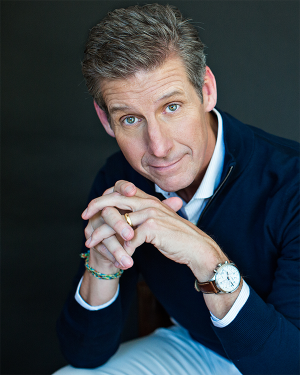
Dan Ariely

To view this content, Javascript must be enabled and Adobe Flash Player must be installed.

Get Adobe Flash player

TEXT OF STORY

Kai Ryssdal: More than half of all the workers in this country have some kind of retirement savings plan through their employer. Of course, you can look at that another way, too. That means about half of all workers don't. Instead of leaving that half out in the cold, the Obama administration's considering a proposal to make it easier for people to save. The White House wants to require companies that don't offer 401k's to start. And then to automatically deduct contributions from people's paychecks. It's being called an automatic IRA. Duke University behavioral economist Dan Ariely is back with us to discuss the pros and cons of required retirement planning. Dan, good to talk to you again.


DAN ARIELY: Same here.

RYSSDAL: So how does this IRA proposal work then?

ARIELY: So here is the issue: are people going to save enough by themselves, or do we need to force them into savings. And we used to have something like pension plans, what was called defined benefits, that your work place would put some money for you, and you wouldn't have to think about it at all. And one day when you retire you would have some money waiting for you. By the way, how is your workplace? Do they give you defined benefits?

RYSSDAL: No, we get a 403B, because we're a nonprofit, and we get contributions from the company. So it's fairly standard.

ARIELY: So you put money in and the company matches it, right? It turns out the vast majority of people don't max out this ability to save, and many people don't even save enough. In fact, a couple of researchers from Harvard show that even people who are half a year from retirement, even those people, that are giving up free money because they are not maxing their 401K or 403B contribution. So the new proposal is to take it out of people's hands. Instead of letting people decide, create what's called the default in which they would basically automatically save. And people would have to fill some paperwork to get out of it.

RYSSDAL: So in other words you would have to take some concrete action to not save, yes?

ARIELY: Right. And creating a default by which people are going to automatically save, and they have to basically fill some paperwork to get out of it is going to be very effective in getting people to save more.

RYSSDAL: What is it about us that makes us not want to save? Even in cases like 401Ks and 403Bs for nonprofits, where the corporate match, the company match, is in essence free money. Why don't more people see the benefit there and take advantage?

ARIELY: The problem really is thinking long-term. And the idea is that we're just not designed to think long-term. Think about what will happen 30 years from now, we're supposed to do all kinds of things to take care of our health. We're supposed to exercise, we're supposed to do all kinds of things that will pay off in the future, but cost us in the present. And turns out evolutionary we're just not designed to do that.

RYSSDAL: Consider this in the present economic circumstance though. The savings paradox. Where everybody tells us we have to spend money to get this economy going again, but we have to save money because frankly things aren't so good. Doesn't this sort of hit right at the nub of that discussion.

ARIELY: Absolutely. We are changing our habits. Americans are starting to save more. That's very good. But the fact is it will slow the recovery. But if you think about the benefits of increased savings as a habit, as something cultural that we all believe in, versus the disadvantages of a slow recovery. I think the benefits of increased savings outweigh the costs, especially because I believe this will stay with us for a long time.

RYSSDAL: See now that's interesting. I would not have figured that you the behavioral economist would have put that much faith in the American consumer. That we would keep on saving even when times get better.

ARIELY: Well, you see that's an interesting thing. I have faith in habits, right? If people thought every time about the cost-benefit analysis, whether something is worthwhile or not, I think as the economy went bad, people would not revise their decision. But because I believe that the way we make often decisions is not to consider them actively but in fact to rely on some habits, I think that the creation of these new habits will basically keep with us for a long, long time.

RYSSDAL: Dan Ariely teaches behavioral economics at Duke University. His book on the subject at hand is called "Predictably Irrational." Dan, thanks a lot.

ARIELY: My pleasure.

About the author

Kai Ryssdal is the host and senior editor of Marketplace, public radio’s program on business and the economy. Follow Kai on Twitter @kairyssdal.

Pages

Richard Parker's picture
Richard Parker - Sep 16, 2009

Although confidence in the American financial sector is understandably low, I agree that something has to be done to encourage the incensed, live-free-or-die mnentality to take care of themselves because I don't want to support them in their old age. This automatic deferral suggestion is hardly ludicrous and there are very easy opt-outs to these plans, as long as one reads. If you want to live in the most expensive country on the planet, you have to pay.

Andrew Pavlis's picture
Andrew Pavlis - Sep 14, 2009

This is a really bad idea. Although solving the human problem of forgetfulness is a noble enough goal on the surface, the ends ("savings," and I use the term loosely as investments are NOT savings) doesn't justify the means (forced contributions).

What's with this administration and forcing people to do things that they may or may not choose to do right now?!

This is ludicrous. One more sign that this administration is out of touch with reality.

Maybe if the dollar was more valuable, people would save more. But the FED inflates the dollar every year @ 2-3%, so *why* is anyone surprised that people don't save enough? It'll be worthless anyway! Change your monetary policies, then maybe we'll let you think about dictating policies like this.

Yet one more reason to leave this country.

Evan Swanson's picture
Evan Swanson - Aug 4, 2009
Michael Schofield's picture
Michael Schofield - Aug 4, 2009

A quick couple comments on this article.
You can call SSI an insurance plan all you want. People use it for retirement. At least we used to prior to congress allowing disability payments from it. But I digress. We already have a retirement fund (SSI).
When asked, during the interview, why Americans are not saving for retirement, the obvious answer was not mentioned. Some of us still try to keep paying our debts. With the rate we are currently taxed (due to the excessive size of our government) we can barely get by now. The little extra for the 401(K) has been buying milk & eggs for our children.

Andrew Dalgleish's picture
Andrew Dalgleish - Aug 4, 2009

While I agree that in general people should save more, having the company be responsible for this is wrong way to go. There are lots of downsides to the 401k model. For example, the company I work for has a 6% matching 401K, with the catch that it has a 3 year vesting period, meaning if I decide to go somewhere else, I don't get the full amount. Also, once the money is put in its very difficult to get it out if you need it. I would rather see an expansion of structures like the Roth IRA.

john paolini's picture
john paolini - Aug 3, 2009

CORRECTION: Fact #5 should have referred to Fact #4, not Fact #3. My bad.

john paolini's picture
john paolini - Aug 3, 2009

Mr. Massung-- I hear your frustration at perceived government diversion of your dollars. I often feel frustrated when I see my paycheck reduced by taxes to pay for things that are supposedly for my benefit(like more warplanes or farm subsidies). However, some facts would help better frame the discussion about this "default opt-in plan".

Fact 1: Social Security is not a retirement plan, it is an insurance plan designed to keep the aged & disabled out of poverty if they have minimal other savings (how well it actually does this is a different debate).

Fact 2: Many (but certainly not all) Americans are poor savers for retirement

Fact 3: An employee can opt-out at any time.

Fact 4: By forgoing a tax sheltered defined contribution plan like a 401(k) or 403(b), employees forego significant tax savings.

Fact 5: The tax code is ridiculously complicated and many Americans just don't understand Fact #3. (A natural consequence of using a tax code to encourage/discourage a social goals, but that is also a different debate).

This default opt-in proposal is conceptually similar to completing a W-4 at a new job: with the W-4 you agree to withhold a portion of today's income so tomorrow (April 14) you are not hit with a several thousand dollar tax bill. Similarly, this proposal simply defaults an employee into deferring a portion of today's income into (a tax sheltered) retirement account so that come tomorrow's retirement he/she will not be left dependent on Social Security's insurance payments because he/she has minimal savings.

Also, the idea of an opt-out participation plan is not a knee-jerk reaction to the recent economic catastrophe -- it has been around for quite a while because of Facts #4, #5, and especially #2.

john paolini's picture
john paolini - Aug 3, 2009

Mr. Agme -----
A) 401(k)s & other define contribution plans include a money market account option. These are exceedingly low risk (though, to your point, lack FDIC protection). Some plans also have the option of investing in government bonds which are relatively safe from default but also lack FDIC protection.

B) Are you referring to Target Date Mutual Funds (TDMFs) when you commented about "redemption horizons"? Unfortunately, investments have a slew of jargon, and we must understand that jargon to make informed decisions. The dates associated with these funds - "2010" for example - refer to the date of ceasing of contributions (i.e. retirement), not "redemption". TDMFs do not have "redemption horizons" because there is not one single particular date in the future at which one will redeem their all shares.

These funds are designed to reduce (not eliminate) risk as one approaches retirement while STILL protecting wealth from inflationary loses over what will likely be a 20-30 year retirement period. A retiree slowly redeems shares throughout retirement. Ideally, the retiree dies before running out of shares to redeem. Instead of thinking of those “2010” funds ending at in the year 2010 – think of them beginning a 30 year retirement in 2010.

I also wonder if some of the 2010 TDMFs may have too heavily invested in stocks. However, I can also see that these funds were taking on risk today to reduce tomorrow's risk of outliving one’s savings.

Juliet Jones's picture
Juliet Jones - Aug 3, 2009

I know I am not putting enough into my 401K, and I would love to double my deposit each pay period. Oh wait, I could if I were not paying more into social security than I am into my own 401K. Allow me to make THAT choice and I would gladly endorse mandatory savings requirements.

David Patton's picture
David Patton - Aug 3, 2009

"Evolutionary we are not designed to do this." That is a comment of Professor Ryssdal. "Evolutionary"!!! If these people don't prepare for retirement by themselves, then do we really want their genetics in the next generation!!??

Pages