6

Freelancers and unemployment insurance

Question: i am a self- employed artist. all of the news about record numbers of people collecting unemployment benefits has me wondering if these benefits are also available to self-employed people whose incomes dry up. i am currently managing to pay all of my bills and even save little bit of money but am concerned about what i will do in the future if i am unable to earn enough money/find a job. thanks, jenny, minneapolis, MN

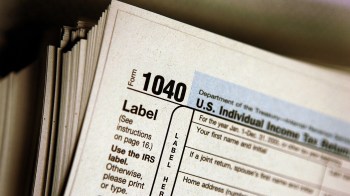
Answer: One of the drawbacks of being self-employed is that you're usually ineligible for unemployment insurance once work dries up. The most common reason why artists operating as a freelance sole proprietor are excluded is that they file their income on a Schedule FC tax form. Yes, you get to take tax deductions as an operating business, but in most cases you can't claim unemployment insurance.

I want to emphasize the phrase, "in most cases." The rules surrounding unemployment insurance are complicated. So, if you ever do find yourself in need of filing, check with a professional. You can get good information at online resources geared toward artists in most major metropolitan areas.

About the author

Christopher Farrell is economics editor of Marketplace Money, a nationally syndicated one-hour weekly personal finance show produced by American Public Media.
amy's picture
amy - Feb 8, 2009

Whoops -- sorry, Chris, that last was me.

Anonymous's picture
Anonymous - Feb 8, 2009

Chris, don't forget that self-employment has been a mainstay for single mothers who must care for children during the workday. I've freelanced the last three years; my daughter's school lets out at various times during the week, from 1:55 to 3:30 pm. The district's been unresponsive when it comes to after-school care and transportation, so someone reliable and affordable must be there to pick her up daily and ferry her across town to her daycare.

Who's that person? Me. I must also be home with her after 6 pm, cutting out options for second-shift work.

I've made a go of it by doing telecommute writing and editorial, often pulling all-nighters. Now that the jobs have dried up, I'm getting some much-needed sleep, but there's no money coming in, and no unemployment, either.

There are 13 million single mothers in the US, and many of us get by this way. Have done, anyway. Lack of unemployment benefits for us will, I imagine, mean that many of us lose our homes, leading to more instability for children whose lives have already had plenty of that.

Remmington's picture
Remmington - Feb 3, 2009

This post has me curious. My situation is almost identical to Susan's (above). My company is just me but I am an S-Corporation in the state of MN.

My accountant has me pay state Unemployment Insurance payments each quarter and federal UI payments once per year-- so I have always assummed that if the work dried up, I can apply for benefits.

I wonder if it would be beneficial for some freelancers to become corporations if they are concerned about Unemployment benefits...?

LOVE your weekend show.

Susan Daigle-Leach's picture
Susan Daigle-Leach - Feb 6, 2009

Remmington, that's an interesting point. We have avoided incorporating out of a desire to keeps things simple. But it might make sense now. Thanks for the thought.

Susan Daigle-Leach's picture
Susan Daigle-Leach - Feb 2, 2009

Thanks for both the question and answer on this subject.

Among the news of massive layoffs among wage and salary earners and increases in applications for unemployment, the large number of self-employed individuals has seemingly been left out of the equation.

My husband and I are both self-employed. We pay into Medicare, FICA (both our share and our 'employer's' share) pay quarterly estimated federal taxes, pay state taxes, pay for our own health care (individual policies, expensive and getting more so), and invest in SEP accounts every year. We are doing our part to support the system, and certainly pay a far higher percentage of our income in taxes than people making ten times our income.

Our income is also affected by the current state of the economy; it has plunged. But we still pay estimated taxes based on last year's higher income, and if our work disappears entirely, we are not considered 'unemployed.'

The entire unemployment compensation system is antiquated and needs to be revised, along with the tax code and poverty level, to reflect the way things are now, not 80 years ago.

Chris Farrell's picture
Chris Farrell - Feb 2, 2009

Thanks. Couldn't agree more. Chris