
11

Don't sweat your daily latte

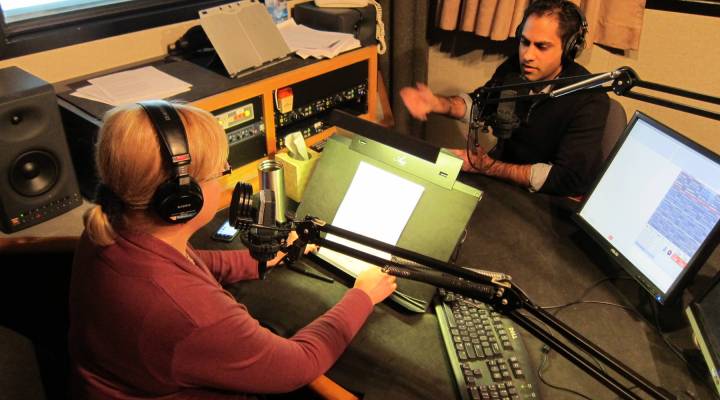
Author Ramit Sethi says fretting about small expenditures are a waste of your time and energy.

To view this content, Javascript must be enabled and Adobe Flash Player must be installed.

Get Adobe Flash player

Tess Vigeland: One of my pet peeves in the personal finance world is this notion that there is one right way to manage and think about your money. For example: Using credit cards is always bad! Well, no it's not. If it works for you, great. If it doesn't, that's OK too. Or how about this one that's sprung up since the housing crisis: Nobody should own! Everybody should rent! Well, no. It's more complex than that.

So I like it when someone in the personal finance space dares to sacrifice our sacred cows. We're going to talk in a moment with Ramit Sethi, best-selling author of "I Will Teach You to Be Rich". And we're going to address what we'll call the "Latte Factor." But first, a clip from a commentary he did for us a few months ago.

Ramit Sethi: Have you ever noticed that personal finance experts love lecturing Americans about what they can't do with their money? They say things like: "Stop spending money on lattes!" "You can't afford those jeans." "Eating out? You should cook at home every night -- duh."

The only problem is, these tips haven't worked for the last 50 years.

Vigeland: Duh! Ramit joins us now to delve into this, perhaps, a little more deeply. Welcome to the program!

Sethi: Thanks for having me.

Vigeland: So, this is a topic that I think tends to come up at this time of year, particularly around New Year's, when you start hearing all of the various ways that you can save money, bring your budget down. Why does that not work?

Sethi: It's a classic mistake that experts make. They sit in their rooms, they come up with an idea that sounds logical -- keep a budget, don't spend money on lattes. And they write it up in a book and they go on a radio or their go on the Internet and they say it. The problem is they never actually stop to test it and see if people actually follow their advice.

Vigeland: And your argument is that they don't.

Sethi: They don't. We know for a fact that they don't. People do not keep budgets. When you tell them to stop spending money on lattes, simply look at the last 20 years -- is it working? No! So if somebody comes and says, "No no no. You can't do that with your money!" What's the first thing I say to them?

Vigeland: Yes, yes, yes I can! It's my money!

Sethi: Exactly, it's my money and I'm not gonna listen to what this person is telling me I can't do.

Vigeland: But I think what always strikes people is the math. And you'll read these stories where if you cut out that latte for one week, yeah, it's only gonna save you five bucks. But for your lifetime, it's gonna cost you $20 million!!! Right?

Sethi: Right.

Vigeland: That's pretty stark.

Sethi: It's a marketing hook that people use. I could create 50 marketing hooks right now. But that's not the way people really work. We operate on a basis of psychology, right, our immediate needs and wants versus long-term wants and needs. And there are ways to balance both of those. And that's really what we're talking about. When you have someone coming in and saying you can't do XYZ, the first thing we do is a psychological term called "reacantance." And that's what happens when we say someone's trying to take away what I feel is my right, and I instantly put up my defenses.

Instead, what about doing something different? Why don't we talk about things like, "Look, automate your money, so that part of it is automatically going into your savings. And if you do that, you could spend as much money as you want on lattes." Or focus on the big wins in life. How come we're not talking about negotiating your salary? That's a $5,000-$10,000 win right there. That's worth more than a million dollars over your career. Or improving your credit. By the way, the difference between someone who goes to buy a house with poor credit and excellent credit -- that's over $100,000. So, there are big wins in our life and if we just get these five to six big wins done, we don't have to worry about the little things, like lattes or if I'm buying a medium or small-sized Coke when I eat out.

Vigeland: But how can cutting back on your spending be a bad thing?

Sethi: There's a cost for everything. We are what's called "cognitive misers." We have limited cognition, limited willpower.

Vigeland: I'm not a miser!

Sethi: We are all misers Tess! I'm a cognitive miser. You know how you know this? Because you wake up in the morning and there's 50 things you can do with your money. You could pay off that debt, you could buy those shoes, you could go out to drinks -- and faced with these 50 decisions, what do we do?

Vigeland: We're gonna spend some money.

Sethi: We're gonna do the same thing we've always done. And so what a lot of the latest psychological research shows is that if we can narrow these choices down, we can actually make better decisions. And we know this intuitively: Think about it, when you go to work and you have 50 things on your to-do list, you end up doing none of 'em. If you have three, you're gonna knock those out. So lattes, there's a cost to that. You're using part of your treasured willpower. Would you rather spend that limited willpower on something like a $3 expenditure? Or would it rather be spent on something like earning more money, automating your money? Or you're gonna buy something, should you buy it on your credit card, should you not? Et cetera. Those are worthy of our willpower. A $2 purchase is not important in the grand scheme of things.

Vigeland: Ramit Sethi joining us in the studio here in Los Angeles. Thanks so much for coming in.

Sethi: Thank you.

About the author

Tess Vigeland is the host of Marketplace Money, where she takes a deep dive into why we do what we do with our money.

Pages

Wise Miser's picture
Wise Miser - Feb 4, 2012

I admire Mr. Sethi's advise of dreaming big and aiming high to reach financial goals. Nonetheless, there is the proverbial "everything little thing adds up". People, especially young people, should develop the dicipline to save regularly. Besides, the small $3 - $5 savings builds measurable successes incrementally, WHILE working toward a high payout investment or negotiating a $5,000 raise. Don't belittle the savers. I don't waste $5/day on lattes, because the $1,825 saved in a year could pay for a vacation.

muertedepepe's picture
muertedepepe - Jan 24, 2012

I find it pretty stunning that so many people think that negotiating a higher salary (or positioning yourself to get a higher paying job) is near impossible, but can turn around and say that giving up a 4 to 6 times a week habit would be easier and more realistic...

Look both of these things are not easy to do, but giving up lattes (or some other fairly cheap multiple times a week habit) for a whole year requires a whole year's worth of effort to reap the benefits. If you can do that, more power to you. If it's easy, then it's not worth the money anyways (you didn't really like it). I mean, really, why the hell are you spending 1,500 bucks a year on something you don't really like?

But if it's hard, I would argue that the effort to cut something small that you really like/love for a whole year would be just as hard (maybe even more so) than spending 3 months learning negotiation/networking/interviewing skills and putting them to practice.

Here is the kicker, getting just one win on a higher salary (new job or raise) sticks with you for the rest of your career with no more effort. But you have to keep making yourself not drink lattes, year after year...

katysued's picture
katysued - Feb 4, 2012

By your logic I don't enjoy sleeping in because I can manage to make myself go to work every day. One can truly enjoy something AND develop the discipline to not have/do that thing everyday. What a sad world where not buying an expensive coffee everyday requires year upon year's worth of effort.

The larger point is that one can do BOTH. And that giving up the coffee is 100% within the spender's control whereas getting a raise -- while a noble effort, to be sure -- is not.

ny8811's picture
ny8811 - Jan 23, 2012

As a longtime reader of Ramit's blog, and as someone who does not implement EVERYTHING he suggests, I just have to say that his point seems to have been missed. It's not about NOT cutting back lattes, it's about looking at your finances from multiple angles, i.e. do I just have to cut back, or can I increase my earning power instead/as well? For the naysayers, how many of you HAVE tried to negotiate your salaries? Anyone? I tried it, a few months back when relocating within my company, expecting to be shot down, but I wasn't. I also cut back expenses that aren't a priority. I like coffee but don't need cable. There's my tradeoff. I'd recommend any who's reading this post to check out Ramit's website and see if any of his suggestions work for you. Maybe they will.

lizdimascio's picture
lizdimascio - Jan 23, 2012

In my opinion - money is made to be spent. If that means spending it on a $5 latte EVERY SINGLE day because, well, I LIKE IT, then I will. Otherwise, money will make me miserable.

Maybe before bashing the concept of negotiating a raise, you folks should all find Ramit's website and watch some of his videos about negotiating.

I probably COULD stop drinking starbucks coffee everyday. That will save me about $2000 per year. Possibly. But if I can get a $5000 raise with a little hard work and energy (that I get from my coffee) I will be SO MUCH HAPPIER.

I absolutely agree with this advice, and I'll happily put in the work for the BIG GAINS in my life. Thanks Ramit :)

DoggyMom's picture
DoggyMom - Jan 22, 2012

Maybe giving up a latte a day won't cure your financial problems but it's more about one's attitude toward spending than the money. As another poster pointed out, there are many ways to cut expenses and save thousands every year. Cable TV costs upwards of $100/month. Unlimited cell phone service can be had for under $50/month. Make your own coffee and save $5/day (where in heavens name can you get a latte for $3? -- not at Starbucks!) Shop at thrift shops and yard sales. Borrow DVDs and best sellers from the library (you don't have to be the first to see/read it -- the cast, performances, stories don't change). Eat out once a week and cook your other meals. Find places to vacation that aren't so expensive. It's amazing how much one can save with very little effort.

As to negotiating a $5000 boost in salary -- in this economy where there are dozens if not hundreds of people eager to take your job? Your employer is going to laugh you right out of the office!

katysued's picture
katysued - Jan 21, 2012

Wow. What crappy advice. Certainly there is room for moderation in any savings plan. But to act as if the control one has over paying way too much for a hot drink and their credit score is the same is pretty naive. Ramit's advice seems geared toward someone who already has a lot of money ("automate your money!" -- WTH?) and not those of us who are trying to better manage our limited resources.

And, I don't think advice is deemed good or bad based on whether or not people follow it. Use that logic and nutritionists might as well recommend that people eat oreos because every time they tell us to eat vegetables we don't.

I would like to live in Ramit's world (hey boss, I don't want to give up my expensive coffees....how about a five to ten thousand dollar raise?) But I live in the real world and I did follow financial advice that recommended that I look at all of the little ways money seeps out of my pockets and I did follow it and it did make a difference. Doesn't mean I never have a latte, but it means that it is a bi-weekly treat and not a daily habit.

Anyway, with that endorsement of instant gratification, no wonder his book is a best seller.

lizdimascio's picture
lizdimascio - Jan 23, 2012

To act as if the control one has over eating vegetables and paying way too much for a hot drink is the same is pretty naive.

I'd rather have more money pouring in and let some of it "seep out of my pockets". If you can't manage to increase the amount coming in, maybe you should rethink your advice comment, and find some GOOD advice that you'll actually follow.

And maybe you should read his book. It would be much more intelligent to judge Ramit after understanding what it means to "automate your money" and "negotiate a raise" - hint: it doesn't have a single thing to do with how much you have, and doesn't include the phrase "hey boss, how about a five to ten thousand dollar raise."

Good luck to you.

jpwelch's picture
jpwelch - Jan 21, 2012

As a volunteer spending plan coach, I have found contrary evidence. Some people very much have the capacity to change and it is most frequently when the pain is greatest. My advice is routinely, "With your income, pay debts, save, and give." Even people with significant financial difficulties will purchase cable services, expensive cell phone plans, and daily lattes but aren't paying debts they've committed to, e.g. student loans, credit cards and house payments. Some do understand that the way to balance the spending plan requires reducing the unnecessary expenses in order to pay bills.

The suggestion that most of us can renegotiate our salary is just unrealistic. And improving one's credit score does require paying bills instead of buying lattes. For those who can do both easily within their spending plan, great. But when the questions of saving and giving are entertained, one should ask if the latte now is more valuable than investing the $2.01 (12 oz. cup at Starbucks) for retirement or giving to those in need through your local church or nonprofit.

To balance a spending plan, each of us should evaluate those areas over which we have daily control and they aren't usually very large savings such as in negotiating salary. It's the small things.

"The master said, 'Well done, my good and faithful servant. You have been faithful in handling this small amount, so now I will give you many more responsibilities. Let's celebrate together!' Matthew 25:3

fl7964d's picture
fl7964d - Jan 21, 2012

". . . the first thing we do is a psychological term called 'reacantance.'" Maybe
you mean "reactance"?

Pages





