
Why "350" is key to global warming

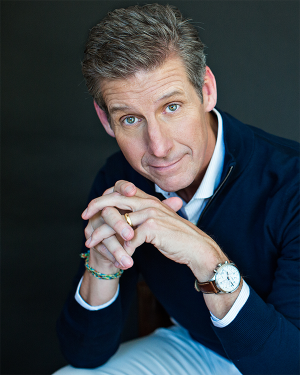
TEXT OF INTERVIEW
Kai Ryssdal The big public policy issue this fall — and when I say big, I mean global — is climate change. Mostly because of a United Nations meeting in Copenhagen this December. In the run-up to that conference, environmental groups are trying to rally people to their cause.
An organization called 350.org is sponsoring an International Day of Climate Action tomorrow. People all over the world will be rallying to stop global warming, with things like bike rides and human pyramids. 350.org was founded by Bill McKibben. His first book, 20 years ago, called “The End of Nature,” was really the first about climate change written for the non-scientists among us.
Bill McKibben: 350 is the most important number in the world, even though nobody really knew it was important two years ago. Once the Arctic had melted in the summer of 2007, our climate scientists went back to work and they said, “This is happening faster than we thought. And the reason is that the climate is more sensitive than we thought.”
As one NASA study put it in January of 2008, any value for carbon in the atmosphere greater than 350 parts per million is not compatible with the planet on which civilization developed, into which life on earth has adapted. Now that’s strong language and it’s stronger still when you know that we’re at 390 parts per million now. We’re too high.
Ryssdal: But I have to ask, how do we get back to 350. We’re at 390-something now, how do you turn the clock back?
McKibben: We’ve got to do everything we can as fast as we can. There are unfortunately no silver bullets — no technology that replaces fossil fuel one for one. It was good stuff. It’s too bad it’s wrecking the planet. Happily, there are some options that are becoming more and more possible all the time. When I talked about solar power or wind power 20 years ago, frankly, we had our fingers crossed. Not so anymore. Wind power’s the fastest growing source of electric generation around the world. And it could grow much faster if our governments put us on the kind of war time footing we need to be on.
Ryssdal: All of this comes with a price tag though. The latest figures I see show something like 1 to 3 percent of global gross domestic product, like a $1 trillion or more.
McKibben: That’s right. There’s no free lunch here and I’m not going to pretend that there is. There have been three or four really good studies now of what it would take to get back to 350 and they all show some cost. On the other side of the ledger, the cost of not doing anything is so astonishing that it hardly even bears talking about. You can’t have an economy on a planet that’s broken.
Ryssdal: On the subject of October the 24th, Saturday, and your planetary call to action. It seems a rather grand ambition for a movement that has had trouble galvanizing global agreement on what to do with climate change in the first place.
McKibben: It is and takes me surprise that our piece of this movement has managed to go as viral as it has. I think what it speaks to is the desire of a great many people to finally insist that our leaders pay some attention to the science. We need a movement. That’s the movement we’ve been building. It’s incredibly exciting to see it happening everywhere — along the shores of the dwindling Dead Sea. You know, the Israeli activists are making a giant human three on their beach, and the Palestinians a giant human five on theirs and the Jordanians a giant zero. ALmost making the case that we’re going to have to put aside some of our other differences for a while and deal with the single biggest problem we’ve ever faced.
Ryssdal: Bill McKibben, he’s the coordinator of 350.org. It’s a climate change campaign. Bill, thanks a lot.
McKibben: Kai, thank you so much. Have a good day.
Stories You Might Like


There’s a lot happening in the world. Through it all, Marketplace is here for you.
You rely on Marketplace to break down the world’s events and tell you how it affects you in a fact-based, approachable way. We rely on your financial support to keep making that possible.
Your donation today powers the independent journalism that you rely on. For just $5/month, you can help sustain Marketplace so we can keep reporting on the things that matter to you.









