Los Angeles joins plastic bag ban


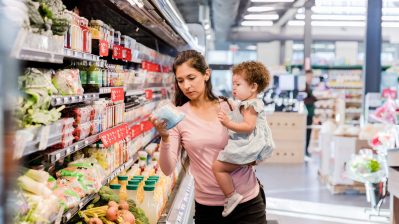
Kai Ryssdal: Here’s today’s mind-blowing but still somehow not surprising indicator of the way we live in the early 21st century. Best guesses are that every year here in the city of Los Angeles, we go through 2.3 billion of those plastic grocery store bags. That goes a long way to explaining why the city council has voted to ban them. L.A.’s the biggest city in the country to do so.
Once the ban phases in over the next year, a subsitute paper bag will cost you 10 cents. But that’s not so great for the environment either. Marketplace’s Adriene Hill reports.
Adriene Hill: Plastic is on the way out in L.A.
Mark Gold: It’s not just great news for our oceans, it’s great news our rivers, it’s great news for our neighborhoods.
Mark Gold is associate director at UCLA’s Institute of the Environment and Sustainability. Plastic sticks around, he says — it gets hung up in trees, snagged in drains. It’s easy to see the pollution it causes.
But paper’s got problems too.
Gold: Which is why the city council went forward with a paper bag fee.
Darby Hoover is with the Natural Resources Defense Council.
Darby Hoover: Any time you have a disposable bag, a bag that is designed for one or maybe two uses at most, you’re investing energy, materials, water, materials like trees, into the production of this bag.
Making paper bags creates green house gases, water pollution. And urban policy makers know this stuff.
David Assmann: They both have environmental problems, we ultimately want to see them both disappear.
David Assmann is the deputy director of the department of the environment in San Francisco, which also has a plastic bag ban.
Assmann: Banning both outright overnight would cause disruptions in the system, people wouldn’t necessarily be prepared. We see this as a progressive policy.
Where the checker of the future simply asks: “Do you have a bag you’d like me to use?” Might wanna watch your back, paper.
I’m Adriene Hill for Marketplace.
Stories You Might Like


There’s a lot happening in the world. Through it all, Marketplace is here for you.
You rely on Marketplace to break down the world’s events and tell you how it affects you in a fact-based, approachable way. We rely on your financial support to keep making that possible.
Your donation today powers the independent journalism that you rely on. For just $5/month, you can help sustain Marketplace so we can keep reporting on the things that matter to you.