
When people cheat on Wall Street

TEXT OF INTERVIEW
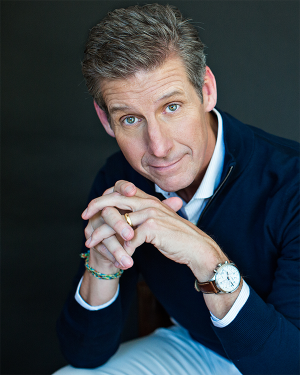
Kai Ryssdal: All the scheming and double dealing in the news doesn’t speak too highly of the world of personal finance. It got us wondering about whether endlessly hearing about the likes of Bernie Madoff might affect everyone else’s sense of right and wrong. Luckily enough for us, behavioral economist Dan Ariely’s been doing some research on just that topic.
Dan Ariely: We got the group of students and we gave them a set of very simple math questions, and some people tried to solve them. And when they finished, we gave them 50 cents per correct question. Some people, we pre-paid them; they had all the money in the envelope and we said, “When you finish, give us back the money you didn’t make.” And, unsurprisingly perhaps, many people cheated by a few questions. The most interesting thing is that we had a student that we hired, an acting student at Carnegie Mellon, who stood up after a few seconds and said “I solved everything,” — clearly cheating because nobody can solve all these questions in 30 seconds — “What should I do?” And the experimenter said, “If you finished, go home.” Now, what will this create? Will people cheat more or cheat less? Well, it turns out it depended on what kind of sweatshirt he was wearing.
Ryssdal: I’m sorry, what kind of sweatshirt?
Ariely: Yes, what kind of sweatshirt.
Ryssdal: OK.
Ariely: Here’s the story. We ran this at Carnegie Mellon, in Pittsburgh. And in Pittsburgh there are two universities: Carnegie Mellon, University of Pittsburgh. All the students who participated were Carnegie Mellon students. If the cheating student, the acting student, was wearing a Carnegie Mellon sweatshirt, he basically got people to cheat more. But if he was wearing a University of Pittsburgh sweatshirt, he got people to cheat less. What is basically happening here is that when he stood there with a Carnegie Mellon sweatshirt, he gave a social justification for a new social norm to emerge about cheating. But when he was wearing a University of Pittsburgh sweatshirt, all of the sudden people said, “This is cheating. This is what the other people in the bad school are doing. This is not what we’re doing.” And therefore cheated actually less.
Ryssdal: Take this back into real life for me though, and let’s pull an example from the headlines. Bernie Madoff, the guy who allegedly ran the Ponzi scheme, does something like that — highly publicized, a guy on Wall Street, been around for a long time — does that then, do you think, inspire people to cheat more or less?
Ariely: So I think it depends on how we frame it. If we are framing it as he’s a part of Wall Street, it will be like the guy wearing the Carnegie Mellon sweatshirt; it will be a part of the in group and will increase what is acceptable in the bankers’ eyes in terms of cheating. But if they were able to frame him as a University of Pittsburgh student, as an outsider — somebody who is from a different investment firm, with a different approach not typical of Wall Street — then they might actually decrease cheating with that approach.
Ryssdal: Is there a way to use other factors to try to stop this cheating? And I’m just thinking about, you know, making people aware of their ethical obligations. I mean, everybody who works on Wall Street has a trading license and they know they’re not supposed to do these things. What if you remind them of that at the beginning of every business day?
Ariely: Yeah. So we actually find very good evidence for that. We’ve done it multiple times. So sometimes we ask people to try and recall the Ten Commandments. And after trying to recall the Ten Commandments, and we give them a chance to cheat and steal money, and nobody does. And it’s not as if the people who remembered more commandments cheat less and the people who remembered few commandments cheat more. It’s nobody cheats after that. The moment we remind people about their honor of themselves, their own standards, they stop cheating.
Ryssdal: Dan Ariely teaches behavioral economics at Duke University. His book on the topic at hand is called “Predictably Irrational.” Dan, thanks a lot.
Ariely: My pleasure.
Stories You Might Like


There’s a lot happening in the world. Through it all, Marketplace is here for you.
You rely on Marketplace to break down the world’s events and tell you how it affects you in a fact-based, approachable way. We rely on your financial support to keep making that possible.
Your donation today powers the independent journalism that you rely on. For just $5/month, you can help sustain Marketplace so we can keep reporting on the things that matter to you.








