
9

Mormons and provident living


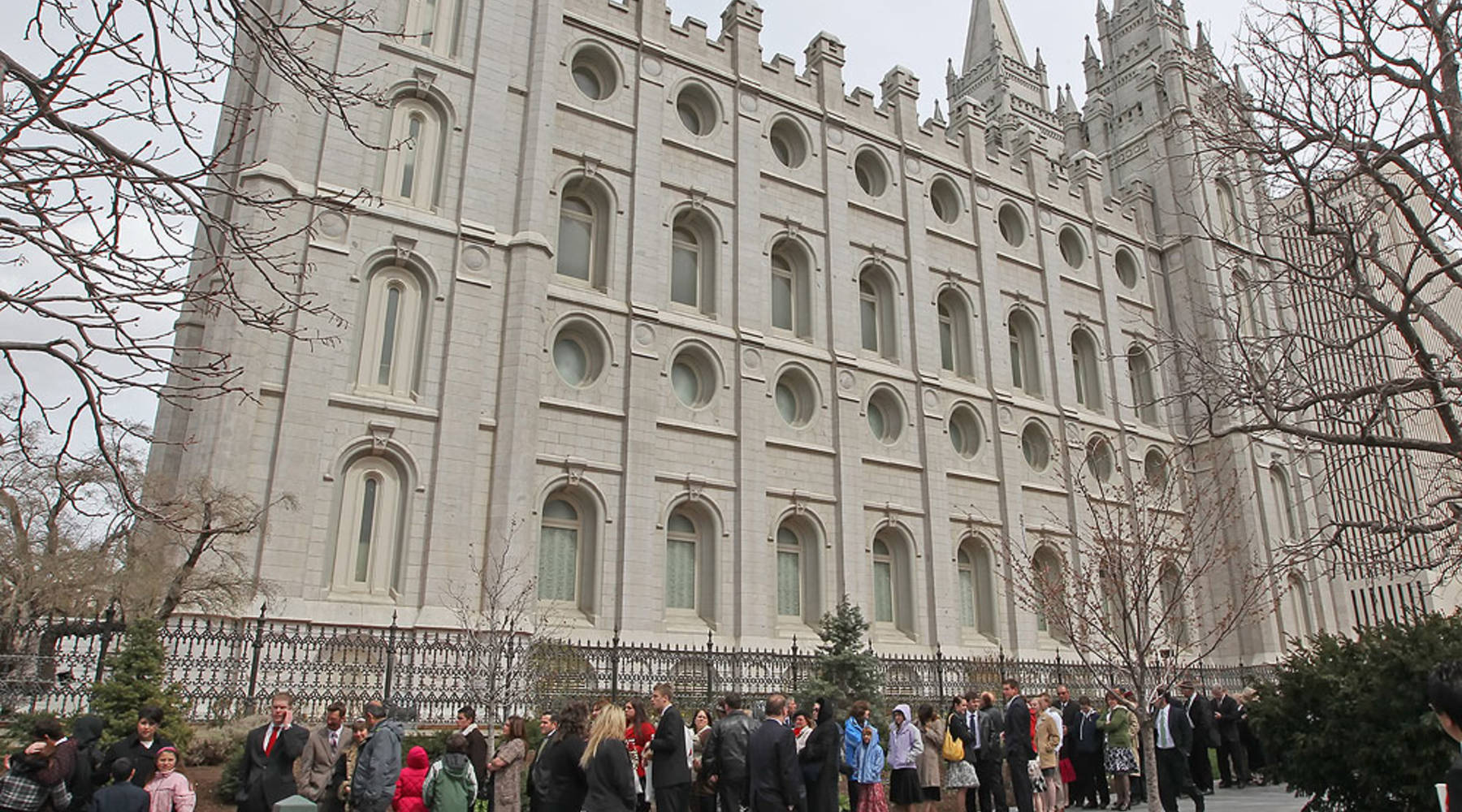
Outside of the historic Salt Lake Temple in Salt Lake City, Utah.

To view this content, Javascript must be enabled and Adobe Flash Player must be installed.

Get Adobe Flash player

Last week we began a series of conversations about the role religion plays in some families' financial decisions. We started with an exploration of how Muslims view money management. Today, the Church of Jesus Christ of Latter Day Saints.

Earlier this year on a trip to Park City, Utah, Money host Tess Vigeland sat down to dinner with several members of the Mormon Church. Greg Robinson is a vice president and wealth advisor with Wells Fargo. He's also a nephew of Republican presidential candidate Mitt Romney. His wife, Robin, is an author and educator. Greg Bishop -- yes, two Gregs -- serves as general counsel for a home automation company in Salt Lake City. His wife Christy is a massage therapist. And finally, a familiar voice on this program, financial advisor and napkin artist Carl Richards of Buckingham Asset Management.

A prominent teaching of the Mormon Church is "provident living." One of the goals of provident living is to achieve self-reliance -- financial and spritual -- which in turn frees church members to help others achieve self-reliance. Church members are required to give a 10-percent tithing, which contributes to church operations. There are many opportunities for Mormons to help support the local and global communities -- things such as a "perpetual education" fund, fast offerings.

"There is a spiritual, sort of, guarantee that you obtain from that, where if you are obedient, then you receive a blessing," Robin Robinson said. "So even if you don't make a lot of money, if you are donating that 10 percent, which is what the Lord has asked of us -- then you have the Lord's promise that he will help you when time are difficult."

Learn more about the Mormon Church's philosophies regarding money, giving, saving and spending by listening to the interview above.

About the author

Tess Vigeland is the host of Marketplace Money, where she takes a deep dive into why we do what we do with our money.
VictorJackson's picture
VictorJackson - Aug 14, 2012

Is Mitt Romney gullible? Does he know fraud when he sees it?

e.g. From the Book of Mormon:

(In America "the land of promise" c. 600 B.C.)
1 Nephi 18:25
"we did find upon the land of promise ...
the cow and the ox, and the donkey and the horse"
Mormon Founders: Money & Sex
http://forourworld.net/group/whiterose21rstcentury/forum/topics/mormon-f...

BusyPoorDad's picture
BusyPoorDad - Aug 13, 2012

I'm surprised the bitter comments about the church took so long to show up. But then Christians and Religion in general are not favored by the larger reader/listener audience of NPR.

People who want to hate will find ways to make anything look bad or just to ridicule it. One writer posts "The implication by a guest that a poor person has the same moral obligation to tithe as a rich person is repugnant" another "Of course, the rest of us just don't know how to live right, get an education, get a good job, and save our money"

What they and some other posters forget is that NO ONE FORCES YOU TO JOIN THE CHURCH! You are free to choose to belong. If you want to be a member, here is what is taught, that all are equal in the eyes of God. As such, under the teachings of the Church, 10% of all increase is to go to building the Church. But no Church official will show up at your door with armed guys to take you away to jail for not paying a full tithe. The Bishop might ask to talk to you one day to encourage you to follow the teachings of the Church but he won't arrest you and seize your home and garnish your pay check.

The Church has a welfare program, it is the last resort when you have hardships. First the church wants us to be able to care for our own family - the food storage, the provident living. Families are the key to the church. It is not wrong to ask if you have gone to the family first before going to the Church or government. If you did not, and remember you are asking for help so it is only fair that questions be asked, then why? After that, the Church will turn to the congregation and what is known as "the Bishops Storehouse" before sending them to the government.

The Bishops Storehouse is where food and supplies are collected, many from the funds raised by fasting once a month, for distribution to the needy. The Bishop has the duty to make sure these supplies are not miss-used. There is no set amount or percentage for that. You are urged to be generous. It is recommended that it be the value of the meals you did not eat, but more is never turned down.

The Church strongly supports education, that is what will help you be able to care for your family and help others. It has never been the attitude that "only the mormons know what is best for you". The reporter was trying to get the view of money and finance from members of this Church, they gave it and the posters here ridicule and make fun of beliefs. Instead of using the opportunity to learn a bit more about Christian's views of money they close their ears and ridicule.

The Church (any church) in the US is tax exempt under law. Money given to the church is used to maintain the buildings and carry out the work of the church. Unlike most other Christian Churches, Mormons do not pay their ministers and teachers. These are called from with in the congregation and serve for a few years before a new person is called. All this is done with out monetary pay, only spiritual pay. So the tithing paid is not lining the pockets of ministers or buying million dollar beach condos.

But the real issue is that no one is forced to be a member, no member is forced to follow the teachings. (granted if you violate enough or commit some egregious sin, you will be dis-fellowshiped or excommunicated, but even then the goal is to help you repent and return to voluntarily following the teachings)

gjg64's picture
gjg64 - Aug 12, 2012

Basically, what I heard from the Mormons interviewed was this; everyone has to pay the exact same percent "tithe" no matter how much or little they earn. This goes to pay for our temples, missions, and other "church things". Use the money you save from fasting to help the poor (how much is that? 1%?). If you need help your Bishop will tell you to get it from your family and if that doesn't work maybe the church will help you.

Wow, what a great scam the leaders of that racket are running......how can I get in? If Ayn Rand weren't an atheist I'd swear she were a Mormon.

So, when Romney says he donates to "charity" don't believe a word of it. I buy my nieces presents or take them out but I don't consider it charity.

sweetmarten's picture
sweetmarten - Aug 12, 2012

What is Miss Vigeland's motive, I wonder? She gives so much precious time to a slick group of promoters and their well-rehearsed script meant to present an organization of wealthy high-jackers and religious zealots as just good ol' spiritual folk workin' hard and lovin' the lord. Of course, the rest of us just don't know how to live right, get an education, get a good job, and save our money. Thank GOD most of us do not buy such cheap promotion and ego. Their words would have been hilarious if they weren't so dull-witted and so offensive to millions of good people with the souls of saints.

rickevans033050's picture
rickevans033050 - Aug 12, 2012

The implication by a guest that a poor person has the same moral obligation to tithe as a rich person is repugnant.

Poor means you lack income and assets but you're expected to slavishly hand 10% of your income over to a tax exempt equivalent of a corporation?

Rich means that you have long past exceed by multiples what it takes to live an upper middle class lifestyle by multiples.

But if the poor person loses her job and needs help she's first asked have you exhausted the help of your relatives?

Welcome to the Romneyhood.

AndrewDavies's picture
AndrewDavies - Aug 11, 2012

This series of interviews about religion and money are really fascinating. Thank you so much for doing this. Not just because of how informative they are, but also because of the conversations they spawn. This one was particularly interesting as it inevitably brought up the topic of politics, especially since one of Gov. Romney's nephews was part of the discussion.
In addition to the tax issue Jerry L mentioned , some of the principles spoken about by the panel (tithing, a fasting offering to provide for the less fortunate, a grant program for the education of the community ) all sound like something a Republican would label pejoratively as "socialist!" I suspect it wouldn't be civil to bring it up in the interview, but I couldn't avoid thinking of how the way Mormons are taught to live, directly conflicts with the way their highest profile representative is communicating he will run the country.
Thanks again for an insightful segment and keep up the good work.

Jerry L's picture
Jerry L - Aug 11, 2012

I think that what Greg Bishop said about paradigms (which is a common religious perspective) has an interesting parallel in what Pres. Obama said recently about "you didn't make that", which conservatives have been attacking him for.

Greg Bishop said: "For me, it’s a paradigm, right? So if you start from the position that all of this that I earn is mine, then you say to yourself, wow! 10%, that’s a lot, that I’m giving away. But if your paradigm is, everything that I have comes from God... so I earned it, yes. But the abilities that I have, my education, my ability to do labor, whatever it is, the way that you earn your money, if that all comes from God because He allows you to live and breathe and exist, then 10% back, that’s just the piece that He wants back of stuff that was His to begin with."

The institutions and infrastructure you relied on to get where you are may have all come from God, but much of it came by way of taxes your fellow citizens paid to build the roads and the schools, to do the medical research, etc., that you and your family relied on. As Obama said: "You didn't build that." Or paraphrasing Greg, "It’s a paradigm, right? So if you start from the position that all of this that I earn is mine, then you say to yourself, wow! The taxes I owe, that’s a lot, that the government is trying to steal from me." But if your paradigm is, "I'm a member of society, and my accomplishments are not just my own doing, so all that I earn isn't just mine. There is a piece of it that I owe back to society,” then you’ll see and agree with what Obama was trying to say. It's a traditional point of view. And it's one that conservatives and libertarians in the Republican Party are seeking to discredit and abandon.

Jerry L's picture
Jerry L - Aug 11, 2012

I found the interview interesting, but frustrating because you didn't ask the question uppermost in my mind, and I suspect I'm not alone. You mentioned that Romney has been in the news. You asked about tithing. But you didn't ask about taxes. It would have been sensitive to ask, but it needed asking. (At least today. Perhaps not so obviously at the time the interview was conducted.) The Mormons interviewed told of how important it is for them to tithe. But what about paying their taxes, especially federal taxes? Is it regarded as a virtuous thing to do? Is it a positive good, like tithing or making fast offerings, or an evil or an imposition which it is better to escape if at all possible? Do Mormons, because they already pay 10% to their church and make fast offerings, feel less of an obligation to contribute to the general welfare by paying taxes to the federal government?

BusyPoorDad's picture
BusyPoorDad - Aug 13, 2012

members of the Church of Jesus Christ of Latter Day Saints, Mormons, have as one of their Articles of Faith the following: "We believe in being subject to kings, presidents, rulers, and magistrates, in obeying, honoring, and sustaining the law." The obligation to pay taxes is part of sustaining the law. They are also expected to work with the law to best bring about a society that reflects the beliefs they have, just as any other person in the US. Liberal members will work to expand the amount of taxes taken by the government to help with their pet projects, Conservative members will work to direct spending by the government towards their pet projects. Just like any other religion.

Harry Reid and Mitt Romney both are working with in the political system to make America a better place. But both have different ideas what that is and how best to reach that goal. The Church does not say "because you pay tithing, fast offering, perpetual education fund, etc you should not have to pay more taxes." it says follow the law, and work with the law to make the world a better place. In the mean time, keep helping others.







