15

Running education more like a business

Philanthropist Eli Broad discusses the problems with education and his ideas on how to fix it.

To view this content, Javascript must be enabled and Adobe Flash Player must be installed.

Get Adobe Flash player

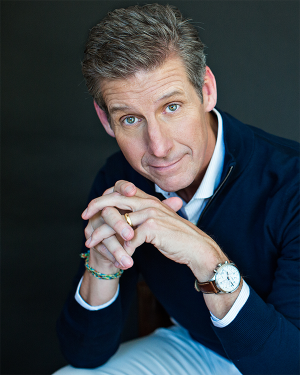
Kai Ryssdal: Amy mentioned a guy named Eli Broad, one of the big donors in education philanthropy. He's one of the world's big donors, period. He made his money in homebuilding and, later on, insurance. He's taken a special interest in modern art.

Which made a visit to his offices here in Los Angeles the other day not unlike a private museum tour.

Eli Broad: These are all Jasper Johns prints.

But we didn't chat long about what was hanging on the walls. I wanted to ask him about the $450 million that his foundation has invested in schools over the past decade and, also about his methods. Things like the Broad Superintendents Academy getting more people with managerial skills into public school administration.

The first question I asked him when we sat down was why he gives to public education.

Broad: I'm a product of America's public schools and a land-grant university. And I think that we're looking at education today in what I call an antiquated system. The American classroom hasn't changed in 100 years. The biggest change is instead of a blackboard with chalk, you've got a whiteboard with marker pens. And if you think of anything else in American society, everything has changed by the use of technology and so on.

Ryssdal: You mentioned your education, Michigan State University, public schools in Detroit.

Broad: Exactly.

Ryssdal: Did they prepare you with what you needed to survive and thrive in this economy?

Broad: I think they did, but the world has changed since then. We weren't concerned with how kids were being educated in Korea, China, Japan, India or certain European nations then. We were the United States of America. The world has changed and we've got to do better.

Ryssdal: There's a tactful way to ask this question, and then there's the expeditious way to ask this question. And so I'll go straight to that way: For all your experience, for all your resources and your success, what do you know about education?

Broad: Well, I know that we aren't getting the job done. I'm looking at student acheivement. I don't see it growing rapidly -- it has too. And how do you change it? You change it -- in my view -- by having better governance, better management -- whether it's the superintendent or the principal. You've got to have better teachers, paid more money -- incentivised -- but held accountable.

Ryssdal: You'll forgive me if I say that sounds spoken like a businessman.

Broad: Well, I'm not sure that some of the things you learn in the world of business, or in government, or in other non-profits can't be applied to education.

Ryssdal: Is it for you a case of -- just to keep with that business theme for a moment -- return of investment? What do you want to see? What results do you want to see?

Broad: We want to see increased student achievement and we want to see the gaps between income and ethnic groups narrow.

Ryssdal: That's it, boom?

Broad: That's what it's all about.

Ryssdal: You have a program at the Superintendents Academy to bring in business leaders, military leaders, civic leaders and others.

Broad: And people from education!

Ryssdal: And people from education. Is that the way to do it?

Broad: I think it is a way to do it. Because when we started 11 years ago, we saw most of the superintendents or chancellors start as a coach or a teacher without any training in management, labor relations, systems, communications, logistics, etc.

Ryssdal: I wonder if something is lost when you have outsiders with resources coming in and saying, "Listen, here's what we think has to be done."

Broad: Well, I think giving people new ideas and new thoughts and saying, "Look, you've got an antiquated system that needs to change." In the last several decades, spending in real dollars has gone up 250 percent, but student achievement has been flat.

Ryssdal: Are there things that educational philanthropy can't fix, that you and foundations like yours -- no matter the resources -- just can't do?

Broad: We can't fix everything. We can come up with ideas, suggestions, we can train people that have competence, but that's all we can do.

Ryssdal: Is there then a role still for public funding for education and local government control?

Broad: Education has to be publicly funded. Local control? I think that we're now competing with too many other nations. We've got to have -- in my view for example -- a uniform math curriculum across America, probably the same thing in science also. And that's going to come from either governors or U.S. Department of Education.

Ryssdal: Is there a way that this economy gets fixed if education doesn't get fixed?

Broad: Education has to get fixed. Look, the gap between the 1 percent and the 99 percent is far too great. And part of the reason is we've not done the job in education that needs to be done.

Ryssdal: Eli Broad, thanks very much.

Broad: Good being with you.

About the author

Kai Ryssdal is the host and senior editor of Marketplace, public radio’s program on business and the economy. Follow Kai on Twitter @kairyssdal.

Pages

SaminTexas's picture
SaminTexas - Dec 13, 2011

As other commenters have alluded, Mr. Broad's only comparison is to China and India, not the top of the education heap, which is located in Scandinavian countries that take a decidedly different approach than incessant, meaningless, time-consuming testing. Even more amusing is how Mr. Broad claims that he wishes to compete with the Chinese and Indian education systems because of growing income inequality in this country; has he checked the income chasms in China and India lately?

annehdrama73's picture
annehdrama73 - Dec 9, 2011

Mr. Broad's comments are horrifying. First, how does he know that the only thing that has changed in schools is that chalkboards have become whiteboards? Second, why didn't Kai Rissdal question his statement. Everyone who commented before me has said beautifully what I believe.
As for students not making progress, let him take the test my kids have to take. The tests are truly difficult, unrealistically so. Furthermore, they are intended to have many students fail, fail to make annual yearly progress. I see my students struggle to make sense of long, meaningless, boring passages. Then they answer questions that are intended to be confusing and deceptive -- yes, deceptive.
I love my kids, and it breaks my heart to have them be told they are failures when they are not.
And I am upset that Kai Rissdal did not challenge him on a single fact or statement.
The comparison to the health care dollars is perfect. Why is it that our nation is not making the same progress that nations like Finland, Germany, and others in Europe are making?
I would challenge anyone who claims to be able to "reform" our schools to spend one year teaching in a public school.
But all Mr. Broad is telling us how bad schools are, as do Bill and Melinda Gates, the Koch brothers, and the Bush family. But none of them have every taught in a pubic school for long enough to get it. Yes, they have all been to school. Somehow, that makes many people believe they are experts on American education.
Well, I have been to the dentist. I have had surgery -- more than once. That does not make me an expert.
Again, Mr. Broad -- come to my school and teach with me. I say that know you never will take that challenge -- much less even care or read our comments.

jader3rd's picture
jader3rd - Dec 9, 2011

Part of the problem is that people who have succeeded partialy think that everyone can succeed to, if only they stopped goofing off and learned. In todays society succeeding greatly depends on ones ability to understand symbols. But ~40% of American's today don't, and no amount of teaching will overcome that. They're brain just isn't wired for it.
Also, many people learn differently. Some people really stretch themselves when competition is involved. Many people learn well when learning as a team. Some people need a little more positive reinforcement. Many people need to get their feelings hurt, get told they're doing it wrong, and then they'll work harder to correct what they're doing wrong.
Schools started out as a place to learn for the sake of learning. Apprenticeships were created to train people in how to do professions. I'm not suggesting we get rid of public education, but the idea that everyone will succeed if they get shoe horned into being a book worm isn't the best of use of public dollars.
Perhaps we should concider leaving some children behind, and getting them focused on and trained in tasks that they will be able to do.

Greg L's picture
Greg L - Dec 9, 2011

I can appreciate how difficult the job of teaching must be these days, as well as the concerns of all the commentators here. I am not an educator, and I’m sure the tactics used in educating no doubt do come down to an art. But Barry 1000 brings up insights into this issue that are of most concern to me. Missing from this dialogue is the incidence of content in education, and likely deliberately so. Personally, I don’t contribute to organizations that I feel are working against my values (not willingly, anyway); but then, I’m not a billionaire who hopes to change an organization structurally. We can surely expect private contributors to want to have a say in what is taught, if they don’t actually do. Here’s a quote from a news feed out of a 2011 Times article:

“John Allison, chairman of BB&T Corp. turned business professor, is now working through the BB&T Charitable Foundation to offer schools multi-million dollar grants, so long as they create and offer a course on capitalism that features Rand’s Atlas Shrugged as part of the course syllabus.”

Read more: http://newsfeed.time.com/2011/05/06/college-donors-want-to-make-ayn-rand...

How students are taught is one thing; what they are being taught is the most important thing to me. For example, there is a lot of emphasis on neo-liberalism in the study of economics these days, according to economics professor Joseph Stiglitz. Unfortunately, that’s about the only thing that has trickled down to the general population since the 80’s, and not by accident, you can bet. The line that government (education, in this case) should be run like a business is really getting old. What sort of business? A mortgage lending business, perhaps? An airline? Government works a lot better when it’s adequately funded. I would also second Barry’s views on the compulsory nature of education, but only from a student’s perspective: I never really started learning until I learned self-discipline, and most of what I’ve learned has been outside of academia. Non-compulsory education sounds radical, but reverse psychology is a powerful tool. If I were a teacher, the first thing I would want to teach is that education is a privilege, not an imposition. (And if you don’t want to learn, what in the world are you doing here!)

Barry1000's picture
Barry1000 - Dec 8, 2011

I'll bet you didn't expect this reaction! The educators all blame the parents & kids & culture (or they deny that the problems are really all THAT bad), while others blame the schools. But the truth is that little has changed, as your guest stated. I'll tell you (& Mr. Broad) one thing; education is not a business & schools should not be operated as businesses. Privatization is the worst possible solution & can only exacerbate problems. Now, please pass on to Mr. Broad the one element that has yet to be discussed, which is at the root of the dilemma of perpetual school failures. Reform is impossible because compulsory attendance creates a host of impediments to valid educational progress for the individual & the society. School as we know it "is bad for kids" (John Holt). The very existence of laws forcing attendance fatally & permanently compromise the provision of learning opportunities. It is a mass delusion to hope that the masses will become educated or even good & competent citizens in such environs. Education & coercion are antithetical. These billionaires are throwing their money into the abyss, unless their goal is to make a profit from selling their products (computers & software in Gate's case) or services. We need to redefine what an education is & completely revise our philosophy regarding children & schools. We will see no improvement until we start a genuine educational revolution in which the ludicrous myths that prevail are abandoned completely. Keep your eyes peeled for my new website TBA soon & for more news about the ending of the school reform fraud. I can be reached at 702-716-0472.

Fireman1979's picture
Fireman1979 - Dec 8, 2011

Mr Eli Broad seems to base his criticisms of education on the lack of correlation between lower outcomes in our student scores or achievements and the increases in educational budgets and or costs. But this isn't the only instance in our country where there is a disconnect between higher costs and mediocre outcomes. The Milliman company published data stating (2011 Milliman Medical Index Healthcare ) that the average family healthcare premium had doubled in the last nine years and I have also read that the medical outcomes have not greatly improved during that time. While we all are complaining about educational costs since they are in our taxes, we somehow forget to mention that our healthcare costs are 17% of our GDP and rising without significantly better outcomes.

Austrian School's picture
Austrian School - Dec 9, 2011

The cost of education and the cost of health care are rising for the same reason. Whenever government comes in as a third party payer we take the pressure off of cost and efficiency. We would do better to have people keep more of their money and then pay directly for those costs rather that have us pay the government first so that they can pay for those costs on our behalf.

Bobb's picture
Bobb - Dec 8, 2011

"Well, I know that we aren't getting the job done. "
Then why does he think that (after 11 years) he is right ? A lot of 'school problems' are 'Family issues' or a LACKof proper parenting. It has nothing to do with teachers having new books etc. I live near Boston and used to service equipment at the old Lawrence, MA High School. All doors but one had THICK chains /padlocks and the one door that was open had a metal detector - like the machines at the airport. School standanrds were never met. It went into receivership. Still no good. Then the govt built a new school complex - 6 big brand new buildings and ... 5 years later the state just took THAT over because the students can't pass a standard test.
...
http://www.eagletribune.com/latestnews/x91294659/Education-chief-briefs-...
... then click here ........

http://www.faiarchitects.com/projects/lawrence-high-school-p1/ .....

Look at that place ! Award winning designs ! etc

So, after spending all of that time and money, students STILL aren't learning. Do you think that MAYBE the school appearance has nothing to do with it ? It's family structure - or lack of it. My public high school in Boston is one of the oldest in the country - no modern conveniences and yet the standards were met by everyone in my class.

sek1949's picture
sek1949 - Dec 8, 2011

Having been in Education for 40 years (-36 public school, 8 university), I MUST take exception to the remarks by Mr. Broad regarding education today. He made the comment that education has been the same for over 100 years. Really, it hasn't, but has he considered that IT WORKS!! The main thing that has changed is unquestionably the parents/family. That is the elephant in the room. Teaching is an art, not a business. Children come from some of the most appalling situations - poverty, violence, neglect, coddling, and others- that to arrogantly say that it is the fault of the teachers is simply wrong. If Mr. Broad really wants to see what is "wrong" with education, he should spend 6 months teaching in schools in a poor city like Cleveland, Detroit, etc. Two months in elementary, two months in middle school, and two months in high school. No mentor, no teacher's aide, same salary, same rules, same students. Also, he must live with another teacher who works in the school or in the neighborhood where the school is located. By himself! After that, and the experience of "standardized testing", then I would like to have a conversation with him. He might find that there are nearly all of the teachers that are hard working, but the students are not due to the circumstances and cultures that they live in. Even the "rich kids" have been so coddled that they assume someone else will pick up their messes - academically and socially. Mr. Broad is a victim of HIS culture as well. The Business and Wealth culture is not the same as the life of a school with the myriad of children who change from day to day, from year to year. Please don't dictate from above. You have no idea about what really happens in our schools. Our teachers really work miracles with very broken children. Apparently you were one of those students.

rsivron's picture
rsivron - Dec 8, 2011

Eli Broad and many other wonderful good hearted philanthropists have a problem: They have no clue, so they pour money into the wrong project. Many of them made their money with good old 19th century education. They think that going back to a model that worked, only on a larger scale, is a good thing.

Training good managers will not solve anything. NCLB is a problem. Race To The Top is a problem. The unsupported ideal that standardized achievement tests are helpful in preparing our student for the university, the workplace, or anything at all is the problem.

I have taught science and math over the last 23 years. I taught gifted and not-so-gifted middle school through grad school students. Students getting into college rarely if ever know how to break complex (or even a two-step) problems into manageable smaller portions almost certainly because they learn towards achievement tests. Achievement tests are rarely ever complex. That's why the best prepared students are those that participated continuously in problem-solving endeavors such as "FIRST Robotics", science olympiad, research projects, and home schools.

"Open source" thinking is the future. Flat management models are the future. Teaching science the way we do science is the future. Teaching students how each minority can contribute to the problem solving effort is the future. Problem-solving oriented models that were developed first by physicists (because we were the worst offenders in the past) are the future.

Pages