

EXECUTIVE PROFILE
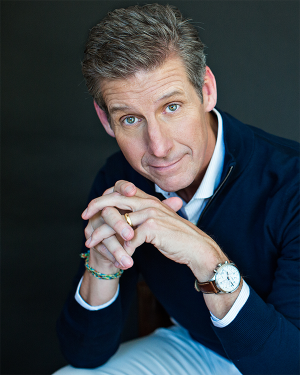
Who: Health Net President and CEO Jay Gellert.
Education: Gellert earned a Bachelor of Arts degree from Stanford University.
Kai Ryssdal: Jay Gellert, welcome to the program.
Jay Gellert: Thank you.
Ryssdal: So how are you going to fix this mess — health care in the United States?
Gellert: We’ve put together a proposal that’s aimed at fixing health care. We think it’s the most fixable of America’s issues. Our industry has put forward a plan that includes making individual health care available to everyone regardless of their medical conditions or health status; secondly, building consumer protections into the health care system so people can be secure and confident that their health care will cover them and cover them on a consistent basis; third, beginning the process of reforming Medicare; fourth, bringing technology and prevention into the health care systems so that it actually works; and fifth, cutting the cost increases that are anticipated in health care by an amount that is half a trillion dollars in 2017 and a trillion dollars a year by 2021.
Ryssdal: Most fixable problem in America. Health care!
Gellert: Most fixable big problem.
Ryssdal: If that’s the case, how come there are still 47 million people in this country, plus or minus, who don’t have health care?
Gellert: Over the last eight years, we have relied entirely on the market to solve the problem. Just like a lot of other things we are realizing the market alone won’t solve the problem. Market is a fantastic tool for our country but it has to be matched with public policy that’s aimed at getting the outcome you want. That’s what we’re saying. We’re saying the system can work but we need some fairly fundamental reforms. We need expansion of certain government programs and we need a commitment on the part of everyone in the industry that these things have to get done.
Ryssdal: One part of the new president’s health care reform agenda is to have some kind of government insurance plan. What do you think of that?
Gellert: Well, we already have a large portion of government insurance plans. We have Medicare. We have Medicaid.
Ryssdal: For fairly specific audiences it should be said.
Gellert: For fairly specific audiences. I think where we are is the following: first of all, we truly believe that government has a bigger role in terms of covering certain populations; so we don’t disagree with the president. We’re strong supporters of the expansion of the children’s program which the Congress has already done. We believe that Medicaid has to be expanded so it covers everyone who is below the poverty level; which it now doesn’t. In terms of the specific issue of the public option, our biggest concern is the following: right now the commercial population spends about a 100 billion dollars more because the government programs are under-reimbursing. If a public option is premised on expanding that, that means the people in the private programs will have an even bigger burden to pay. Right now it’s $1500.00 a family. If that’s the case, then the whole system will blow up. So if it’s a viable proposal, then we are ready to look at it but to try and continue shifting costs to the private sector as a way to do it doesn’t work.
Ryssdal: Sort of sounds like you’re saying, “Yeah, government participation in the market would be fine so long as it doesn’t really compete with the private sector.”
Gellert: No, I think we’re saying we think there’s a role for government as a regulator, we think there’s a role for government for specific populations, and we think that that’s the place government needs to be. If government wants to go beyond that, it should do it with a level playing field. It shouldn’t end up doing what it did, in my view in the home ownership area, where it came forward with an uneconomical proposal that three years later it ended up blowing up. That’s what we don’t want.
Ryssdal: Do you think that government has an unfair advantage just because of its size in the marketplace?
Gellert: No I don’t think it’s just because of its size. The government doesn’t negotiate, it establishes rates. It has the right to say basically this is what we’re going to pay. It has over the last five years, contributed a significant portion to the commercial increase by virtue of not paying costs. So I don’t think it’s fair or unfair; I just think it’s bad policy.
Ryssdal: Don’t you think though, that we have to try something given the state of affairs in health care?
Gellert: Oh yeah! I think we have to try something but what we learned from the financial services system is that we have to try something that works. Just trying something and then ending up with a two trillion dollar problem five years later isn’t sensible. So I would say that what we have to look at everything and see what does the five things that I said. Put the proposals up against objective criteria and see which ones work.
Ryssdal: Let’s run through one or two of those. The first, I guess, and probably the most important would be getting some control over the rate of increase in the health care cost. How do you propose to do that?
Gellert: America doesn’t have higher utilization as most of the rest of the world. It has higher unit costs.
Ryssdal: Which is to say that we go about as many times to the doctor as everybody in the rest of the world does but we just pay more per visit.
Gellert: Yes and we go to the hospital probably a little less, same thing in prescription drugs. There’s a series of things that need to be done. First of all, we have to cut the cost of administration. So one of the things that we’ll be presenting are specific proposals that will cut administrative costs in the system; Second, we need to find a way basically to trim only about 1 and 1/2 % a year of growth in terms of unit costs across the system. And we’ll be coming forth with some very specific proposals that will do that. If you do that, you can have the cost savings I’ve articulated and still have universal coverage.
Ryssdal: Universal coverage.
Gellert: Yes!
Ryssdal: You really believe that even though there’re 47 million people out there who have no coverage at all.
Gellert: Yes. Oh, I think that it’s a crime that we have that in this country. I believe that we have come forward with some very specific proposals that will deal with it. The proposals which we came forward with, even Senator Kennedy’s people said were very productive and pushing forward the debate. So I don’t think it’s this big ideological chasm that we’re facing. I think it’s an issue of practicality. Are people willing to check their ideology at the door, sit down and say this is a solvable problem and it’s incumbent, we do it. I think the new president has been very clear that that is the essence of most of our problems in this country and we’re at the table ready to profer solutions that we believe go to those core issues.
Ryssdal: What’s the difference between 2009 and 1993, 1994 when President Clinton tried to do the same thing?
Gellert: I think that there are three or four basic differences. First of all, I believe there is a much greater sense of urgency across the board in this country. Not only in health care but we’re seeing the shrinking of the middle class. We’re seeing increased pressure on people below the middle class. I think every one believes that’s a national emergency. I don’t think there was that sense when President Clinton was originally elected. Secondly, I believe that the process that the Clinton reform went through wasn’t productive. It just led to needless opposition. It led to not taking the best ideas, pulling them together. I believe that President Obama made a very wise move in picking Senator Daschle who’s sophisticated in bringing people together and getting meaningful reform, but getting it actually completed.
Ryssdal: Senator Daschle obviously to be the new head of Health and Human Services in the new cabinet.
Gellert: That’s correct. So that’s second. Third, I believe that every one sees that there are four or five issues which we have to solve if the country is going to be successful in the 21st century. If we solve them, then once again I believe we will be in the forefront of the world. This is one of them. So there is an intense recognition of that. And then fourth and finally, I think business people have learned a lot from the financial crisis, that over the long haul you can’t have a good business if you have a sector that’s collapsing. And so, across the board I think there is a greater determination to see fundamental change. That doesn’t mean that there aren’t a lot of special interests. That doesn’t mean that there aren’t a lot of barriers. But I am encouraged by everyone I have talked to in the sector that they understand the problems, they recognize the gaps, they don’t believe ‘business as usual’ is viable and that’s much different than it was 15 years ago.
Ryssdal: It’s a little distressing to keep hearing you reference the financial services industry and that model, frankly of industrial implosion, when we’re talking about health care in this country. Do you really believe it’s that dire?
Gellert: I believe that if we do the right things over the next couple of years, it will be a great success. If we do nothing or if we do the wrong things, it’s big enough that it can have the same effect on our economy. So I’m encouraged that the president, that people like Senator Daschle view this as a fundamental economic as well as a fundamental health care problem. That they recognize that this done right again, that it’ll be a great American success but done wrong, it has all the risks of what we’ve seen in the financial services.
Ryssdal: What we have here though in health care in the United States is doctors leaving their practice because they are sick and tired of insurance and sick and tired of under-reimbursement, we have patients going bankrupt to try and pay their medical bills, children without coverage. How do you systemically solve a problem that has so many different problems inside it?
Gellert: First of all, one of the great things of multiple problems is that it’s an environment where nobody will try and protect the status quo. So you have in the essence of what you’ve said, I would say the basis for reform. If 90% of the people were satisfied as providers, as the children, etc…etc…then I don’t think people make change. You know again, we’re playing the financial services analogy, no one talked about the risks in the system four years ago because everyone was merrily happy. So I find the fact that there’s a little tension in the system as opening the door to change. I also think what’s encouraging is that the vast majority of people are happy with their own coverage. So we’re not in a system where when you look at the polls, those who are insured are generally satisfied.
Ryssdal: But the 47 million who are not, their voices aren’t in those polls.
Gellert: No, no, I agree entirely. So you have a system that has the ability to meet needs for some people and you have a crying need to fix it for the rest. I think that’s the way I would say it. So that’s good; it’s not hopeless on the one hand but no one wants to rest on their laurels on the other. When you talk about the 47 million uninsured, 12% are in California. In 2007, the Governor, along with the legislative leaders came forward with a far reaching proposal that would’ve addressed the problem comprehensively. And we, along with other health plans, with the hospital association, with the medical association, with labor, all worked on it and if it wasn’t for the fact that, quite honestly we were between 6 and 10 billion dollars short, it would’ve happened here. That gives me confidence you can do it! And the numbers that the president has talked about in terms of his health proposal would’ve made California health reform a reality. If you can do it in California, you can do it anywhere. And so our experience, the experience of getting that close, gives you a lot more confidence. It was hard work but the work we did would’ve dealt with the problems and concerns you’ve raised.
Ryssdal: Of course, we didn’t get it done in California.
Gellert: But we didn’t get it done only because the state cannot do it on its own. The state needs a Federal government that is a partner in doing it. We now have one.
Ryssdal: Seems to me there would have to be three partners if you are going to look at it that way: a state, the Federal government and private industry.
Gellert: That’s right and I think in California, you had enthusiasm on the part of a large portion of the private sector, you had tremendous hard work on the part of the state, and you didn’t have a Federal government who was engaged. I believe that now we have a Federal government that is committed to it, we have states whether they’re Democratic or Republican all agreeing it’s an issue, and we have a private sector that knows it can’t rest on its laurels. And importantly, a private sector in California that proved it was prepared to change. Just the lack of Federal participation was, I think, the gap that made California not work.
Ryssdal: You are the chairman of the board of America’s health insurance plan, it’s a large trade group for your industry. Do you think that your industry speaks with one voice on this issue?
Gellert: Well, clearly no industry speaks with one voice although I’d say that the proposals we’ve forwarded won the praises, for example of Senator Kennedy’s staff, the Boston Globe; you know not normal advocates or supporters of ours, were unanimously passed at our Board. So I’d be naive to tell you that there’s one voice but I’d say in terms of the basic principles and the basic outline of what I’ve articulated, there is a consensus.
Ryssdal: How much are you as private corporations willing to sacrifice in terms of shareholder value and your profits to get some kind of deal done on universal coverage in this country?
Gellert: Let me make two points: I would argue that in many sectors in this country that the fact that they weren’t willing to take steps earlier, sacrificed a lot more shareholder value than if they would’ve earlier. So I firmly believe that we’re learning each day there isn’t a lot of shareholder value in sectors that fail. So however well you run your company, it doesn’t matter if the business melts. So to me, I see long-term shareholder value and the public interest aligned. Now there’s short-term difficulties which I would admit. Most people have gotten hit hard enough across all industries in terms of shareholder value that they have the opportunity to consider reform now. It’s not like we’re at the peak of a frothy market where any move to change will destroy a sector. We’re at a point where the market is also saying that they don’t see visability to how the status quo is going to bring shareholder value. So we have a chance to say that the market is somehow aligned with us and those that support reform because it’s saying loud and clear that it is not giving a vote of support to ‘business as usual’! It’s not giving a vote of support to ‘business as usual’ in any sector in this economy so this is a unique time for people to step forward and say, “Mr. Shareholder, you don’t have confidence in this economy as a whole in our sector necessarily in particular.” We have a vision of how we can in the long-term make this a very, very viable sector and I think shareholders are interested and ready to hear it.
Ryssdal: How is the recession affecting business for you?
Gellert: We had a difficult 2008. Part of the reason we had a difficult 2008 is we anticipated that consumers would become more cost- conscious earlier than they did. For us actually, 2009 looks fairly good because our products are aimed at high-value products for cost-conscious consumers. And so we’re actually feeling that 2009 will be a decent year for us in that we, I think, thought reform was coming, thought change was coming and in many ways repositioned our business to a less kind of ebullient view of the market.
Ryssdal: Sounds a little bit optimistic to be thinking that reform was coming any time soon. Do you think that the administration is going to be able to do this in the next 6, 8, 10, 12 months or is it going to take longer into his term?
Gellert: I am optimistic that we’ll see legislation in 2009. It will take a long time to implement but even beyond just pure governmental reform, as people have less disposable income, they’re looking for broader coverage and they’re willing to be more aggressive shoppers. That is helping us because that’s the kind of programs we’ve been constructing. And so in California, I think is a place where there are good opportunities for you to segment the market and build products that are more responsive to what people are looking for. I think we have done a good job of that and believe that will be evident in ’09.
Ryssdal: Have you been talking to President Obama’s people or were you talking to them during the transition?
Gellert: We’ve talked to some of the people in the administration, yes.
Ryssdal: O.K. What have you been saying?
Gellert: Just what I am saying here and I think that they’re still in a phase of sorting things out. We’re not by any means the most popular industry…
Ryssdal: Right behind the banks probably…
Gellert: Yeah. We have to sell our ideas. We’re not going to win based on our personalities and so we know that. But I believe the steps that we have taken…as I’ve said, the idea of saying, “we want to end medical underwriting and we want to end it now”. Those are things that they didn’t expect and that they’ve said are very productive parts of the discussion. We’re going to have to do that every day though because it’s our job not only, in my view to have really good ideas, but it’s to convince others that they can begin to believe we’re committed to the things we’re saying. I think we’ve made progress in that but again, people are skeptical of us, this administration is rightfully skeptical of us, the president has said things that clearly we are not things that mean we are going to be in the front of the class but the good thing about that is that it puts incredible pressure on you to have really good ideas. And it puts incredible pressure on you to be flexible and it puts incredible pressure on you to be outcome oriented. And in some ways I think that the protected groups that don’t have that kind of pressure will find that the times and this president will not be as easy for them as those who are actually forced to come up the ideas to solve the problems.
Ryssdal: How much of your time do you spend trying to get this company ready for reform, trying to get the industry ready for health care reform versus the day to day job of running a big health insurance and coverage provider?
Gellert: I think what we’ve said, and we said it about two years ago is that you can’t split it. Our day to day job is so intricately linked with this broader policy issue for really three reasons: One, our customers vote on health as well as buy on health. It’s not like certain goods where people buy them one way but they don’t think about them from a policy standpoint. There’s a pretty good linkage from what people are saying in the ballot box and what they’re saying in our marketplace. So that’s point one. Point two, we believed long time ago that change was coming and so we’ve repositioned some of our business goals. And so we think that’s an important thing to do and I think you’re hearing that more and more from our sector. And then finally, anything you do is in the news so you have to be prepared to think about the whole thing as just one continuum. And so I don’t think it’s divisible. It’s not a case where you can kind of say here’s reform and here’s your business. Again, I go back to the downside of the financial services analogy. They can’t do that at all now, I mean it’s one big pot, it’s one big stew for them. We’d rather be ahead of that in a positive way rather than end up in that position in a negative way.
Ryssdal: Do you worry actually that if you don’t get it right that the government is going to come in and wind up doing what it wants to do anyway, much as has happened in financial services?
Gellert: I don’t think the outcome in terms of financial services is good for the government or good for the industry. But I do believe that if we don’t find a solution that the American people demand one and when you are talking about 16-17 percent of the economy, it has to be front of mind. So I firmly believe that we need to advance proposals that solve the problem and that there isn’t a business model that survives if the problem isn’t solved.
Ryssdal: Do you have the sense of urgency here, I mean there’s a lot of talk, there’s a lot of “we have to reform and it’s a critical problem” and you’ve said a lot of that today but I’m not sure that the public perceives that the health care industry has a sense of urgency.
Gellert: As I’ve said before, there’s an enormous natural skepticism for a variety of reasons. No industry historically has ever led reform. Secondly, as I’ve said we’re not top of the class even when you look at it that way. But the other side of that is that if we actually do what I’m saying, we’ll even shock people into more belief because it will be so surprising! So I think as long as we keep our eye on solving the nation’s problem, making sure that it’s a solution that works, hearing the voices out there and actually not trying to convince people as we have had in the past that what they see isn’t really what is, I think that we will surprise a lot of people. I think this administration is incredibly committed. You know our Congressman is Mr. Waxman. He came and spoke to our associates, three or four hundred of them about 3 or 4 years ago and he said the one thing that he regrets is that he hadn’t yet played a role in fixing the health care system. Well I believe he is going to. I think he is a determined, very competent guy. So I see him, I see Senator Daschle, I see Senator Baucus, Senator Kennedy…I mean their minds are like a laser on getting this done. And so I think we will.
Ryssdal: Last year this company paid millions in penalties and reimbursement for the practice of cancelling policies for people after they got sick. How does that make business sense just in an ethical model?
Gellert: The way the individual insurance market works unfortunately, is that people can come into the market whenever they decide, and if you look at the premiums in California, they are about a third of the levels of those in New York and New Jersey. The reason for that is California has medical underwriting, those states don’t.
Ryssdal: Remind us what medical underwriting is.
Gellert: Medical underwriting means that depending on your health status, you get a different rate or a different set of coverage benefits or the like. I don’t think that’s a good system. I think that’s a bad system and a system that we’ve been front and center with the legislature in terms of changing. So I wouldn’t defend the system. I also think that we made mistakes in terms of our processes. We’ve dealt with them, we’ve resolved them. Those were mistakes that were made 4 or 5 years ago at a different time. We’ve taken responsibility for what we’ve done and we’ve offered policies to everybody who was affected. We’ve come forward and accepted responsibility for the issues and our processes are already changed and we’re aggressive supporters of changing the system so that that process doesn’t exist anymore.
Ryssdal: Are you still paying bonuses and incentives for people to go out and find these candidates for cancellation?
Gellert: First of all, that stopped in 2004. The bonus wasn’t for finding individual people and the total amount of bonuses that were paid, which was mistaken, was under a $1000.00. So I am not defending that element. I am not proposing that I agree with how the system works but we’ve changed it and we are in the forefront of wanting to change the entire system so that we eliminate medical underwriting in its entirety.
Ryssdal: Is there room in this country for a government run health care program and a private health care industry that is profitable?
Gellert: Through all our history we have had government run programs and private run programs and we will always have government run programs and private programs. The answer is yes.
Ryssdal: But on the scale that is being proposed by the Obama administration, it’s orders of magnitudes larger, this government coverage program for all of the people out there who aren’t insured and you’ve talked and worried about profitability and I am wondering if you think there is room for both now and in the future?
Gellert: I definitely do and I think that…the key issue is we can’t tolerate in the future continued growth in the amount of money shifted from government programs into the public sector. We, as I’ve said, each family in America who has a private health care program is paying $1500.00 more a year because the government is under-reimbursing for its existing programs. I think that there is ample place for both of us. I don’t think that the president has indicated that he believes in a government only program. But at the same time I think we have to find a way to solve that problem.
Ryssdal: How do you go about it, as you’ve worried about it today, leveling that playing field? You’ve worried about the government’s influence and it’s abilities in the marketplace. How do you get yourself where you’re happy as a leader of an industry to make that playing field a little more even?
Gellert: I’m not concerned about the government’s influence in the system. Let me be clear about this. If the government took over the entire medical system at the Medicare health care rates, I think every hospital in America would go bankrupt. All of the hospital bonds would default….
Ryssdal: Back to the financial services industry again…
Gellert: So I don’t worry about that as an alternative. I think that if we sit down and rationally look at the numbers as we did here, a good solution will come. And it will be a solution that will combine the private sector that has to be more responsible and more focused on outcome and more focused on our new term which is systemic risk and a government that is functioning effectively. So I think the sooner we get into the details, the sooner we start looking at this, the more we’re going to see consensus than division. And there are some parts of this business, many of which we are not in fortunately, that I don’t think will survive. But I feel like there’s a wonderful opportunity for partnership to fix the systems that will be palpable to the American people.
Ryssdal: Let me back you up for a second. You said you want people to be rational and sit down and look at the numbers but this is such an emotional topic. When you can’t pay your insurance or you don’t have insurance and you can’t pay for your seven year old to go to the doctor, or your husband has cancer and can’t get care and can’t pay for his medication, how do you get rationality into something that is so emotional?
Gellert: Well you start with the fact that none of us are debating whether kids should have coverage. None of us are debating whether husbands with cancer should have care. We’ve proposed something that is a comprehensive coverage plan. So if somebody was saying, “We can’t do that. We have to let 20% of the people go uninsured or we have to make it so…” What I think was a bad idea that the Bush administration had which is that a portion of kids can’t have coverage just because we can’t do that. If that was the debate, I don’t think that’s a debate that I’d want to participate in. We supported the expansion of the children’s program even during the Bush administration. We’ve supported the elimination of medical underwriting and combined with an individual mandate so everyone can always get coverage but has to have coverage. We’ve come forward with a broad proposal on affordability that would make this economically viable. That’s what the debate should be about. We have to state from the start that the very emotional, very valid issues you’ve raised have to be resolved as part of any proposal and no amount of economics should stand in the way of a kid getting coverage.
Ryssdal: Parenthetically, what do you think of the Universal coverage program in Massachusetts and how that’s working out?
Gellert: Massachusetts is a very good design of a program. The problem with Massachusetts is that health care costs so much in Massachusetts it…I think the estimate is that if California spent the same as Massachusetts did on health care, it would cost an extra 50 or 60 billion dollars. Just in California, just a year. So the framework of Massachusetts is very good, I think we have to find a way to do it affordably. The president has made it very clear that if affordability doesn’t follow coverage, it doesn’t work. And so the Massachusetts level of affordability isn’t something that could be tolerated in the rest of the country. Other than that, I think it has a lot of potential and a lot of what we did here in California, was very consistent with that but at a much more economic level.
Ryssdal: Do you despair at all that now that California is in such dire budget straights and the federal government is and will soon be in worse budget straights that the health care debate won’t be able to go anywhere because there just is no money?
Gellert: Well the health care debate must have a solution to the problem at the same time as it goes forward. I firmly believe, and if you look at our AHIP proposal it firmly says that you can’t solve costs without solving coverage and you can’t solve coverage without solving cost.
Ryssdal: Sounds a little circular to me.
Gellert: It is and either we solve the problem and get out of the circle or we run around in the circle. I am an advocate for the first and I think most everybody will come to that conclusion that what we’ve done over the last eight years is run in the circle and we’ve had ideological posts that everyone’s carried around as they’ve run in the circle. What we’re saying is let’s break the circularity and I believe that there’s a lot more sophisticated understanding of that among the key policy makers. I think we have some really smart people leading this thing who understand a lot more than the American people know and will present things in a very positive way.
Ryssdal: Do you think the American people are savvier now than they were 15 years ago when the Clinton’s tried to do this?
Gellert: I think the American people are much more pragmatic about outcomes and much less interested in ideology. I think the American people want results. So I think when people from one side say, “It’s nasty corporations, you can’t trust them!” Or people from the other side say, “It’s big government, you can’t trust them!” I think American people don’t care. They care about the questions you’ve raised: their kids getting coverage, their husband with cancer getting care, access being able to afford their policy, their ability that even if they change jobs that they can still get health care coverage. That’s what they care about! I think the people on both ends who I think destroyed the Clinton plan, I think they are going to find no one cares about them. And I think there will be a powerful movement to solve this problem and we’ll be a participant with a lot of others and potentially strange bedfellows because it will unite everybody who wants a solution against everybody who wants to do talk radio. And you know, I think that’s what this is going to come to and that’s why I think we’re so encouraged.
Ryssdal: Jay Gellert, CEO of Health Net. Thanks a lot for your time.
Gellert: Thanks for having me.
Stories You Might Like


There’s a lot happening in the world. Through it all, Marketplace is here for you.
You rely on Marketplace to break down the world’s events and tell you how it affects you in a fact-based, approachable way. We rely on your financial support to keep making that possible.
Your donation today powers the independent journalism that you rely on. For just $5/month, you can help sustain Marketplace so we can keep reporting on the things that matter to you.









