
The future of U.S. ports after Panama Canal growth
Share Now on:
The future of U.S. ports after Panama Canal growth


David Brancaccio: It’s possible America’s busiest ports may not stay busy. Southern California currently receives most of the imports shipped from Asia. But that could change with a major expansion of the Panama Canal.
Marketplace’s Jeff Tyler explain
Jeff Tyler: Southern California traffic jams aren’t just on the roads. Congestion can stretch out into the Pacific — monster ships with big horns.
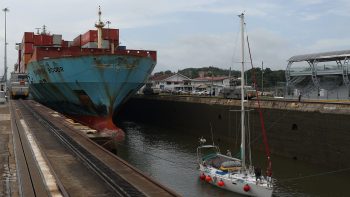
The ports of Los Angeles and Long Beach are the busiest in the country. But that business isn’t guaranteed. The Panama Canal is adding a new, deeper lane that will allow huge cargo ships from Asia to reach the East Coast.
Robert Puentes with the Brookings Institution expects California will lose some business.
Robert Puentes: How big that shift in gonna be is still unclear. There are estimates for a 25 percent drop in and around L.A. That’s probably on the high end. But we do know there is going to be some emphasis on East Coast ports.
Sending Asian imports through the Panama Canal takes longer. It’s faster to send cargo across country by railroad. But congestion around the Los Angeles ports can slow things down.
Page Siplon is with the Center of Innovation for Logistics. It’s his job to promote the port in Savannah, Georgia.
Page Siplon: The congestion comes up all the time. Not just in my conversations, but in business conversations. The congestions on the West Coast ports is a huge challenge.
California is fighting to protect its shipping business. Recently, a coalition of business and political leaders launched a campaign called “Beat the Canal.”
Willie Brown: Hundreds of thousands of jobs are at risk.
Maria Elena Durazo: If we lose to the canal, we lose job opportunities and business opportunities for a whole generation.
It comes back to that issue of congestion.
Paul Bingham is chief economist with the Jobs 1st Alliance. It’s pushing to build new roads, bridges and rail depots to help speed cargo from the ports.
Paul Bingham: In many cases, those projects are ready to go with the funds today if we could get through the government permitting process.
He says government red tape can tie up projects for years. Meanwhile, the new lane of the Panama Canal is expected to open in two years.
In Los Angeles, I’m Jeff Tyler for Marketplace.
Stories You Might Like



There’s a lot happening in the world. Through it all, Marketplace is here for you.
You rely on Marketplace to break down the world’s events and tell you how it affects you in a fact-based, approachable way. We rely on your financial support to keep making that possible.
Your donation today powers the independent journalism that you rely on. For just $5/month, you can help sustain Marketplace so we can keep reporting on the things that matter to you.








