
10

A pragmatic response to climate change

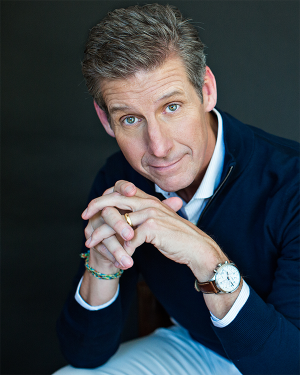
Stewart Brand, author of "Whole Earth Catalog" and "Whole Earth Discipline"

To view this content, Javascript must be enabled and Adobe Flash Player must be installed.

Get Adobe Flash player

TEXT OF INTERVIEW

Kai Ryssdal: Stewart Brand is as close to an iconic figure as the sustainability movement has. Forty years ago he came up with the idea for the Whole Earth Catalogue, kind of a how-to-guide for the environmentally minded. "Whole earth" became a byword for sustainable living. And Stewart Brand became known for this idea that human progress depends on some deeply individual ideas about technology and development. That perception of him may be about to change. He's got a new book. It's called "Whole Earth Discipline: An Ecopragmatist Manifesto," in which he outlines solutions to the climate change problem that might catch some of his old friends off guard. Stewart Brand, it's good to have you with us.

STEWART BRAND: My pleasure.

Ryssdal: Why this book at this time?

BRAND: I think the realization that my fellow environmentalists had been wrong about a couple of issues and were getting in the way of important things we should be doing, both with biotechnology and with nuclear technology and in terms of how we think about cities, and in terms of how I know we're going to think about geoengineering, that is, direct intervention in the climate. All of those issues needed to be re-thought at a deep level, and that's what I tried to set in motion.

Ryssdal: Let's break some of those out and talk about them. Urbanization, first of all. You are now a fan basically of big cities.

BRAND: Not only big cities, but big slums. The squatter cities where a billion people live now, and a billion people more live that are coming. That's how they're getting out of poverty. They're emptying out a lot of the subsistence farms that have been tough on the landscape all over the world, moving into town for opportunity, building jobs for each other. They're also moving up what's called the energy ladder, toward more and better, greater electricity. By and large, cities are probably the greenest things that humans do.

Ryssdal: Did you ever think in a million years you'd be saying something like that? Cities are the greenest things that we could ever do?

BRAND: You know, I was part of the back to the land thing. In fact, I guess I encouraged a fair amount of it with the Whole Earth Catalogue in the '60s and '70s. And most of us went back to the land then and bounced pretty hard, and came back to town within two or three years having learned all sorts of important things.

Ryssdal: Let's continue with the list of things you advocate in this book. Genetically modified crops or genetic engineering. How does that make sense from an environmentalist point of view?

BRAND: Already the crops that we have now, the herbicide tolerant and the insect-resistance crops, like Bt-corn and Bt-cotton, and so on, are cutting back on pesticide use, which is terrific. The herbicide-tolerant ones mean that you don't need to plow every year, so you're getting what amounts to higher yield, so you can raise more food on less land. And all of that is good for ecology in general and climate in particular.

Ryssdal: I will use the language of critics of genetically modified crops here, and say, but what we have, Stewart Brand, is frankenfoods.

BRAND: Yeah, and frankenfood is first to a fictional romantic story in the 19th century, and the idea there was that Dr. Frankenstein was doing something against nature. And that somehow genetically engineered food crops are against nature. And as a biologist, I'm just baffled by that line of argument because agriculture has been in that sense against nature for 10,000 years. That we're finally able to do more precise tuning of the crops is a huge gain, not a loss.

Ryssdal: You're the guy who came up with the idea for the Whole Earth Catalogue 40-some-odd years ago. Chart your progression for me, would you? From a guy who writes something like that to a book called "Whole Earth Discipline: An Eco-Pragmatist Manifesto." I mean, what happened?

BRAND: What's different is in that one I focused on individual empowerment, and in this one the focus is on the aggregate effects of humans on things like climate. And some of these issues are of such scale that you got to have the governments doing things like making carbon expensive. Or making coal expensive to burn and putting all that carbon into the atmosphere. And individuals can't do that, individual communities can't do that. It takes national governments.

Ryssdal: Is there anything we can do that's going to get it done in time? I mean, I know that's kind of a pessimistic question but...

BRAND: I think we'll probably have to step across a couple of too-late lines. Events tend to change behavior. You realize that it's just going to keep getting worse unless you do something. And I think that's what we're going to have to go through before you really get the level of action that's called for.

Ryssdal: Stewart Brand. You knew him first as the founder of the Whole Earth Catalogue. He's got a new book out, it's called "Whole Earth Discipline." Mr. Brand, thanks so much for your time.

BRAND:My pleasure, and thank you.

About the author

Kai Ryssdal is the host and senior editor of Marketplace, public radio’s program on business and the economy. Follow Kai on Twitter @kairyssdal.
Robert Kraft's picture
Robert Kraft - Dec 26, 2009

I heard this story and was intrigued enough to read the book, which apparently, most of the negative commentors have not. I found most of his assertions to be backed up and cited by public and private data or reseach. Perhaps most importantly, he presents alternative views and the (or lack of) supporting data.

Rick Keller's picture
Rick Keller - Nov 2, 2009

I am not aware of any evidence that the billions of people living in big-city slums are successfully moving out of poverty.

Wylie Harris's picture
Wylie Harris - Oct 27, 2009

Marketplace, please fact-check your guests’ statements before allowing them so grossly to mislead your audience.

Brand characterized small subsistence farms as "tough on the landscape;" by most measures, large-scale commercial farms are even tougher.

Moreover, small farms typically produce many *times* more food per acre than larger ones. This pattern is so well documented that agricultural economics gives it a name: the "inverse relationship between farm size and productivity."

Brand stated that herbicide-tolerant genetically modified crops a) reduce pesticide use, and b) have higher yields. Neither is true:

a) USDA pesticide data shows a marked increase in pesticide applications corresponding to the adoption of GM crops. (www.co.lake.ca.us/Assets/BOS/GE+Crops+Committee/6.+GM+Crops+and+Pesticid...)

b) The United Nations' 2008 "Agriculture at a Crossroads" report reported widely varied yield comparisons between GM crops and their non-GM counterparts, and was ambivalent about GM crops’ role in alleviating global poverty and hunger. (www.agassessment.org)

Harry Bennett's picture
Harry Bennett - Oct 27, 2009

I was one of those who went "back to the land" in the early 70's and have never left except to serve in the Peace Corps 2002-04 in Central America in a sustainable agriculture program. Here in rural Kansas where I have my organic farm I am surrounded by fields of GMO soybeans and corn. Every year as more weeds become resistant to "roundup" herbicide the farmers add more chemicals to the tank mix, including atrazine. Our streams, lakes and groundwater are contaminated with excessive ferilizer runoff from no-till GMO crops and now have alarming levels of glyphos, the active ingredient in "Roundup". I have been a farmer for over 30 years and I know this is not a sustainable system of food production and is doing harm to the water resource. I have spent time in several urban areas in Guatemala and Ecuador and did not find a bright future in the slums that are the refuge of those displaced from the rural areas. Mr. Brand has a very skewed vision of the world from his houseboat in San Franciso.

margaret cashion's picture
margaret cashion - Oct 27, 2009

Not impressed with this story. Monsanto, which produces genetically modified seeds is a financial supporter of Marketplace. I don't think it is fair and accurate reporting to have a story that is one-sided in favor of genetically modified seeds and food especially if it helps promote the financial success of your biggest sponsor.

Allen xxxxxxxx's picture
Allen xxxxxxxx - Oct 26, 2009

The end of cheap oil? Isn't that something folks talked about in the 1970s?

Andrea Steurer's picture
Andrea Steurer - Oct 26, 2009

I’m with Carol on this one. Especially in light of the interview on NPR I heard about a month ago produced by World Vision that discussed the so-called “Green Revolution” which is based on genetically engineered crops. Although the initial outcomes were encouraging, one only needs to look at the current food crises in India to see the devastation that has occurred. The dependence on monoculture and fossil fuels for fertilizers, especially with the end of cheap oil, is the “height of irresponsibility”. Monoculture results in depleted soil with poor yields, not to mention the high cost of fertilizer. Quoting Vandana Shiva: “We must stop focusing on simply maximizing grain yields at any cost and consider the environmental and social impacts of food production.”

Tim Anderson's picture
Tim Anderson - Oct 26, 2009

I think this was a terrific interview and shows the value in taking an honest and object look in evaluating the environment. In regards to the previous comment by Carol Williams, I hardly see beckoning to the original literally period that Frankenstein was written in (i.e. Romanticism) as a sophomoric comment; in fact it was somewhat clever. Furthermore many genetically modified crops are supposed to have a negative effect on the life of targeted insect populations � that is their point. Also from my understanding there is no conclusive data to support the notion that non-targeted insects are negatively affected by a genetically modified crop. Finally G.M. food crops are absolutely going to be needed to properly feed the growing global population not to mention these products may also yield a decrease in deforestation, increase in water utilization, and decrease in chemical spraying. In fact to resist the usage of these modified crops while claiming to support sustainability of life on Earth is more than likely being disingenuous. Not using modified may very well lead to a significant loss of life. It is interesting to note that when plants were crossed with one-another in greenhouses to select for ideal traits, it was a fair and reasonable thing to do. Once the same concept moved to a laboratory, though, people began to have a problem with it.

John Happel's picture
John Happel - Oct 26, 2009

I found this to be one of the most interesting interviews that you have done in quite a while. Stewart Brand was a formative thinker for me back 30- 40 years ago, but I had long since dismissed the Whole Earth cult as largely irrelevant to most peoples' lives. So it was very intriguing to hear him discuss "the bounce back". I think that I will pick up his book and give his ideas some consideration. In regards to the previous comment, in light of mass malnutrition and hunger, I find many of the "franken food" proponents opposition to genetically modified food crops to be sadly overblown.

Carol Williams's picture
Carol Williams - Oct 26, 2009

Kai Ryssdal's interview with Stewart Brand shakes my faith in free public radio--and I have been a supporter for many years.
Here is why. Brand promotes genetic modification of crops as "good for the environment". Ryssdal's 'challenges' with a sophomoric comment that critics of genetic modification are worried about "Frankenfoods', which Brand laughs of as romantic fantasy. No mention is made of effects of genetically modified seeds on genetic diversity of food crops and on insect life --all the issues that truly worry critics of genetic modification' who are concerned for the sustainability of life on earth. Critics that include many distinguished biologists.
I had hoped that the support that Marketplace receives from Monsanto--the world's chief purveyor off g.m. seeds--would not interfere with the editorial content of the program. After this evening's broadcast I find this very hard to believe.
Any chance that you will find this message (or any similar one you may receive) interesting enough play any of it on the air?
That would go far towards dispelling these sad suspicions.







