10

High oil prices are good for U.S. culture

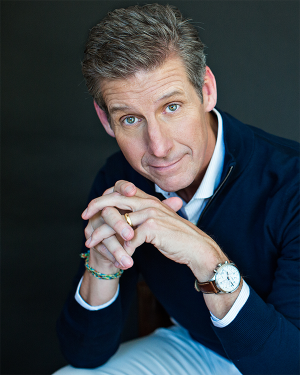
Chris Steiner's book "$20 Per Gallon: How the Inevitable Rise in the Price of Gasoline Will Change Our Lives for the Better."

To view this content, Javascript must be enabled and Adobe Flash Player must be installed.

Get Adobe Flash player

TEXT OF INTERVIEW

Kai Ryssdal: Oil prices rose today. Crude inched closer to $65 a barrel. That price bumps around quite a bit as the economic news changes. But oil and gas are still far cheaper than they were last summer. Thing is, though, that they'll eventually get back to where they were in 2008. And even higher. In his new book "$20 a Gallon," Forbes writer Chris Steiner imagines what life will be like when that happens. Things won't be all bad, he says. Once we get used to it.

CHRIS STEINER: We've hit a plateau as far as how much the world produces you know in the low $80 million barrel per day range. The problem is that there's about two billion people who are going to join the ranks of Americans in living the kind of lifestyles we live in the next 30 years.

Ryssdal: Those two billion extra people who are going to be living our lifestyle, you're talking basically China and India, yes?

STEINER: They're a big part of it. Yeah, China and India are a big part of it. China by itself is going to add another America worth of energy consumption by the year 2040.

Ryssdal: All right, so let's explore this thought experiment that you call it in your book. We'll go through the chapters. I will point out that you cleverly named these chapters after gasoline prices. So you've got chapter $4 gallon, chapter $6 gallon. What is going to be the tipping point?

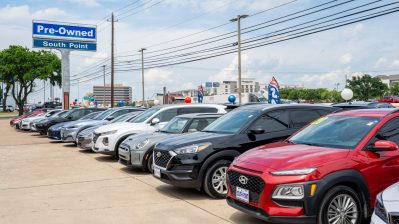
STEINER: Well, there's a lot of tipping points. And I think the point is there's different tipping points at every price. I kinda think $6 per gallon is going to be a lightswitch for the American people. I think most people walk away from SUVs forever. I think people will think twice about flying places. Most people are going to understand that life won't be the same, and we have to change the way we do things.

Ryssdal: I want to skip right to chapter $12 a gallon.

STEINER: That's where we kinda forecast that people will finally come to the grips with the fact that the freestanding house with a quarter acre of land, or half an acre of land, 50 miles outside the city, isn't a sustainable way to live. And they're going to get into places that are more walkable and denser.

Ryssdal: All right, so let's play that out a little bit. If we all move into inner cities, you point out that some of those big box retail stores that are sort of set apart from society that you have to drive to in large measure, we're going to be left with carcasses of Wal-Marts, and Targets, and Best Buys out there.

STEINER: Yeah, they call those ghost boxes. When Wal-Mart leaves a store they call it ghost box. There's actually 300 ghost boxes around the country right now, but by the time gas gets to $14 the Wal-Mart model won't be very tenable. They're going to shut down.

Ryssdal: Are you saying Wal-Mart is going to go out of business because we're driving there anymore, or is it all the rest of it that goes with Wal-Mart. The shipping and the scale and all of that?

STEINER: Wal-Mart is a company with 6,000 suppliers, 80 percent of whom are in China. And so they ship the stuff over on cargo ships very cheaply. It gets to the ports, and then Wal-Mart has 7,000 trucks they use to disseminate it to 4,000 different stores in America. It's a network built on gasoline. And the only reason it works is cheap oil. Now Wal-Mart could morph. They're a smart company, they could turn into something else, but in the current form we know Wal-Mart, it won't survive.

Ryssdal: But if at $12 a gallon we're driving by factors of 10 less than we are driving today. I have images of weeds sprouting up on the I-405 here in Los Angeles, and the 10 that goes across the country crumbling into the soil here. I mean, is that what you're envisioning here?

STEINER: I think some roads will close down. And I think a lot of the roads are going to go to tolls. We certainly don't need the giant infrastructure of roads we have in places like Chicago and Los Angeles right now. There's a highway every two miles. The nice thing is that it gives us thoroughfares that we can use for trains and other modes of transportation that would be impossible to put in because people live in these places without those roads being there. So they'll actually come in quite in handy.

Ryssdal: So it's really a good thing.

STEINER: Well, it depends on how you look at it. I mean, if you have a giant house and you have three SUVs this isn't a good thing. But I think everybody will be surprised as they usually are at how well most of us adapt.

Ryssdal: Christopher Steiner's book on the looming gas apocalypse and how it actually might be good for us is called, "$20 a Gallon." Chris, thanks a lot.

STEINER: Thank you, Kai.

About the author

Kai Ryssdal is the host and senior editor of Marketplace, public radio’s program on business and the economy. Follow Kai on Twitter @kairyssdal.
Jo Ellen Ringer's picture
Jo Ellen Ringer - Jul 23, 2009

The author does not address the needs of rural Americans, nor the home bound elderly who rely on home health aides. Should we just warehouse the frail elderly to make it more convenient for us who are able bodied? I am disabled and cannot use the bus system because it deposits me too far from my destinations for me to walk.

ed lucas's picture
ed lucas - Jul 23, 2009

I don't know why this is news now in 2009. Even in 2004 I was presenting the DVD "The End of Suburbia," a primer about
peak oil and its looming effects on the economy and life as we know it. Maybe it wouldn't hurt to revisit it and measure it against the present news. I think there was plenty that the film gets right.

Five dollar gas would be jarring as we saw last year, and even now we have many interrelated systems that are still dizzy. It seems like folly to think that number could be quadrupled in a generation or less and still allow life to go on as we know it. Investment in the "new energy economy" is only made harder from lack of credit, which itself is predicated on growth, which in turn is predicated on reliable and expanding supplies of energy. Oil has shown itself to be the energy source par excellence of all of human history. I think only dreamers think we can top that. Maybe the time has come to do the soul searching that our 20th century lifestyle has allowed us to brush aside, and to face the music: we must live differently in all ways. This is a far more cost effective way to meet our dilemma.

And frankly, I'd be surprised if India and China really ever have their heyday such as America had in the 1960s and 70s. Time for a new idea, not new fuels.

H Free's picture
H Free - Jul 22, 2009

If you have not already done so, read Omnivore's Dilemma. A very graphic picture of how fossil fuel based our food supply has become.

I agree with Mr. Steiner that higher fuel costs can and should change our habits. But until there is a focus on rail and urban transit, walking and biking, and away from driving, we won't be forced out of our SUV's

Dave Boylan's picture
Dave Boylan - Jul 22, 2009

The sky is falling. Another "Peak Oil" argument from an author with little understanding of economics. Sustained high oil prices will not only increase the value of alternative technologies, but increase the oil supply as well.

samuel root's picture
samuel root - Jul 22, 2009

ihave heard the arguement that the Saudi's like to see the price of oil go up so that they can conserve their stores while maintaing a good price and if the price goes down,of course, they stii conserve their stores by increasing price.One of their objects is to not run low,or out of oil.

Rick Guerrero's picture
Rick Guerrero - Jul 22, 2009

The author assumes a smooth gradual transition to $20 gasoline. This allow time for people to adjust and adapt to the changing environment. Unfortunately, people do not realize how dependent we are fossil fuel to maintain this delicate civilization (not just the economy). A tremendous spike in fuel prices or an outright shortage (like we had in the Southeast last summer) can be devastating to the economy and society for that matter. That will be the tipping point! People will survive( hopefully all or at least most of us) and I'm sure we will walk to work, ride the bike to the mall, Take the bus to the Wal-Mart outside the city limits and ride that 200 MPG family scooter to grandma's across the country. I'm just afraid what will happen during that transitional (tipping) point.

Francesco Tenore's picture
Francesco Tenore - Jul 22, 2009

One thing that changes at the "tipping point" is the fact that everything starts to become more efficient, and consumers, as pointed out by the author, start to move away from traditional SUVs and move towards greener technologies. In the 30-year span that the book describes it is not unreasonable to have vehicles that travel 100-200 miles/gallon. At $3/gallon a 30 mile/gallon car requires approximately $40 to travel 400 miles.
At 100 miles/gallon and $20/gallon gas, we'll be travelling some 1300 miles while spending $260, but 200 miles/gallon vehicles will make things even once more.

Jon Dagle's picture
Jon Dagle - Jul 22, 2009

Interesting hypothesis, but I don't think Mr Steiner understands the concept of "tipping point". A tipping point is a major shift, after which "everything is different". Certainly there might be many individual behavior changes, but calling these "a lot of tipping points" is off base. Also, in the interview, too much focus on Walmart (though I agree) and turning roads into new transit networks. Only a few sentences on how prices will reach $20/gallon. Interesting story though.

Matt Rivenbark's picture
Matt Rivenbark - Jul 22, 2009

Yet another bad story with a prominent and alarmist book plug. I hope this isn't becoming a trend.

Did the story bother mentioning that as the price of oil-based energy increases, alternative sources of energy become cost effective, thus providing price-lowering competition (good) or an outright replacement of oil as a primary source of fuel (potentially best case scenario)? Of course not, because $20 Per Gallon is the title of the book this story is advertising.

Chris Woodhouse's picture
Chris Woodhouse - Jul 21, 2009

I'd like to see the economic modeling that would predict $20/g fuel. Demand is very elastic, and alternative energies are no more than 2x conventional fuels, so there is a strong cap on how high gasoline prices could rise. Cars are, also, extremely efficient personal transportation, in terms of time and convenience.