CDs out of tune in digital age


TEXT OF INTERVIEW
Kai Ryssdal: Nielsen released its figures for 2008 music sales the other day. The stats all point in one direction: Digital. Between song downloads and ringtones, actual CDs are starting to feel as outdated as cassettes or 8-tracks. We’ve got Steve Knopper with us for a look back at the year in the music business. He covers the recording industry for Rolling Stone magazine. Steve, good to talk to you.
Steve Knopper: You too. Thanks very much for having me.
Ryssdal: So, was 2008 the year, finally, that the lines on the chart crossed and CDs died and digitals, sort of, became ascendant?
Knopper: You know, I think that you could make the case that that was the closest year so far. The lines are definitely going in opposite directions. Digital music is going way up, CD sales are going way down.
Ryssdal: And yet, CDs are still selling. I mean, millions and millions of them.
Knopper: Yep. I don’t think they’re ever going to go entirely away, but what clearly happened this year was that the places that sell the most CDs, such as Wal-Mart and Best Buy and Target, those big-box stores started to cut their shelf space for CDs considerably. I mean, they see the writing on the wall like everybody else does; they just don’t draw people into the stores like they used to.
Ryssdal: How much of a problem is that in terms of profitability for the recording industry, though?
Knopper: Yeah, you know, I make the analogy of you own a Saks Fifth Avenue and it’s really successful, and then one day people stop coming into your store. So you say, well, I’m going to change my business model. I’m going to start an ‘everything’s a dollar’ store. OK. Well, the next day, everybody comes into the ‘everything’s a dollar’ store and you have tons of business. But, it’s certainly not as high a profit margin. I mean, the record labels could make a lot more money on an $18 CD then they could make on a $0.99 download, even though downloads are selling just fine. I mean, I think they top the one billion marks. So, that part of the business is very successful, but it’s not necessarily a great thing for the major record labels.
Ryssdal: What do you make of the news yesterday about Apple introducing variable pricing on iTunes? More popular songs at, I think, a buck-twenty-nine or a buck-thirty-nine, and then the old standards at $0.69?
Knopper: It’s something that the record labels have been pushing Steve Jobs and Apple to do for a long, long time. I mean, their original contract that called for $0.99 for everything was unfair. The record labels had been saying that for years. So it’s interesting to me that Steve Jobs would say, “OK. Alright. We’ll do it this way.” From a consumer perspective it kind of make sense. I was talking to a guy this morning who was saying, you know, if they sell all their catalog stuff — the older material — for $0.69, that’s a really good cheap price; I’m going to just go click, click, click, click, click and just get all the catalogs of all of the artists that I was missing. You know, the $1.29 may put people off from what I assume would be the big popular hits. But, it’s probably a smart idea.
Ryssdal: Let me ask you about something I saw in the data as I was looking through these numbers getting ready to chat with you. There was a thing in there that just kind of amazed me: LP sales — that is, vinyl — was up like 90 percent.
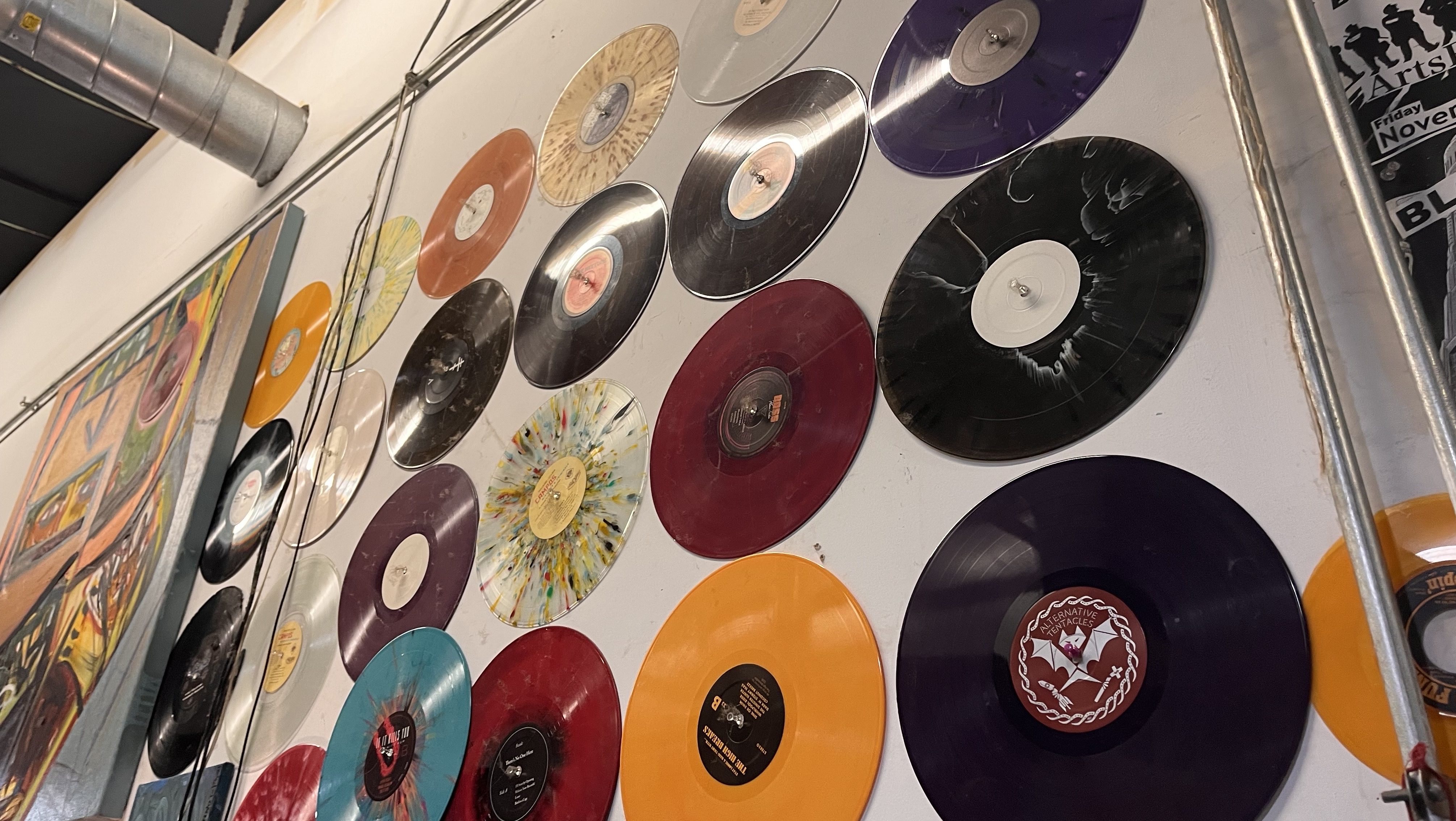
Knopper: Well, first of all, it’s still a really tiny portion of the marketplace. But it’s really interesting because what’s happening is that you’ve got all these college students and other hipsters who have been downloading for several generations now, since Napster came out in the late ’90s. And they’ve got all this music on their hard drives. And then they’re going, you know what, artwork is pretty cool and having a big thing to hang on my wall is pretty cool and being able to flip through the racks at a record store is a fun experience. And they don’t want to just go back to CDs because they’re expensive, and you can see that. But, it kind of makes sense to buy a vinyl record because there’s this sort of throwback quality to it.
Ryssdal: Kind of terrifying that the late ’90s were several generations ago.
Knopper: It is terrifying. I was just thinking that Napster turns ten, or would have turned ten, this year. And Shawn Fanning is almost in his 30s. So, yeah, it’s — we’re all getting old.
Ryssdal: Steven Knopper writes for Rolling Stone. He’s got a book out too about the music industry. It’s called “Appetite for Self-Destruction: The Spectacular Crash of the Record Industry in the Digital Age.” Steve, thanks a lot.
Knopper: Thank you for having me.
Stories You Might Like


.jpg?w=350)


There’s a lot happening in the world. Through it all, Marketplace is here for you.
You rely on Marketplace to break down the world’s events and tell you how it affects you in a fact-based, approachable way. We rely on your financial support to keep making that possible.
Your donation today powers the independent journalism that you rely on. For just $5/month, you can help sustain Marketplace so we can keep reporting on the things that matter to you.